
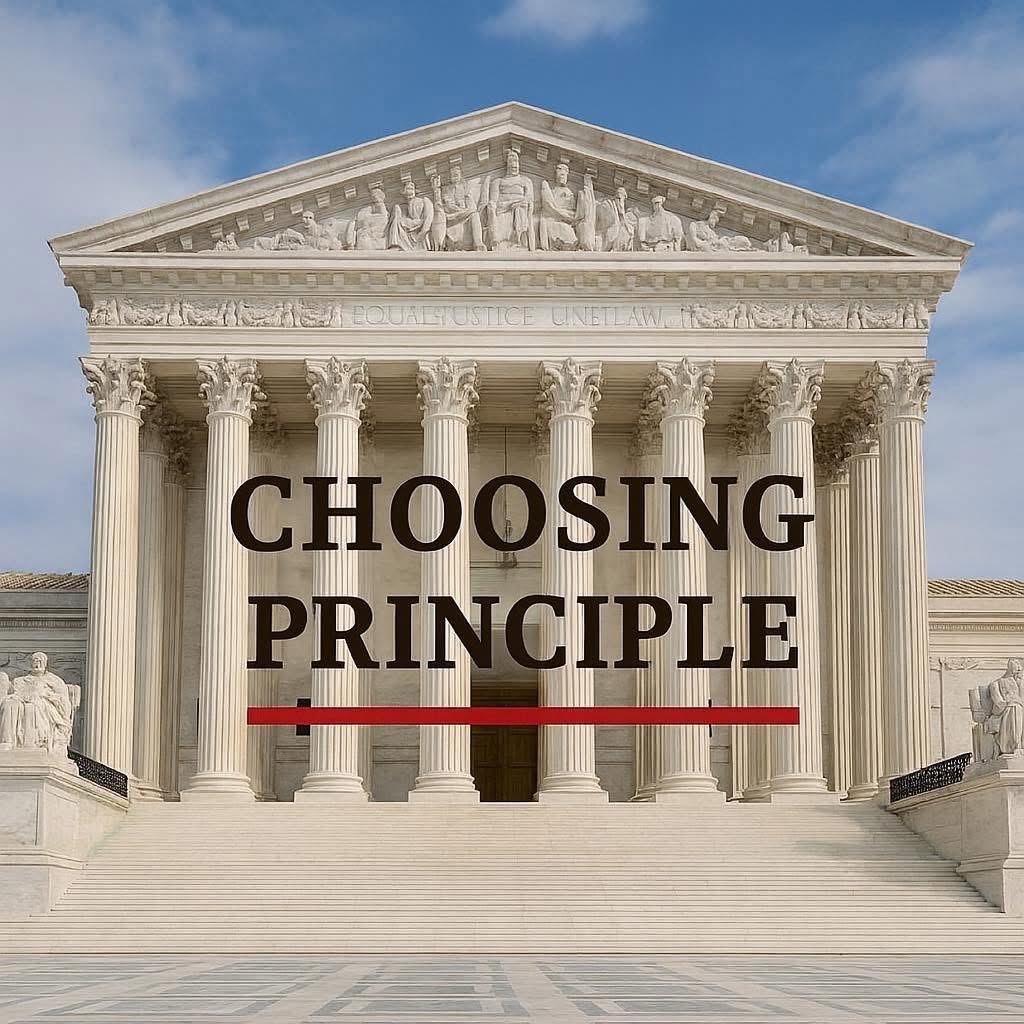
The Supreme Court’s latest ruling — a 6–3 decision limiting President Trump’s use of emergency powers to impose sweeping tariffs — triggered exactly the kind of reaction many expected. By nightfall, the president was publicly venting his anger, accusing the Court of being “disloyal,” and singling out the very justices he appointed. In his telling, loyalty is owed to him personally, and any deviation is betrayal.
But the Court’s majority did something quietly important: they stayed within their constitutional lane. They did not rule for or against a president. They ruled on the law. And in a political climate where personal allegiance is often demanded as the highest virtue, that restraint is worth noticing.
The president’s response, however, went further. Despite the ruling, he insisted he would still pursue new tariffs, claiming the authority already exists “in the law.” The implication is unmistakable: that presidential will can, by itself, create legal reality. That is not how the American system works — and the Court’s decision was a reminder of that.
This tug‑of‑war between institutional limits and personal authority is not new, but it is wearing on the country. It creates a sense of perpetual crisis, as if the nation is trapped in a loop where the same conflict plays out again and again: a president pushing the boundaries of power, and the courts pulling the reins back.
People are tired. And the question many are asking — quietly, privately — is simple: When does this end?
There is no date on the calendar. But historically, these cycles end in one of three ways: when institutions hold long enough to rebuild public trust; when political incentives shift away from conflict; or when a new generation of leaders emerges who value constitutional norms over personal loyalty.
For now, what we witnessed this week is a reminder that not every institution bends. The Court’s majority, including two of the president’s own appointees, chose principle over pressure. That does not solve the larger struggle, but it does signal that the guardrails are still there — scratched, dented, but intact.
And sometimes, in a season like this, that is the only good news available. But it is still good news.
Discover more from The Editorial Room
Subscribe to get the latest posts sent to your email.
