Why Taxing Remittances Reveals Something Deeper About Those Targeting Immigration and Immigrants

Every proposal to tax immigrant remittances begins with the same claim: immigrants aren’t paying their fair share. But the truth is simpler and more revealing. A remittance tax isn’t an economic strategy. It’s a moral signal — and not a flattering one.

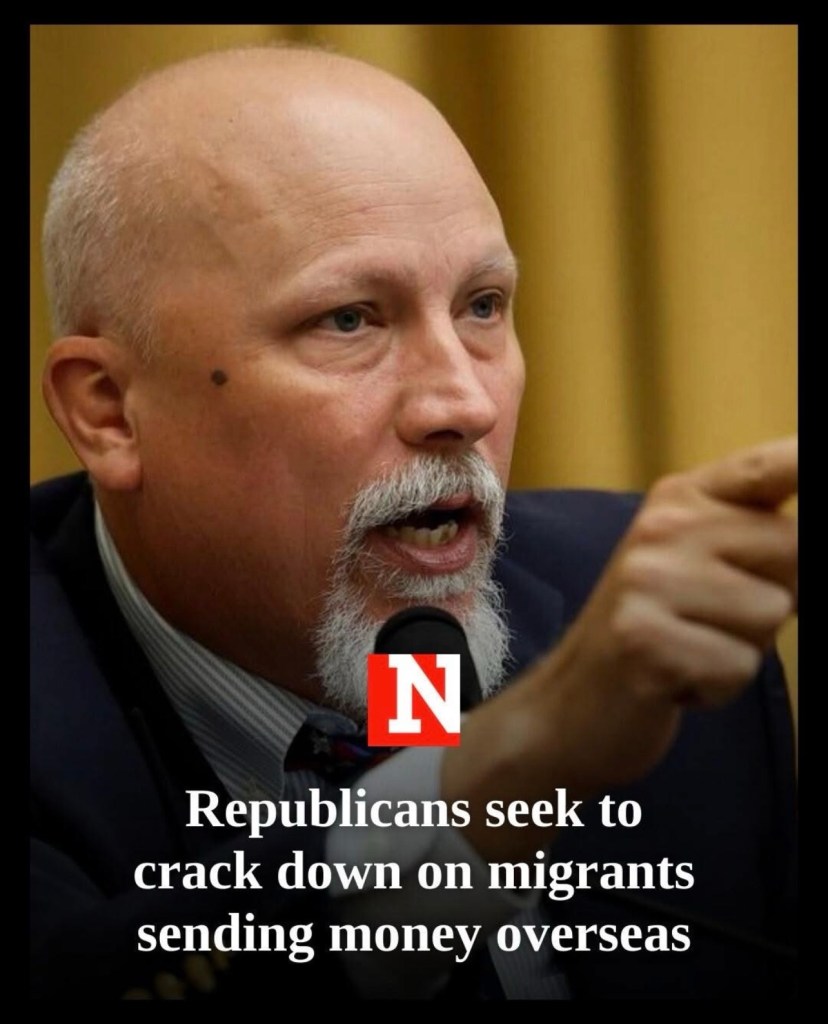
Chip Roy introduced a bill that would impose a 25 percent tax on remittances sent by non-citizens to recipients overseas.

Every year, immigrants in the United States send more than $80 billion to family members abroad. These are not luxury transfers. They are survival transfers. They are the difference between a grandmother in Manila getting her hypertension medication, or not; between a nephew in Guatemala staying in school, or dropping out to work; between a family in Haiti eating three meals a day, or one.

To tax that is to tax love.

The real people behind the numbers

Walk through any hospital in Tucson and you’ll meet the people this policy would hit first.

There’s the Filipino nurse at Banner South, working a twelve-hour shift, then sending $300 home so her parents can afford their monthly prescriptions. She already pays federal income tax, state tax, Social Security, Medicare, and every sales tax embedded in her daily life. A remittance tax would not make her “contribute more.” It would simply take from her parents’ medicine cabinet.

There’s the Mexican construction worker rebuilding homes in Vail and Oro Valley, sending money to help his sister raise her children. His remittances don’t weaken the U.S. economy — they stabilize a family that might otherwise face impossible choices.

There’s the Haitian caregiver in Phoenix who sends part of every paycheck to keep her younger brother in school. That money doesn’t disappear into some foreign void. It becomes food, tuition, and hope — the very things that reduce the desperation that fuels forced migration.

And there’s the Somali Uber driver in Tucson who sends money to a refugee camp in Kenya, not because he has extra, but because he remembers what it was like to have nothing.

These are the people a remittance tax targets. Not billionaires. Not corporations. Not offshore accounts.
Just workers. Just families. Just love.

What the policy really reveals

Supporters of a remittance tax often frame it as a matter of fairness or national interest. But the economics don’t hold. Immigrants already contribute billions in taxes — often without ever receiving the benefits. Remittances are sent from after‑tax income. And taxing them would generate little revenue while inflicting disproportionate harm.

So if it’s not about economics, what is it about?

It reveals a worldview that sees immigrants not as neighbors, coworkers, or contributors, but as targets.
It reveals a willingness to punish the poor for the crime of caring for their families.
It reveals a political project that confuses cruelty with strength.

A confident nation does not tax the money a daughter sends her mother so she can buy blood pressure medication.
A secure nation does not squeeze the poorest workers to score political points.
A morally serious nation does not weaponize policy against the very people who keep its hospitals, farms, and service industries running.

The deeper truth

Taxing remittances is not about revenue.
It is about resentment.

It is not about fiscal responsibility.
It is about cultural punishment.

It is not about strengthening America.
It is about narrowing who gets to belong.

Immigrants do not send money home because they are disloyal. They send money home because they are human — because love does not stop at borders, because responsibility does not end with migration, because family is not a taxable commodity.

A remittance tax tells us nothing about immigrants.
But it tells us everything about those who want to tax them.


The Deal That Worked — And the Decision That Broke It

(Readers are encouraged to confirm details with trusted, authoritative sources.)

In a moment when global tensions feel dangerously combustible, it is worth remembering that the world once had a functioning, peaceful mechanism to restrain Iran’s nuclear ambitions. It wasn’t perfect, and it wasn’t permanent, but it worked — and it worked because diplomacy was allowed to do what missiles and threats cannot.

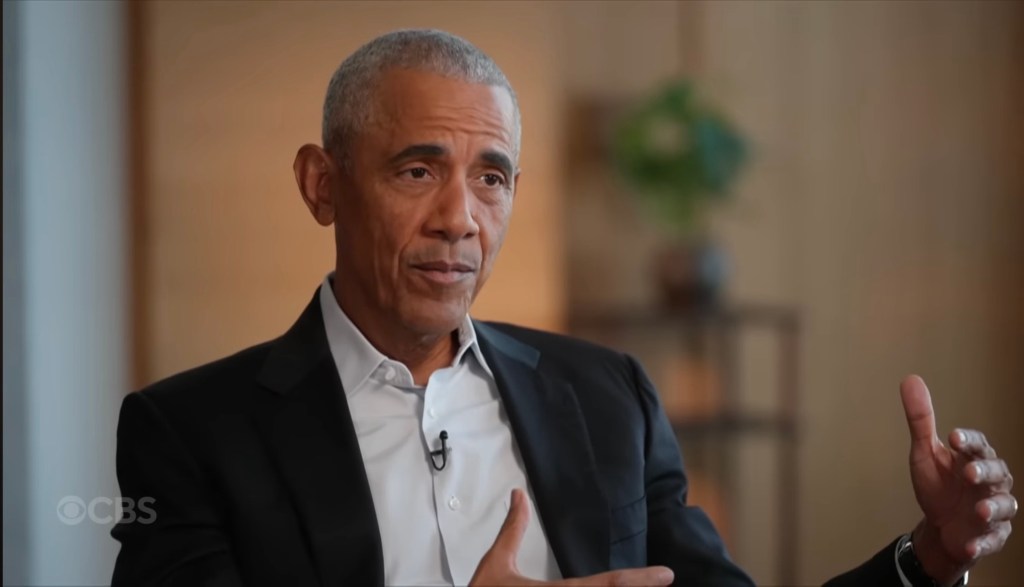
“We Pulled It Off Without Firing A Missile” – President Obama On The 2015 Iran Nuclear Deal

The Joint Comprehensive Plan of Action (JCPOA), negotiated in 2015, dramatically reduced Iran’s nuclear capacity. According to publicly available International Atomic Energy Agency (IAEA) reports, Iran shipped out roughly 97% of its enriched uranium, dismantled thousands of centrifuges, redesigned its Arak reactor to prevent plutonium production, and accepted one of the most intrusive inspection regimes ever implemented. Inspectors were on the ground. Cameras were in place. Supply chains were monitored. Breakout time — the period Iran would need to produce weapons‑grade material — was extended significantly.

In short: the world had visibility, leverage, and time.

Then, in 2018, the United States unilaterally withdrew from the agreement. Not because the IAEA found violations. Not because the deal collapsed. Not because a better alternative had been negotiated. The withdrawal was political, not evidentiary — a reversal driven by domestic considerations rather than international security assessments.

The consequences were predictable. With the restraints gone and sanctions reimposed, Iran accelerated its enrichment, reduced inspector access, and moved closer to the nuclear threshold than at any point under the deal. Analysts across the political spectrum have noted that the post‑withdrawal landscape is more opaque, more volatile, and more dangerous.

It is tempting to treat today’s crisis as inevitable — as if the Middle East is destined to burn, as if nuclear brinkmanship is simply the natural order of things. But inevitability is a myth. There was a period when diplomacy held the line, when inspectors had access, when uranium stockpiles were a fraction of what they are now.

We had a working agreement.
We had a verifiable system.
We had a peaceful path that kept Iran farther from a bomb.

And then it was abandoned.

The lesson is not about nostalgia for a past administration, nor is it about assigning partisan blame. It is about recognizing the cost of dismantling functioning structures simply because they were built by someone else. Foreign policy cannot be governed by personal vendettas or symbolic gestures. The world is too fragile, and the stakes are too high.

If we are to navigate the present moment with any wisdom, we must remember this:

Diplomacy is not weakness. Verification is not naïveté. And tearing down what works is not leadership.

When Power Turns Toward the Young: A Reflection on Youth, Fitness, and the Shape of a Nation

(Readers should confirm all political details with trusted sources.)

There are moments in civic life when a public proclamation lands with a weight that is not entirely its own. President Donald Trump’s recent call to revive a national youth physical fitness test is one such moment. On the surface, it resembles the familiar rituals of school gymnasiums — the shuttle run, the pull‑up bar, the stopwatch in a coach’s hand. But beneath the nostalgia lies a deeper question about how a nation imagines its future, and what it asks of its children.

This reflection is not about equivalence. It is about discernment — the quiet, necessary work of noticing the shape of things as they unfold.

The Young as a Mirror of National Longing

Every society, especially in seasons of uncertainty, turns its gaze toward the young. They become the canvas on which a nation paints its hopes, anxieties, and unfinished dreams. Throughout the last century, governments of many kinds — democratic, authoritarian, and everything in between — have used youth programs to cultivate a particular vision of citizenship.

Physical fitness often becomes the doorway. It is tangible. It is measurable. It carries symbolic weight. A strong body can be framed as a sign of a strong nation.

But history teaches us that when a government turns its attention to the bodies of the young, it is rarely only about health.

It is about formation.

A Pattern Older Than Any One Leader

Across the 20th century, a recognizable pattern emerges:

  • Youth are framed as the key to national renewal.
  • Programs begin with fitness, discipline, and shared activity.
  • Physical training slowly blends with civic or ideological messaging.
  • Alternative spaces for youth formation narrow.
  • The young become symbols of the nation’s desired identity.

The most extreme examples — Nazi Germany, Fascist Italy, Maoist China — are not invoked here as comparisons, but as reminders of how easily physical formation can become moral formation, and how quickly moral formation can become political formation.

The pattern is not about a particular leader. It is about the architecture of influence.

Why This Moment Deserves Attention

Trump’s proclamation does not recreate the systems of the past. But it does echo the early moves that historians often notice when leaders speak of youth fitness in the language of national destiny:

  • a narrative of decline
  • a call for renewed discipline
  • a symbolic use of youth as carriers of national strength
  • a leader‑centered vision of what the next generation should embody

These elements are not inherently dangerous. They are, however, historically resonant. They invite us to listen closely to the story being told beneath the policy.

The Question Beneath the Question

Physical activity is good for children. Communities should encourage it. Schools should support it. The concern is not the test itself but the imagination behind it.

A democracy must ask:

  • What kind of strength are we cultivating?
  • What virtues are being attached to the young body?
  • What vision of citizenship is implied?
  • And who is shaping that vision?

Youth formation is healthiest when it is plural — when families, schools, religious communities, civic groups, the arts, and the natural world all have a voice. When that landscape narrows, even subtly, the tone of a society shifts.

The Sanctuary of Discernment

At TEdR, we return often to the idea of sanctuary — not as escape, but as clarity. A place where the noise of public life quiets enough for us to hear the deeper currents beneath it.

Trump’s proclamation invites such sanctuary. It invites us to pause, to breathe, to ask what story is being told about our children and our future. It invites us to remember that youth programs are never just about youth. They are about the kind of society we are becoming, and the kind of citizens that future requires.

The work before us is not to react, but to discern. Not to fear, but to stay awake. Not to assume the worst, but to refuse to look away.

In the end, the question is simple and ancient:

What do we believe a child is for?

Everything else flows from that.

Two Stories, One Pattern — When “Disruptive” Becomes a National Security Issue

There are two stories circulating right now — one verified, one unverified — and together they raise a question about the presidency that goes beyond partisanship.

The first story comes from credible reporting. The Wall Street Journal documented that during a high‑stakes Iran‑related rescue operation, senior officials intentionally kept the President out of the Situation Room because they feared his presence would be “disruptive.”

That word wasn’t invented by critics. It came from officials responsible for managing a delicate military mission.
It is unusual — and telling — for a commander‑in‑chief to be treated as a potential obstacle during an operation requiring precision and discipline.

The second story is different. It comes from a single podcast appearance by a former CIA analyst Larry Johnson and has no independent verification. No major news outlet has confirmed it, and parts of the claim contradict established nuclear command procedures. It is, at this point, an allegation — not a fact.

Johnson claimed that during an “emergency” White House meeting, Donald Trump sought to “use the nuclear codes” against Iran and that General Dan Caine supposedly refused. He described it as a dramatic confrontation.

But even as an unverified claim, its virality says something about the public mood. People are primed to believe it because the idea of a president behaving impulsively in matters of national security no longer feels unthinkable. The ground has shifted.

That’s the real story.

When the presidency becomes associated with unpredictability, when senior officials feel the need to manage around the president rather than with him, when the word “disruptive” appears in reporting about military operations — that’s not a partisan critique. That’s a structural concern.

The office of the presidency carries nuclear authority, diplomatic weight, and the responsibility to steady the nation in moments of crisis.

If the person holding that office is perceived — by their own team — as someone who might derail a mission simply by entering the room, that perception alone becomes a national‑security issue.

Two stories. One verified, one not.
But both point to the same unsettling truth: the stability of the presidency matters, not just for politics, but for the safety of the country.


When Moral Speech Is Mistaken for Politics

There is a category error many people make when a religious leader speaks into public life.
They hear politics.
But what is being offered is moral witness.

A religious authority does not speak as a rival power to the state. The task is not to govern, mobilize voters, or draft policy. The task is simpler—and harder: to speak truthfully about human dignity, justice, mercy, and responsibility as revealed in the Gospel.

When that speech challenges a political leader, the instinct is to translate it into political terms.
Who is siding with whom?
Which party benefits?
Who is attacking whom?

That translation is the mistake.

The church does not address the state as a political opponent, but as a moral interlocutor.

This is not new. The Hebrew prophets spoke to kings. John the Baptist spoke to Herod. Across Christian history, the church has understood that power must be confronted by something it cannot command: conscience.

Many evangelicals struggle here, especially those shaped by decades of teaching that treats Catholic authority as inherently suspect or even hostile to the Gospel. Suspicion often precedes listening. Once the speaker is dismissed, the content never has a chance.

But Christian faith does not permit us to evaluate speech based on who speaks rather than what is said.

If a religious leader speaks in line with the Gospel—about care for the vulnerable, truthfulness, humility, or the restraint of power—then the speech must be weighed on those grounds alone. Agreement or disagreement should follow listening, not replace it.

Confusion deepens when political movements demand loyalty that rivals theological conviction. In such an environment, any moral critique feels like betrayal. Faith becomes tribal. The Gospel becomes partisan.

That is not evangelicalism at its best. And it is not Christianity.

Religious leaders are not called to be chaplains of the state, nor activists chasing relevance. They are called to bear witness—to speak plainly, even when it is inconvenient, even when it is misunderstood.

When moral speech is reduced to politics, everyone loses.
The state loses a necessary mirror.
The church loses its voice.
And the Gospel is flattened into just another opinion.

Clarity requires that we keep the categories straight.
Politics governs.
Faith speaks.
And sometimes, faith speaks to politics—not as an enemy, but as a reminder that power is never ultimate.

“I have no fear of the Trump administration or of speaking out loudly about the message of the Gospel, which is what I believe I am here to do, what the Church is here to do.”

— Pope Leo XIV, April 13, 2026

Talks—Not War—Still Work

Every now and then, a story breaks through the noise of global politics and reminds us that diplomacy, when practiced with patience and clarity, still has the power to shift outcomes. The recent report that the Philippines successfully renegotiated safe passage for its oil tankers through the Strait of Hormuz is one such moment.

This was not a simple diplomatic task.
The Philippines maintains long‑standing ties with the United States, and the current administration had just concluded a high‑visibility visit with President Trump. At the same time, Iran is under immense geopolitical pressure, navigating its own conflict dynamics with both the U.S. and Israel. For Manila to engage Tehran directly—while balancing these relationships—required careful calculation, steady hands, and a willingness to sit at the table despite the risks.

And yet, the result speaks for itself:
Philippine‑flagged and Filipino‑manned vessels are now moving safely through one of the most volatile maritime chokepoints in the world.

This is not merely a political achievement.
It is a practical one.
A human one.

The Strait of Hormuz is a narrow passage with global consequences. When tensions rise there, ordinary people feel it first—through fuel prices, supply chain disruptions, and the quiet anxiety that comes when conflict threatens to spill into daily life. Securing safe passage means Filipino seafarers can work without fear, tankers can move without becoming bargaining chips, and the country can breathe a little easier about its energy supply.

It also underscores a truth that often gets overshadowed in an age of spectacle:
Diplomacy works.
Not always quickly. Not always cleanly. But consistently, quietly, and with far fewer casualties than any alternative.

Some may be tempted to frame this achievement through the lens of political rivalry or international alignment. But the heart of the matter is simpler: negotiation prevented escalation. Dialogue protected lives. A government chose engagement over confrontation, and the outcome benefited the people who would have suffered most if tensions had worsened.

This is the kind of story that rarely dominates headlines, yet it is precisely the kind of story that deserves attention. It reminds us that the work of peace is often slow, often unglamorous, and often overshadowed by louder voices calling for force. But it is also the work that keeps nations stable, families safe, and economies functioning.

So let’s name it plainly:
Good work was done here.
Lives were safeguarded.
And the world is a little less volatile today because two nations chose to talk.

In a time when conflict is easy and escalation is fashionable, this moment stands as a quiet testament to what diplomacy can still accomplish.
Talks—not war—continue to prove their worth.


For the details of the story, please click here.

When Crisis Becomes a Business Model

Every time global tension rattles the oil markets, the pattern repeats itself with unnerving precision. Ordinary Americans pay more at the pump, and a small circle of fossil‑fuel executives see their profits swell. It’s a cycle so familiar that it barely registers as news anymore — but the speed and scale of the most recent price spike should force us to look more closely at who benefits when the world is on fire.

After the U.S. strikes in Iran, gas prices rose sharply, as they almost always do when conflict touches an oil‑producing region. Economists have been explaining this dynamic for decades: instability raises risk, risk raises prices, and consumers absorb the cost. What’s different now is how openly some political figures frame these spikes as opportunities rather than burdens.

In a recent post, Donald Trump wrote that “we make a lot of money” when oil prices rise. He didn’t specify who “we” refers to, but the beneficiaries are not hard to identify. The people who profit most from volatility are the same executives who have spent years funding campaigns, lobbying for deregulation, and securing tax incentives that tilt the playing field in their favor.

And the markets responded exactly as expected. Analysts at outlets like the Financial Times noted that if elevated crude prices hold, major U.S. oil and gas companies could see tens of billions in additional revenue this year. Publicly traded firms signaled to investors that they were well positioned to capitalize on the moment. None of this requires speculation; it’s how commodity markets function.

Several of the companies now poised to benefit have long‑standing financial ties to Trump‑aligned political groups. Their CEOs have appeared on earnings calls describing how global instability strengthens their competitive position. That doesn’t prove intent behind any military decision — but it does reveal alignment. Policies that loosen regulations, expand tax incentives, or weaken oversight consistently reward the same donors who help keep certain politicians in power.

This is the architecture of influence in American politics:

  • Wealthy donors fund campaigns.
  • Those campaigns produce policies that increase donor profits.
  • Those profits then finance the next round of political influence.

Meanwhile, the public pays the bill — in higher fuel costs, higher transportation costs, and higher household expenses.

And the pattern isn’t confined to fossil fuels. In the tech sector, leaders are increasingly candid about the societal consequences of their own products. When a major AI executive acknowledges on national television that his technology could reshape the labor market in ways that disproportionately affect highly educated women — and then shrugs off the implications — it exposes the same concentration of power, the same absence of accountability, the same confidence that no one will stop them.

These are not isolated anecdotes. They are symptoms of a political economy where a handful of industries have the resources to shape policy outcomes in ways that serve their interests, even when those outcomes harm the broader public.

Taxing extreme wealth and enforcing meaningful checks on corporate power are not radical proposals. They are the basic tools of a functioning democracy — one in which public policy is shaped by the needs of the many rather than the profits of the few.

If we want a political system that works for ordinary people, we have to confront the cycle that rewards the same small group every time crisis hits. Until then, volatility will remain a business model, and the rest of us will keep paying for it.


When Power Rejects Accountability: What the Kent Resignation Tells Us About Trump’s Leadership Culture

The resignation of National Counterterrorism Center Director Joe Kent should have opened a rare window for introspection inside the administration. Kent did not leave in silence. He left with a warning: that the march toward war with Iran lacked an imminent threat, lacked strategic coherence, and was propelled by pressures the public has not been allowed to see. These are the kinds of concerns a healthy administration would confront head-on.

Instead, the president dismissed Kent as “weak on security” and “not up to the job.” The critique was not answered; the critic was diminished. And in that exchange — documented plainly in the AP report — we see a leadership culture that treats dissent not as a resource but as a threat.

This is not an isolated moment. It is a governing pattern. Appointees are celebrated when they affirm the president’s position and maligned when they depart from it. The shift is instantaneous: competence becomes incompetence, loyalty becomes betrayal, and expertise becomes weakness. The individual changes; the script does not.

What makes the Kent episode especially revealing is the gravity of the issue at hand. War demands clarity, accountability, and the courage to face uncomfortable truths. Kent attempted to raise those truths. The administration responded with personal attack. The public is left with no clearer understanding of the policy — only a clearer understanding of the leadership style.

A government that cannot tolerate internal critique becomes brittle. It loses the ability to self-correct. It drifts toward decisions shaped not by deliberation but by deference. And when the stakes are measured in lives, that brittleness becomes dangerous.

The AP report does not editorialize. It simply records what was said. But the implications are unavoidable. If every departing official is recast as weak or disloyal, the public must ask whether the problem is always the appointee — or whether the deeper issue is a leadership culture that rejects accountability itself.

In moments of national consequence, the country needs leaders who can absorb critique without collapsing into grievance. Leaders who can distinguish disagreement from disloyalty. Leaders who understand that strength is not measured by the volume of one’s dismissals but by the capacity to engage the truth, even when it is inconvenient.

Joe Kent’s resignation offered an opportunity for that kind of leadership. The response made clear that opportunity was refused.

A School Was Bombed. The World Must Speak.

A school was bombed in Minab.

More than 150 children died.

That is not rumor — that is verified loss.

And when children die in their classrooms, the world does not need spin, or deflection, or leaders reaching for the nearest convenient enemy. The world needs truth. The world needs grief. The world needs accountability that does not wait for political permission.

A prophetic voice begins here:

No nation is righteous enough to excuse the killing of children.

No military is precise enough to call this “collateral.”

No leader is credible if they answer a mass grave with a shrug or a conspiracy.

The facts are still being investigated.

But the scale of harm is not in question.

And when the smallest coffins are lowered into the ground, the burden of truth rises — not falls.

So this must be said plainly:

• A school is not a battlefield.

• A child is not an acceptable loss.

• And any government involved — directly or indirectly — owes the world not a justification, but a confession.

Prophetic speech does not wait for the powerful to feel ready.

It speaks because the dead cannot.

Update:

The most authoritative, up‑to‑date figure comes from Al Jazeera’s live casualty tracker, which reports:

“168 children were killed in the Minab elementary school strike.”

This aligns with the higher end of earlier reports (115–168 total children), but the 168 figure is the latest confirmed and comes from Iran’s deputy health minister speaking directly to Al Jazeera.