
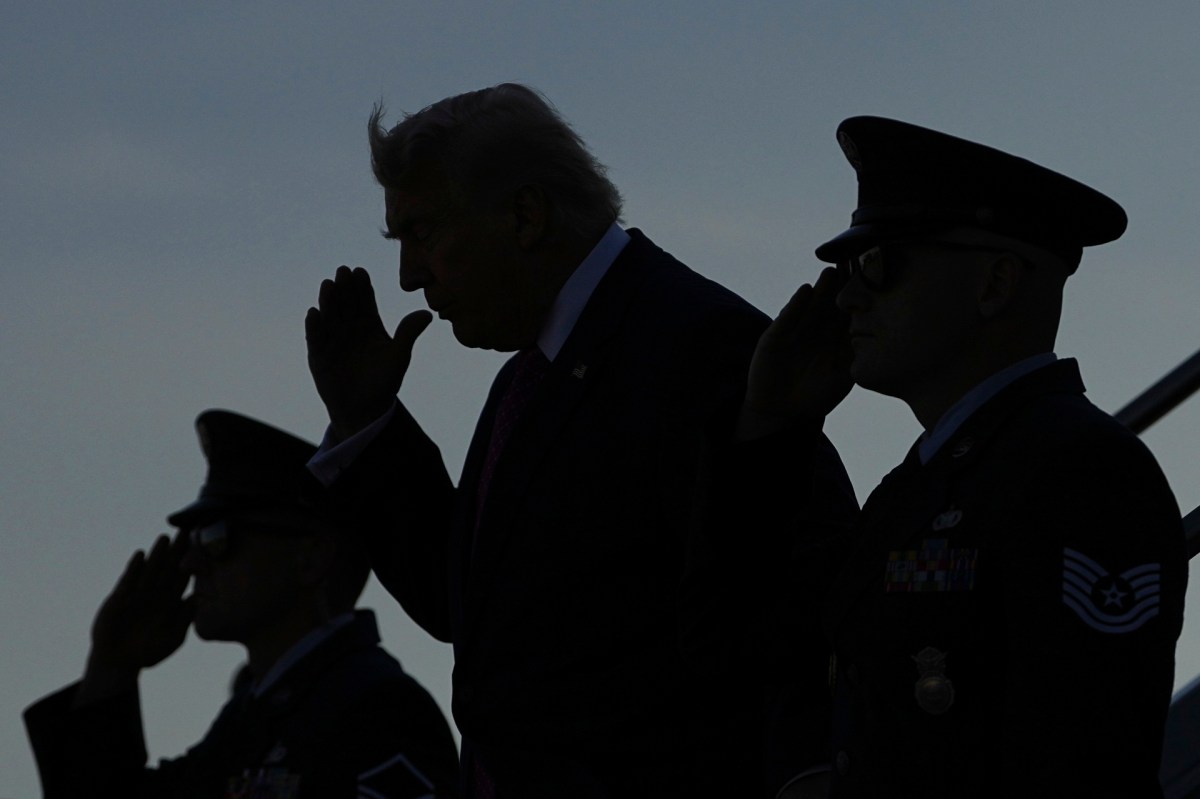
Two Stories, One Pattern — When “Disruptive” Becomes a National Security Issue

There are two stories circulating right now — one verified, one unverified — and together they raise a question about the presidency that goes beyond partisanship.

The first story comes from credible reporting. The Wall Street Journal documented that during a high‑stakes Iran‑related rescue operation, senior officials intentionally kept the President out of the Situation Room because they feared his presence would be “disruptive.”

That word wasn’t invented by critics. It came from officials responsible for managing a delicate military mission.
It is unusual — and telling — for a commander‑in‑chief to be treated as a potential obstacle during an operation requiring precision and discipline.

The second story is different. It comes from a single podcast appearance by a former CIA analyst Larry Johnson and has no independent verification. No major news outlet has confirmed it, and parts of the claim contradict established nuclear command procedures. It is, at this point, an allegation — not a fact.

Johnson claimed that during an “emergency” White House meeting, Donald Trump sought to “use the nuclear codes” against Iran and that General Dan Caine supposedly refused. He described it as a dramatic confrontation.

But even as an unverified claim, its virality says something about the public mood. People are primed to believe it because the idea of a president behaving impulsively in matters of national security no longer feels unthinkable. The ground has shifted.

That’s the real story.

When the presidency becomes associated with unpredictability, when senior officials feel the need to manage around the president rather than with him, when the word “disruptive” appears in reporting about military operations — that’s not a partisan critique. That’s a structural concern.

The office of the presidency carries nuclear authority, diplomatic weight, and the responsibility to steady the nation in moments of crisis.

If the person holding that office is perceived — by their own team — as someone who might derail a mission simply by entering the room, that perception alone becomes a national‑security issue.

Two stories. One verified, one not.
But both point to the same unsettling truth: the stability of the presidency matters, not just for politics, but for the safety of the country.
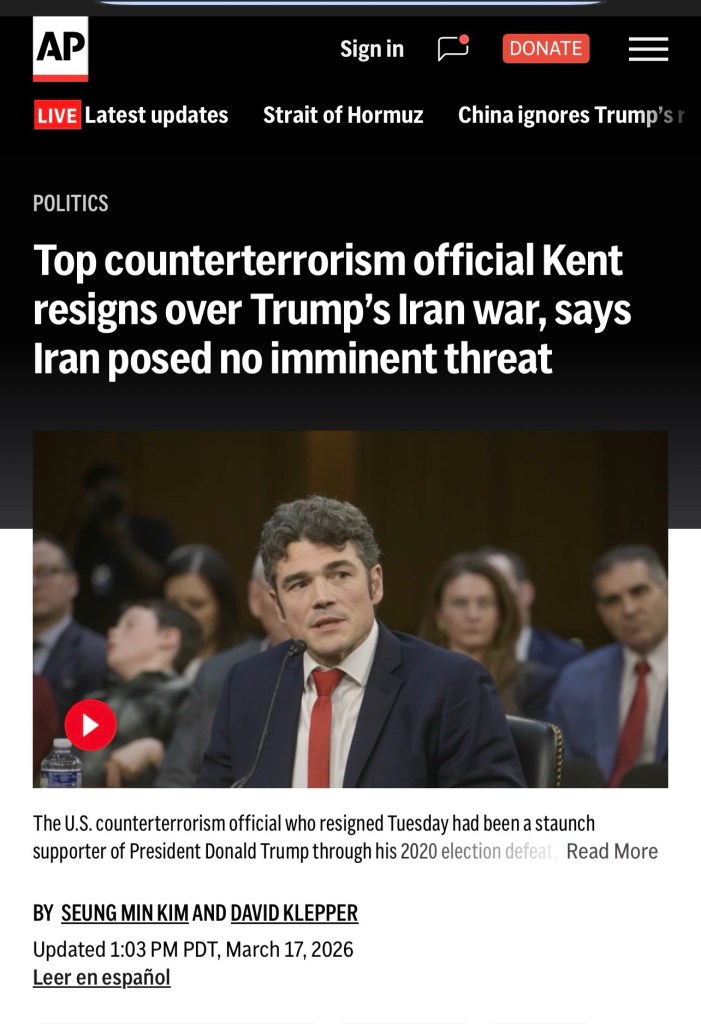

When Power Rejects Accountability: What the Kent Resignation Tells Us About Trump’s Leadership Culture

The resignation of National Counterterrorism Center Director Joe Kent should have opened a rare window for introspection inside the administration. Kent did not leave in silence. He left with a warning: that the march toward war with Iran lacked an imminent threat, lacked strategic coherence, and was propelled by pressures the public has not been allowed to see. These are the kinds of concerns a healthy administration would confront head-on.

Instead, the president dismissed Kent as “weak on security” and “not up to the job.” The critique was not answered; the critic was diminished. And in that exchange — documented plainly in the AP report — we see a leadership culture that treats dissent not as a resource but as a threat.

This is not an isolated moment. It is a governing pattern. Appointees are celebrated when they affirm the president’s position and maligned when they depart from it. The shift is instantaneous: competence becomes incompetence, loyalty becomes betrayal, and expertise becomes weakness. The individual changes; the script does not.

What makes the Kent episode especially revealing is the gravity of the issue at hand. War demands clarity, accountability, and the courage to face uncomfortable truths. Kent attempted to raise those truths. The administration responded with personal attack. The public is left with no clearer understanding of the policy — only a clearer understanding of the leadership style.

A government that cannot tolerate internal critique becomes brittle. It loses the ability to self-correct. It drifts toward decisions shaped not by deliberation but by deference. And when the stakes are measured in lives, that brittleness becomes dangerous.

The AP report does not editorialize. It simply records what was said. But the implications are unavoidable. If every departing official is recast as weak or disloyal, the public must ask whether the problem is always the appointee — or whether the deeper issue is a leadership culture that rejects accountability itself.

In moments of national consequence, the country needs leaders who can absorb critique without collapsing into grievance. Leaders who can distinguish disagreement from disloyalty. Leaders who understand that strength is not measured by the volume of one’s dismissals but by the capacity to engage the truth, even when it is inconvenient.

Joe Kent’s resignation offered an opportunity for that kind of leadership. The response made clear that opportunity was refused.