
Why Taxing Remittances Reveals Something Deeper About Those Targeting Immigration and Immigrants

Every proposal to tax immigrant remittances begins with the same claim: immigrants aren’t paying their fair share. But the truth is simpler and more revealing. A remittance tax isn’t an economic strategy. It’s a moral signal — and not a flattering one.
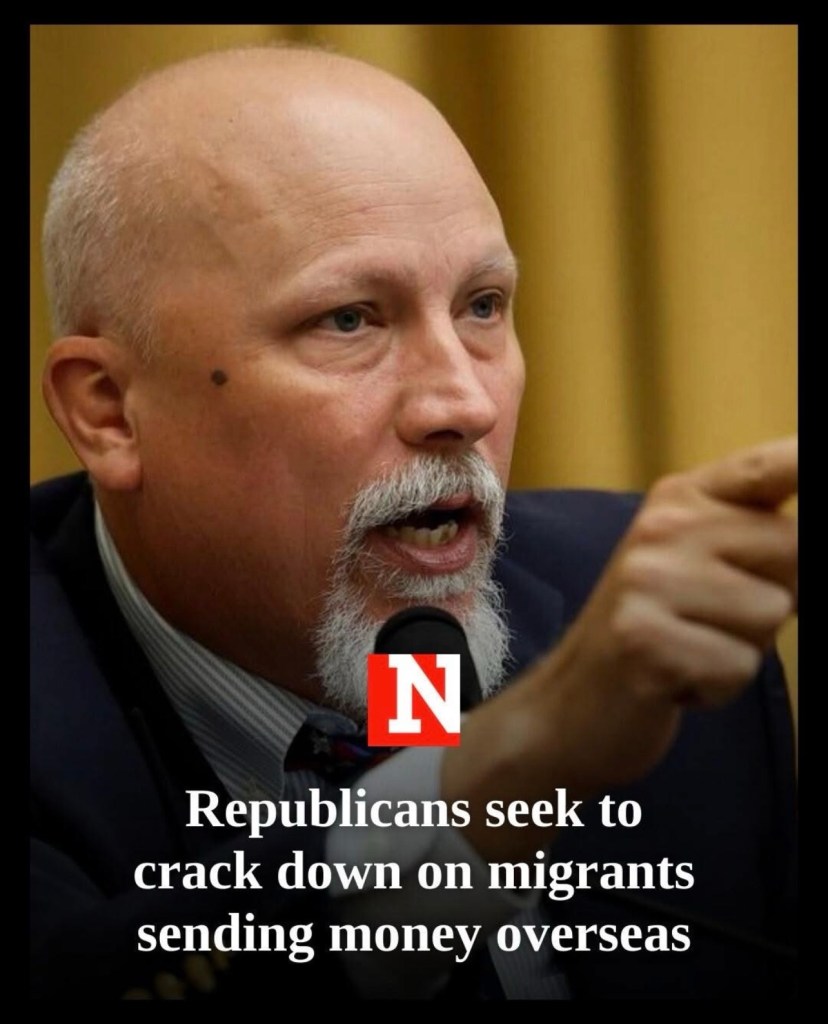
Chip Roy introduced a bill that would impose a 25 percent tax on remittances sent by non-citizens to recipients overseas.

Every year, immigrants in the United States send more than $80 billion to family members abroad. These are not luxury transfers. They are survival transfers. They are the difference between a grandmother in Manila getting her hypertension medication, or not; between a nephew in Guatemala staying in school, or dropping out to work; between a family in Haiti eating three meals a day, or one.

To tax that is to tax love.

The real people behind the numbers

Walk through any hospital in Tucson and you’ll meet the people this policy would hit first.

There’s the Filipino nurse at Banner South, working a twelve-hour shift, then sending $300 home so her parents can afford their monthly prescriptions. She already pays federal income tax, state tax, Social Security, Medicare, and every sales tax embedded in her daily life. A remittance tax would not make her “contribute more.” It would simply take from her parents’ medicine cabinet.

There’s the Mexican construction worker rebuilding homes in Vail and Oro Valley, sending money to help his sister raise her children. His remittances don’t weaken the U.S. economy — they stabilize a family that might otherwise face impossible choices.

There’s the Haitian caregiver in Phoenix who sends part of every paycheck to keep her younger brother in school. That money doesn’t disappear into some foreign void. It becomes food, tuition, and hope — the very things that reduce the desperation that fuels forced migration.

And there’s the Somali Uber driver in Tucson who sends money to a refugee camp in Kenya, not because he has extra, but because he remembers what it was like to have nothing.

These are the people a remittance tax targets. Not billionaires. Not corporations. Not offshore accounts.
Just workers. Just families. Just love.

What the policy really reveals

Supporters of a remittance tax often frame it as a matter of fairness or national interest. But the economics don’t hold. Immigrants already contribute billions in taxes — often without ever receiving the benefits. Remittances are sent from after‑tax income. And taxing them would generate little revenue while inflicting disproportionate harm.

So if it’s not about economics, what is it about?

It reveals a worldview that sees immigrants not as neighbors, coworkers, or contributors, but as targets.
It reveals a willingness to punish the poor for the crime of caring for their families.
It reveals a political project that confuses cruelty with strength.

A confident nation does not tax the money a daughter sends her mother so she can buy blood pressure medication.
A secure nation does not squeeze the poorest workers to score political points.
A morally serious nation does not weaponize policy against the very people who keep its hospitals, farms, and service industries running.

The deeper truth

Taxing remittances is not about revenue.
It is about resentment.

It is not about fiscal responsibility.
It is about cultural punishment.

It is not about strengthening America.
It is about narrowing who gets to belong.

Immigrants do not send money home because they are disloyal. They send money home because they are human — because love does not stop at borders, because responsibility does not end with migration, because family is not a taxable commodity.

A remittance tax tells us nothing about immigrants.
But it tells us everything about those who want to tax them.
The Deal That Worked — And the Decision That Broke It

(Readers are encouraged to confirm details with trusted, authoritative sources.)

In a moment when global tensions feel dangerously combustible, it is worth remembering that the world once had a functioning, peaceful mechanism to restrain Iran’s nuclear ambitions. It wasn’t perfect, and it wasn’t permanent, but it worked — and it worked because diplomacy was allowed to do what missiles and threats cannot.

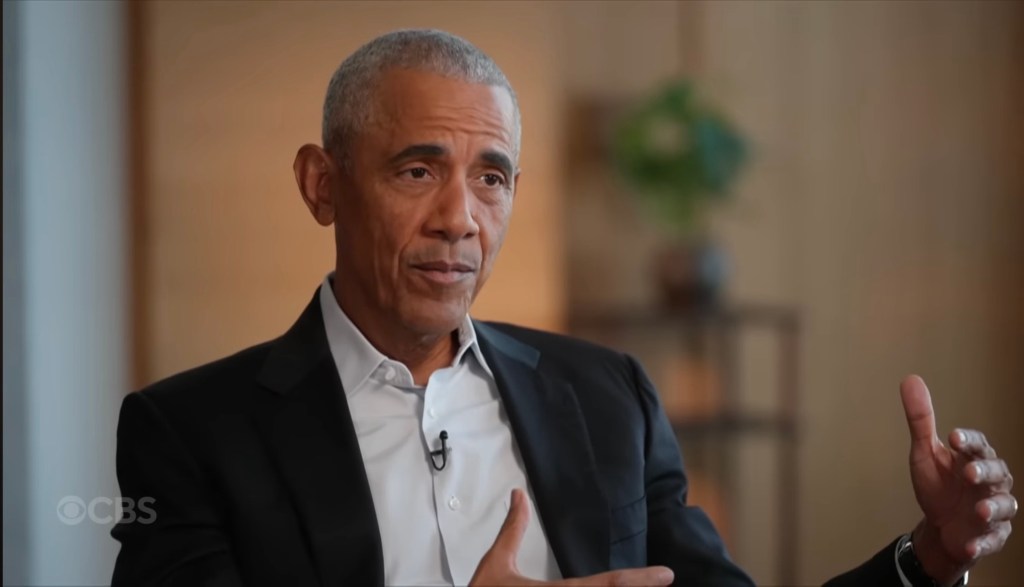
“We Pulled It Off Without Firing A Missile” – President Obama On The 2015 Iran Nuclear Deal

The Joint Comprehensive Plan of Action (JCPOA), negotiated in 2015, dramatically reduced Iran’s nuclear capacity. According to publicly available International Atomic Energy Agency (IAEA) reports, Iran shipped out roughly 97% of its enriched uranium, dismantled thousands of centrifuges, redesigned its Arak reactor to prevent plutonium production, and accepted one of the most intrusive inspection regimes ever implemented. Inspectors were on the ground. Cameras were in place. Supply chains were monitored. Breakout time — the period Iran would need to produce weapons‑grade material — was extended significantly.

In short: the world had visibility, leverage, and time.

Then, in 2018, the United States unilaterally withdrew from the agreement. Not because the IAEA found violations. Not because the deal collapsed. Not because a better alternative had been negotiated. The withdrawal was political, not evidentiary — a reversal driven by domestic considerations rather than international security assessments.

The consequences were predictable. With the restraints gone and sanctions reimposed, Iran accelerated its enrichment, reduced inspector access, and moved closer to the nuclear threshold than at any point under the deal. Analysts across the political spectrum have noted that the post‑withdrawal landscape is more opaque, more volatile, and more dangerous.

It is tempting to treat today’s crisis as inevitable — as if the Middle East is destined to burn, as if nuclear brinkmanship is simply the natural order of things. But inevitability is a myth. There was a period when diplomacy held the line, when inspectors had access, when uranium stockpiles were a fraction of what they are now.

We had a working agreement.
We had a verifiable system.
We had a peaceful path that kept Iran farther from a bomb.

And then it was abandoned.

The lesson is not about nostalgia for a past administration, nor is it about assigning partisan blame. It is about recognizing the cost of dismantling functioning structures simply because they were built by someone else. Foreign policy cannot be governed by personal vendettas or symbolic gestures. The world is too fragile, and the stakes are too high.

If we are to navigate the present moment with any wisdom, we must remember this:

Diplomacy is not weakness. Verification is not naïveté. And tearing down what works is not leadership.

When Power Turns Toward the Young: A Reflection on Youth, Fitness, and the Shape of a Nation

(Readers should confirm all political details with trusted sources.)

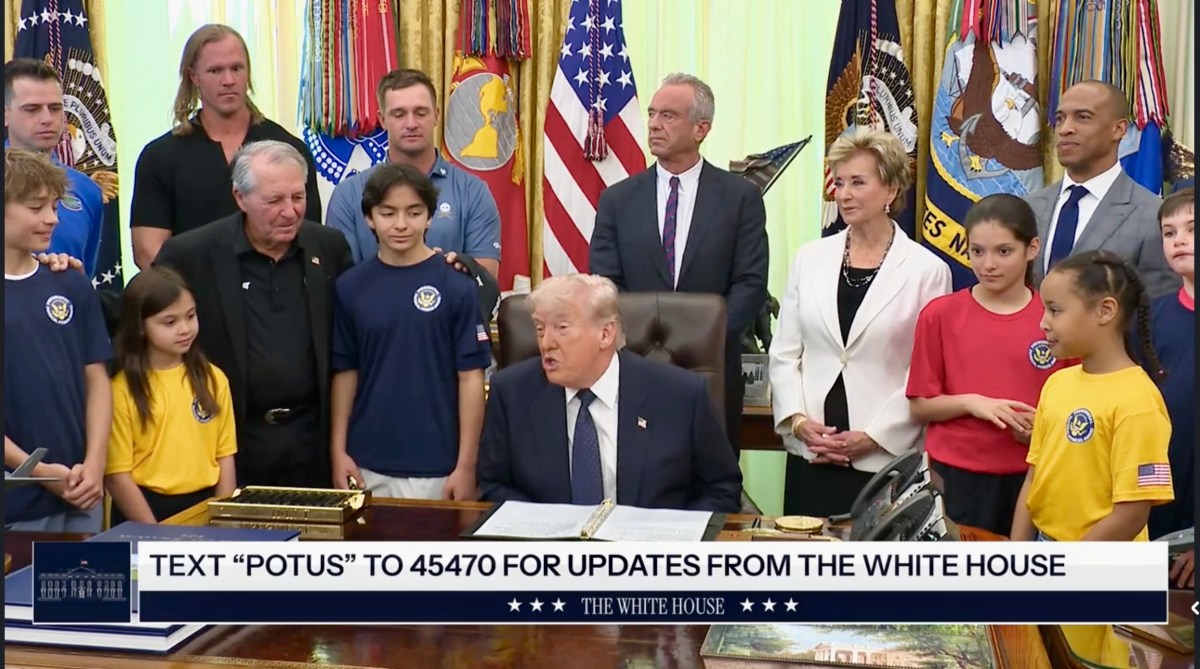
There are moments in civic life when a public proclamation lands with a weight that is not entirely its own. President Donald Trump’s recent call to revive a national youth physical fitness test is one such moment. On the surface, it resembles the familiar rituals of school gymnasiums — the shuttle run, the pull‑up bar, the stopwatch in a coach’s hand. But beneath the nostalgia lies a deeper question about how a nation imagines its future, and what it asks of its children.

This reflection is not about equivalence. It is about discernment — the quiet, necessary work of noticing the shape of things as they unfold.

The Young as a Mirror of National Longing

Every society, especially in seasons of uncertainty, turns its gaze toward the young. They become the canvas on which a nation paints its hopes, anxieties, and unfinished dreams. Throughout the last century, governments of many kinds — democratic, authoritarian, and everything in between — have used youth programs to cultivate a particular vision of citizenship.

Physical fitness often becomes the doorway. It is tangible. It is measurable. It carries symbolic weight. A strong body can be framed as a sign of a strong nation.

But history teaches us that when a government turns its attention to the bodies of the young, it is rarely only about health.

It is about formation.

A Pattern Older Than Any One Leader

Across the 20th century, a recognizable pattern emerges:

  • Youth are framed as the key to national renewal.
  • Programs begin with fitness, discipline, and shared activity.
  • Physical training slowly blends with civic or ideological messaging.
  • Alternative spaces for youth formation narrow.
  • The young become symbols of the nation’s desired identity.

The most extreme examples — Nazi Germany, Fascist Italy, Maoist China — are not invoked here as comparisons, but as reminders of how easily physical formation can become moral formation, and how quickly moral formation can become political formation.

The pattern is not about a particular leader. It is about the architecture of influence.

Why This Moment Deserves Attention

Trump’s proclamation does not recreate the systems of the past. But it does echo the early moves that historians often notice when leaders speak of youth fitness in the language of national destiny:

  • a narrative of decline
  • a call for renewed discipline
  • a symbolic use of youth as carriers of national strength
  • a leader‑centered vision of what the next generation should embody

These elements are not inherently dangerous. They are, however, historically resonant. They invite us to listen closely to the story being told beneath the policy.

The Question Beneath the Question

Physical activity is good for children. Communities should encourage it. Schools should support it. The concern is not the test itself but the imagination behind it.

A democracy must ask:

  • What kind of strength are we cultivating?
  • What virtues are being attached to the young body?
  • What vision of citizenship is implied?
  • And who is shaping that vision?

Youth formation is healthiest when it is plural — when families, schools, religious communities, civic groups, the arts, and the natural world all have a voice. When that landscape narrows, even subtly, the tone of a society shifts.

The Sanctuary of Discernment

At TEdR, we return often to the idea of sanctuary — not as escape, but as clarity. A place where the noise of public life quiets enough for us to hear the deeper currents beneath it.

Trump’s proclamation invites such sanctuary. It invites us to pause, to breathe, to ask what story is being told about our children and our future. It invites us to remember that youth programs are never just about youth. They are about the kind of society we are becoming, and the kind of citizens that future requires.

The work before us is not to react, but to discern. Not to fear, but to stay awake. Not to assume the worst, but to refuse to look away.

In the end, the question is simple and ancient:

What do we believe a child is for?

Everything else flows from that.

Two Stories, One Pattern — When “Disruptive” Becomes a National Security Issue

There are two stories circulating right now — one verified, one unverified — and together they raise a question about the presidency that goes beyond partisanship.

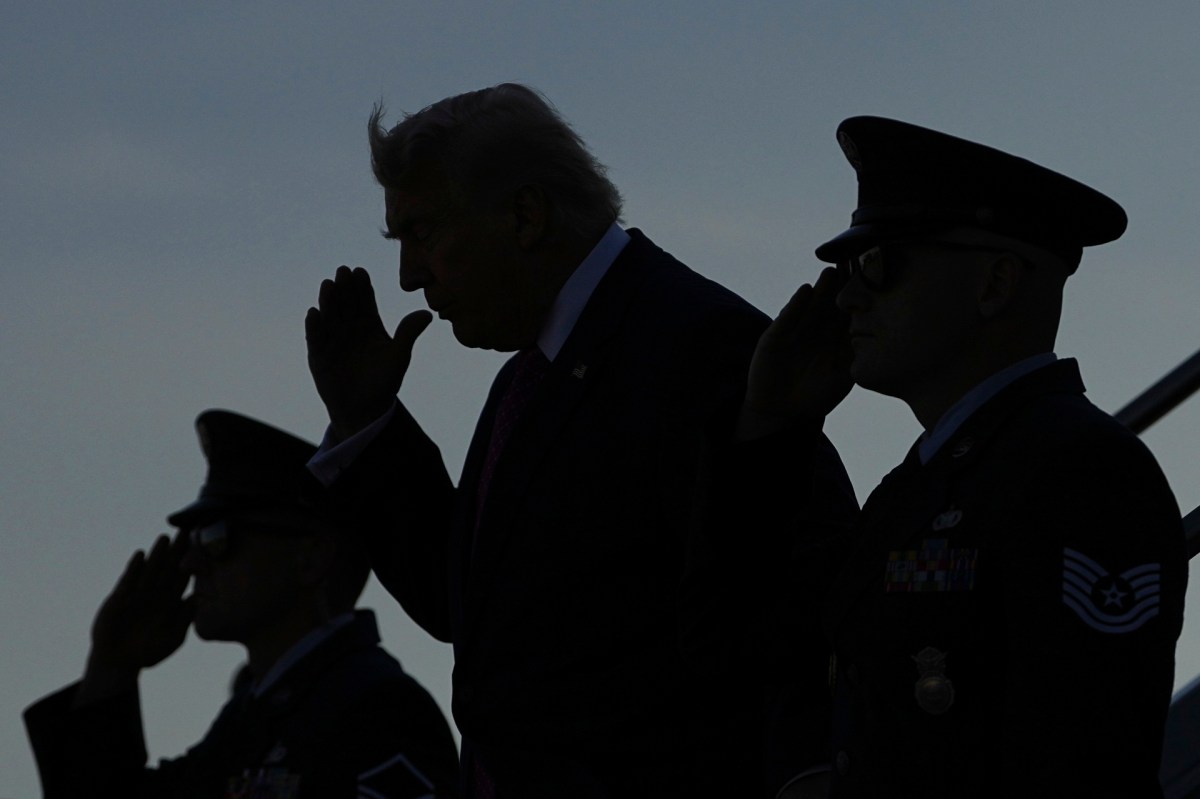
The first story comes from credible reporting. The Wall Street Journal documented that during a high‑stakes Iran‑related rescue operation, senior officials intentionally kept the President out of the Situation Room because they feared his presence would be “disruptive.”

That word wasn’t invented by critics. It came from officials responsible for managing a delicate military mission.
It is unusual — and telling — for a commander‑in‑chief to be treated as a potential obstacle during an operation requiring precision and discipline.

The second story is different. It comes from a single podcast appearance by a former CIA analyst Larry Johnson and has no independent verification. No major news outlet has confirmed it, and parts of the claim contradict established nuclear command procedures. It is, at this point, an allegation — not a fact.

Johnson claimed that during an “emergency” White House meeting, Donald Trump sought to “use the nuclear codes” against Iran and that General Dan Caine supposedly refused. He described it as a dramatic confrontation.

But even as an unverified claim, its virality says something about the public mood. People are primed to believe it because the idea of a president behaving impulsively in matters of national security no longer feels unthinkable. The ground has shifted.

That’s the real story.

When the presidency becomes associated with unpredictability, when senior officials feel the need to manage around the president rather than with him, when the word “disruptive” appears in reporting about military operations — that’s not a partisan critique. That’s a structural concern.

The office of the presidency carries nuclear authority, diplomatic weight, and the responsibility to steady the nation in moments of crisis.

If the person holding that office is perceived — by their own team — as someone who might derail a mission simply by entering the room, that perception alone becomes a national‑security issue.

Two stories. One verified, one not.
But both point to the same unsettling truth: the stability of the presidency matters, not just for politics, but for the safety of the country.