
Why Taxing Remittances Reveals Something Deeper About Those Targeting Immigration and Immigrants

Every proposal to tax immigrant remittances begins with the same claim: immigrants aren’t paying their fair share. But the truth is simpler and more revealing. A remittance tax isn’t an economic strategy. It’s a moral signal — and not a flattering one.
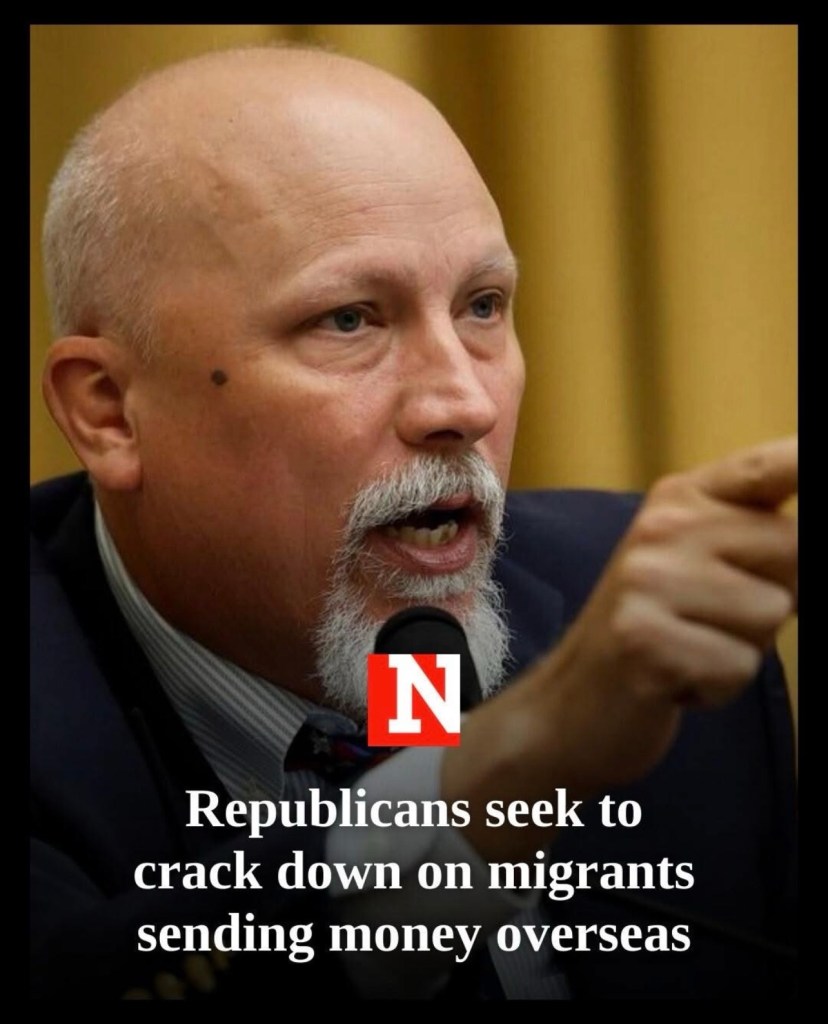
Chip Roy introduced a bill that would impose a 25 percent tax on remittances sent by non-citizens to recipients overseas.

Every year, immigrants in the United States send more than $80 billion to family members abroad. These are not luxury transfers. They are survival transfers. They are the difference between a grandmother in Manila getting her hypertension medication, or not; between a nephew in Guatemala staying in school, or dropping out to work; between a family in Haiti eating three meals a day, or one.

To tax that is to tax love.

The real people behind the numbers

Walk through any hospital in Tucson and you’ll meet the people this policy would hit first.

There’s the Filipino nurse at Banner South, working a twelve-hour shift, then sending $300 home so her parents can afford their monthly prescriptions. She already pays federal income tax, state tax, Social Security, Medicare, and every sales tax embedded in her daily life. A remittance tax would not make her “contribute more.” It would simply take from her parents’ medicine cabinet.

There’s the Mexican construction worker rebuilding homes in Vail and Oro Valley, sending money to help his sister raise her children. His remittances don’t weaken the U.S. economy — they stabilize a family that might otherwise face impossible choices.

There’s the Haitian caregiver in Phoenix who sends part of every paycheck to keep her younger brother in school. That money doesn’t disappear into some foreign void. It becomes food, tuition, and hope — the very things that reduce the desperation that fuels forced migration.

And there’s the Somali Uber driver in Tucson who sends money to a refugee camp in Kenya, not because he has extra, but because he remembers what it was like to have nothing.

These are the people a remittance tax targets. Not billionaires. Not corporations. Not offshore accounts.
Just workers. Just families. Just love.

What the policy really reveals

Supporters of a remittance tax often frame it as a matter of fairness or national interest. But the economics don’t hold. Immigrants already contribute billions in taxes — often without ever receiving the benefits. Remittances are sent from after‑tax income. And taxing them would generate little revenue while inflicting disproportionate harm.

So if it’s not about economics, what is it about?

It reveals a worldview that sees immigrants not as neighbors, coworkers, or contributors, but as targets.
It reveals a willingness to punish the poor for the crime of caring for their families.
It reveals a political project that confuses cruelty with strength.

A confident nation does not tax the money a daughter sends her mother so she can buy blood pressure medication.
A secure nation does not squeeze the poorest workers to score political points.
A morally serious nation does not weaponize policy against the very people who keep its hospitals, farms, and service industries running.

The deeper truth

Taxing remittances is not about revenue.
It is about resentment.

It is not about fiscal responsibility.
It is about cultural punishment.

It is not about strengthening America.
It is about narrowing who gets to belong.

Immigrants do not send money home because they are disloyal. They send money home because they are human — because love does not stop at borders, because responsibility does not end with migration, because family is not a taxable commodity.

A remittance tax tells us nothing about immigrants.
But it tells us everything about those who want to tax them.


When Crisis Becomes a Business Model

Every time global tension rattles the oil markets, the pattern repeats itself with unnerving precision. Ordinary Americans pay more at the pump, and a small circle of fossil‑fuel executives see their profits swell. It’s a cycle so familiar that it barely registers as news anymore — but the speed and scale of the most recent price spike should force us to look more closely at who benefits when the world is on fire.

After the U.S. strikes in Iran, gas prices rose sharply, as they almost always do when conflict touches an oil‑producing region. Economists have been explaining this dynamic for decades: instability raises risk, risk raises prices, and consumers absorb the cost. What’s different now is how openly some political figures frame these spikes as opportunities rather than burdens.

In a recent post, Donald Trump wrote that “we make a lot of money” when oil prices rise. He didn’t specify who “we” refers to, but the beneficiaries are not hard to identify. The people who profit most from volatility are the same executives who have spent years funding campaigns, lobbying for deregulation, and securing tax incentives that tilt the playing field in their favor.

And the markets responded exactly as expected. Analysts at outlets like the Financial Times noted that if elevated crude prices hold, major U.S. oil and gas companies could see tens of billions in additional revenue this year. Publicly traded firms signaled to investors that they were well positioned to capitalize on the moment. None of this requires speculation; it’s how commodity markets function.

Several of the companies now poised to benefit have long‑standing financial ties to Trump‑aligned political groups. Their CEOs have appeared on earnings calls describing how global instability strengthens their competitive position. That doesn’t prove intent behind any military decision — but it does reveal alignment. Policies that loosen regulations, expand tax incentives, or weaken oversight consistently reward the same donors who help keep certain politicians in power.

This is the architecture of influence in American politics:

  • Wealthy donors fund campaigns.
  • Those campaigns produce policies that increase donor profits.
  • Those profits then finance the next round of political influence.

Meanwhile, the public pays the bill — in higher fuel costs, higher transportation costs, and higher household expenses.

And the pattern isn’t confined to fossil fuels. In the tech sector, leaders are increasingly candid about the societal consequences of their own products. When a major AI executive acknowledges on national television that his technology could reshape the labor market in ways that disproportionately affect highly educated women — and then shrugs off the implications — it exposes the same concentration of power, the same absence of accountability, the same confidence that no one will stop them.

These are not isolated anecdotes. They are symptoms of a political economy where a handful of industries have the resources to shape policy outcomes in ways that serve their interests, even when those outcomes harm the broader public.

Taxing extreme wealth and enforcing meaningful checks on corporate power are not radical proposals. They are the basic tools of a functioning democracy — one in which public policy is shaped by the needs of the many rather than the profits of the few.

If we want a political system that works for ordinary people, we have to confront the cycle that rewards the same small group every time crisis hits. Until then, volatility will remain a business model, and the rest of us will keep paying for it.