Why Taxing Remittances Reveals Something Deeper About Those Targeting Immigration and Immigrants

Every proposal to tax immigrant remittances begins with the same claim: immigrants aren’t paying their fair share. But the truth is simpler and more revealing. A remittance tax isn’t an economic strategy. It’s a moral signal — and not a flattering one.

Chip Roy introduced a bill that would impose a 25 percent tax on remittances sent by non-citizens to recipients overseas.

Every year, immigrants in the United States send more than $80 billion to family members abroad. These are not luxury transfers. They are survival transfers. They are the difference between a grandmother in Manila getting her hypertension medication, or not; between a nephew in Guatemala staying in school, or dropping out to work; between a family in Haiti eating three meals a day, or one.

To tax that is to tax love.

The real people behind the numbers

Walk through any hospital in Tucson and you’ll meet the people this policy would hit first.

There’s the Filipino nurse at Banner South, working a twelve-hour shift, then sending $300 home so her parents can afford their monthly prescriptions. She already pays federal income tax, state tax, Social Security, Medicare, and every sales tax embedded in her daily life. A remittance tax would not make her “contribute more.” It would simply take from her parents’ medicine cabinet.

There’s the Mexican construction worker rebuilding homes in Vail and Oro Valley, sending money to help his sister raise her children. His remittances don’t weaken the U.S. economy — they stabilize a family that might otherwise face impossible choices.

There’s the Haitian caregiver in Phoenix who sends part of every paycheck to keep her younger brother in school. That money doesn’t disappear into some foreign void. It becomes food, tuition, and hope — the very things that reduce the desperation that fuels forced migration.

And there’s the Somali Uber driver in Tucson who sends money to a refugee camp in Kenya, not because he has extra, but because he remembers what it was like to have nothing.

These are the people a remittance tax targets. Not billionaires. Not corporations. Not offshore accounts.
Just workers. Just families. Just love.

What the policy really reveals

Supporters of a remittance tax often frame it as a matter of fairness or national interest. But the economics don’t hold. Immigrants already contribute billions in taxes — often without ever receiving the benefits. Remittances are sent from after‑tax income. And taxing them would generate little revenue while inflicting disproportionate harm.

So if it’s not about economics, what is it about?

It reveals a worldview that sees immigrants not as neighbors, coworkers, or contributors, but as targets.
It reveals a willingness to punish the poor for the crime of caring for their families.
It reveals a political project that confuses cruelty with strength.

A confident nation does not tax the money a daughter sends her mother so she can buy blood pressure medication.
A secure nation does not squeeze the poorest workers to score political points.
A morally serious nation does not weaponize policy against the very people who keep its hospitals, farms, and service industries running.

The deeper truth

Taxing remittances is not about revenue.
It is about resentment.

It is not about fiscal responsibility.
It is about cultural punishment.

It is not about strengthening America.
It is about narrowing who gets to belong.

Immigrants do not send money home because they are disloyal. They send money home because they are human — because love does not stop at borders, because responsibility does not end with migration, because family is not a taxable commodity.

A remittance tax tells us nothing about immigrants.
But it tells us everything about those who want to tax them.


ICE’s Training Crisis Is No Longer “News”—But It Must Not Be Forgotten

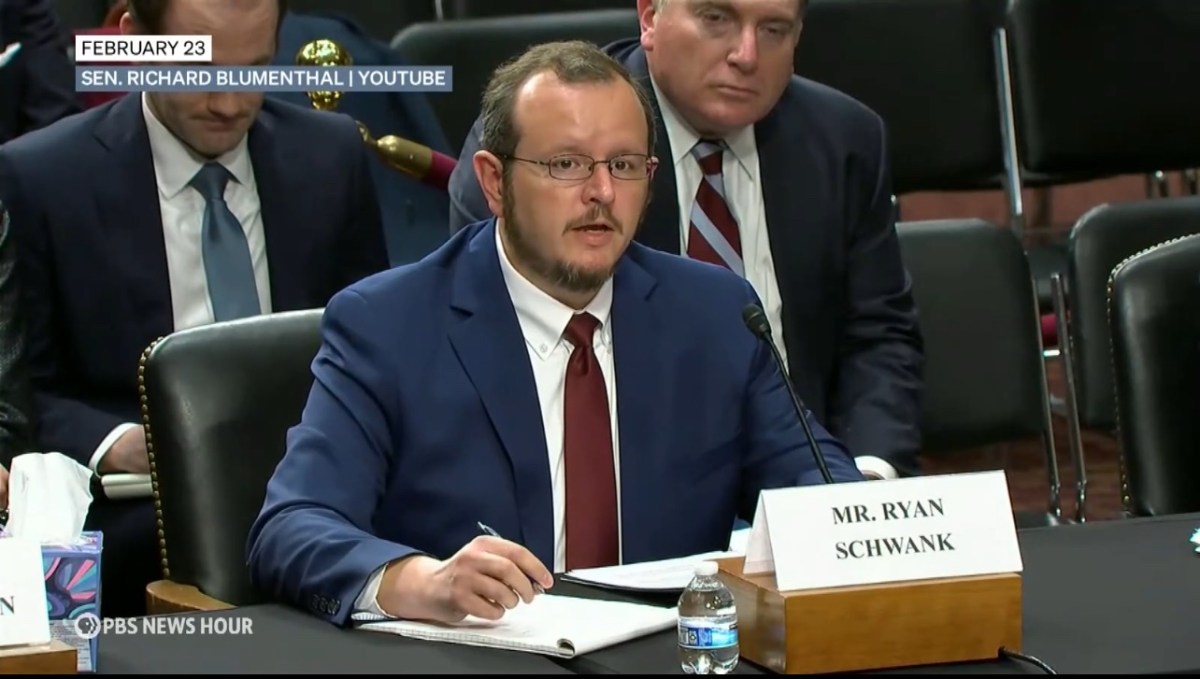
A former ICE attorney and instructor, Ryan Schwank, testified that the agency’s training program has become “deficient, defective and broken.” He described a system where essential instruction on the Constitution, lawful arrest, and use‑of‑force standards has been removed, and where new officers are being taught practices that contradict the Fourth Amendment, including entering homes without a judicial warrant. Schwank resigned so he could speak publicly, warning that rushing thousands of under‑trained officers into the field is dangerous and unlawful.

This was months ago. It is no longer “news.” And yet it is exactly the kind of truth that must not be forgotten. The public may move on, but the consequences of this training system have not. The same pipeline that contributed to fatal mistakes—including the deaths of U.S. citizens—remains in place.

Since Schwank’s testimony, very little has changed. Congress has not launched a formal investigation. DHS continues to deny the training cuts but has not provided documentation to support those denials. The hiring surge continues, sending thousands of inadequately trained officers into communities. No independent review has been initiated into the warrantless‑entry memo or the legality of the curriculum. The silence is not a sign of resolution; it is a sign of avoidance.

Forgetting is not harmless. Forgetting is how violations become normalized. Forgetting is how preventable tragedies repeat themselves. Forgetting is how public institutions drift further from the law they are sworn to uphold. The violations did not stop simply because the headlines did. The risks to the public remain active and unaddressed. And the agency responsible has not been held accountable.

ICE must be held accountable for the violations already committed. Constitutional and legal instruction must be restored. Congress must investigate the training cuts and the warrantless‑entry memo. Independent oversight must review use‑of‑force instruction, testing standards, and officer deployment. The hiring surge must be paused until training meets constitutional requirements. Families harmed by unlawful or negligent enforcement deserve transparency and justice.

This cannot be allowed to fade from public memory. A federal agency cannot be permitted to train its officers to break the law they are sworn to uphold.