
Why Taxing Remittances Reveals Something Deeper About Those Targeting Immigration and Immigrants

Every proposal to tax immigrant remittances begins with the same claim: immigrants aren’t paying their fair share. But the truth is simpler and more revealing. A remittance tax isn’t an economic strategy. It’s a moral signal — and not a flattering one.
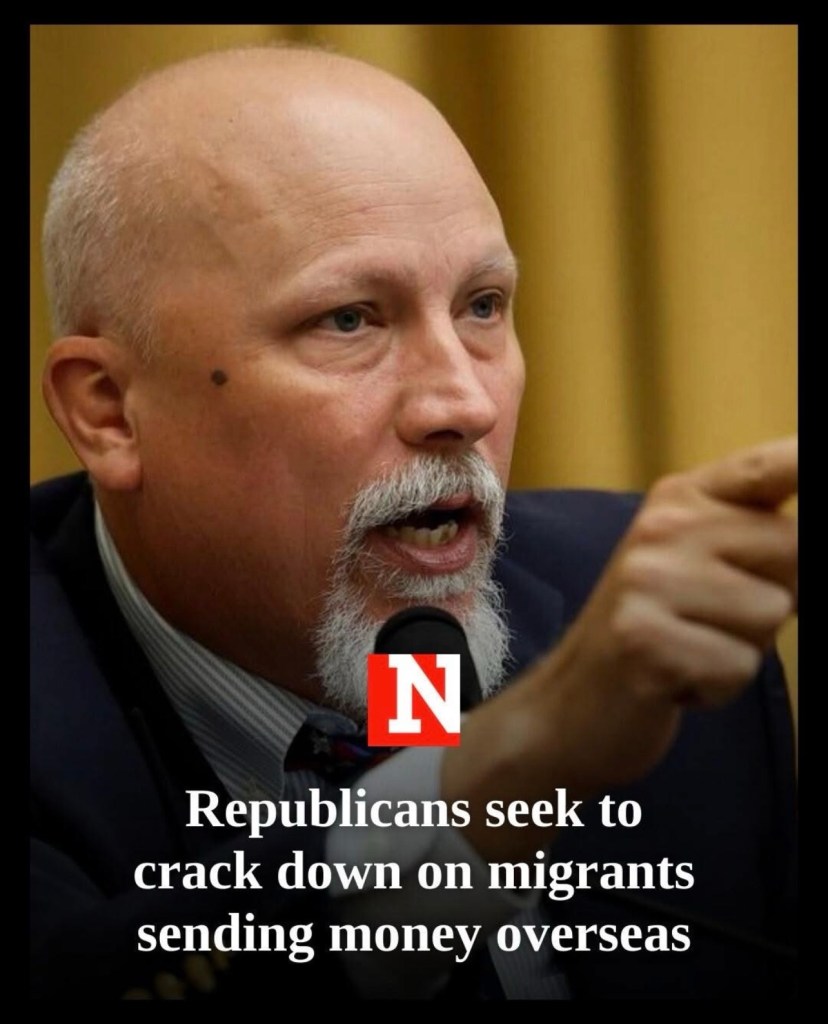
Chip Roy introduced a bill that would impose a 25 percent tax on remittances sent by non-citizens to recipients overseas.

Every year, immigrants in the United States send more than $80 billion to family members abroad. These are not luxury transfers. They are survival transfers. They are the difference between a grandmother in Manila getting her hypertension medication, or not; between a nephew in Guatemala staying in school, or dropping out to work; between a family in Haiti eating three meals a day, or one.

To tax that is to tax love.

The real people behind the numbers

Walk through any hospital in Tucson and you’ll meet the people this policy would hit first.

There’s the Filipino nurse at Banner South, working a twelve-hour shift, then sending $300 home so her parents can afford their monthly prescriptions. She already pays federal income tax, state tax, Social Security, Medicare, and every sales tax embedded in her daily life. A remittance tax would not make her “contribute more.” It would simply take from her parents’ medicine cabinet.

There’s the Mexican construction worker rebuilding homes in Vail and Oro Valley, sending money to help his sister raise her children. His remittances don’t weaken the U.S. economy — they stabilize a family that might otherwise face impossible choices.

There’s the Haitian caregiver in Phoenix who sends part of every paycheck to keep her younger brother in school. That money doesn’t disappear into some foreign void. It becomes food, tuition, and hope — the very things that reduce the desperation that fuels forced migration.

And there’s the Somali Uber driver in Tucson who sends money to a refugee camp in Kenya, not because he has extra, but because he remembers what it was like to have nothing.

These are the people a remittance tax targets. Not billionaires. Not corporations. Not offshore accounts.
Just workers. Just families. Just love.

What the policy really reveals

Supporters of a remittance tax often frame it as a matter of fairness or national interest. But the economics don’t hold. Immigrants already contribute billions in taxes — often without ever receiving the benefits. Remittances are sent from after‑tax income. And taxing them would generate little revenue while inflicting disproportionate harm.

So if it’s not about economics, what is it about?

It reveals a worldview that sees immigrants not as neighbors, coworkers, or contributors, but as targets.
It reveals a willingness to punish the poor for the crime of caring for their families.
It reveals a political project that confuses cruelty with strength.

A confident nation does not tax the money a daughter sends her mother so she can buy blood pressure medication.
A secure nation does not squeeze the poorest workers to score political points.
A morally serious nation does not weaponize policy against the very people who keep its hospitals, farms, and service industries running.

The deeper truth

Taxing remittances is not about revenue.
It is about resentment.

It is not about fiscal responsibility.
It is about cultural punishment.

It is not about strengthening America.
It is about narrowing who gets to belong.

Immigrants do not send money home because they are disloyal. They send money home because they are human — because love does not stop at borders, because responsibility does not end with migration, because family is not a taxable commodity.

A remittance tax tells us nothing about immigrants.
But it tells us everything about those who want to tax them.
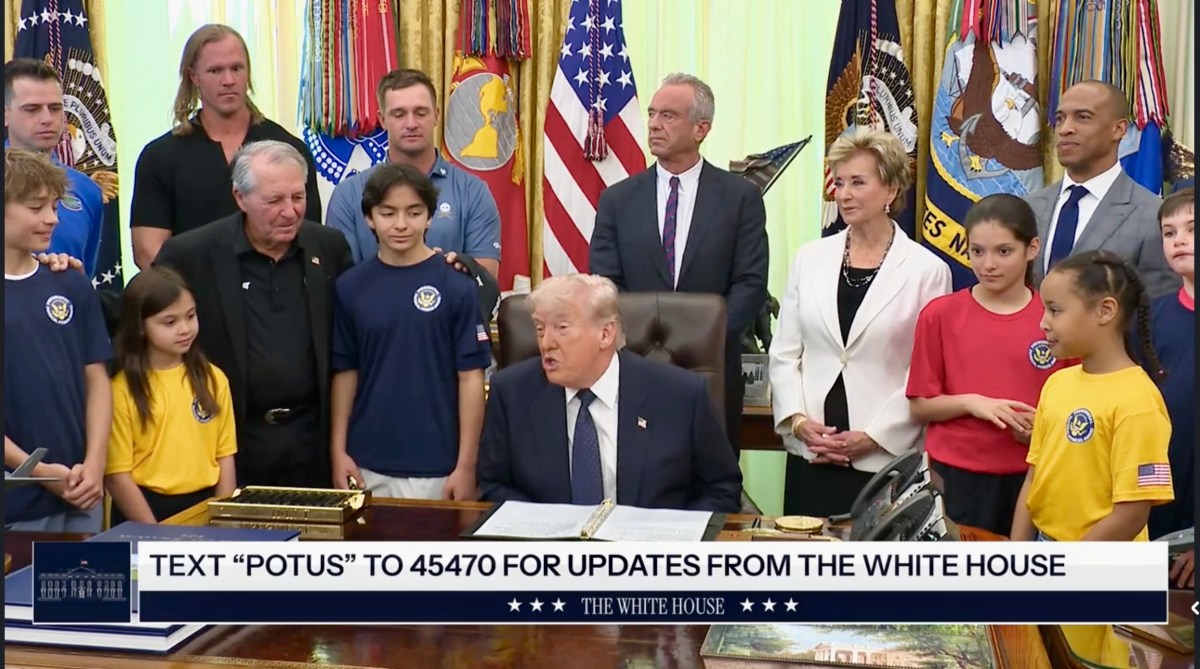

When Power Turns Toward the Young: A Reflection on Youth, Fitness, and the Shape of a Nation

(Readers should confirm all political details with trusted sources.)

There are moments in civic life when a public proclamation lands with a weight that is not entirely its own. President Donald Trump’s recent call to revive a national youth physical fitness test is one such moment. On the surface, it resembles the familiar rituals of school gymnasiums — the shuttle run, the pull‑up bar, the stopwatch in a coach’s hand. But beneath the nostalgia lies a deeper question about how a nation imagines its future, and what it asks of its children.

This reflection is not about equivalence. It is about discernment — the quiet, necessary work of noticing the shape of things as they unfold.

The Young as a Mirror of National Longing

Every society, especially in seasons of uncertainty, turns its gaze toward the young. They become the canvas on which a nation paints its hopes, anxieties, and unfinished dreams. Throughout the last century, governments of many kinds — democratic, authoritarian, and everything in between — have used youth programs to cultivate a particular vision of citizenship.

Physical fitness often becomes the doorway. It is tangible. It is measurable. It carries symbolic weight. A strong body can be framed as a sign of a strong nation.

But history teaches us that when a government turns its attention to the bodies of the young, it is rarely only about health.

It is about formation.

A Pattern Older Than Any One Leader

Across the 20th century, a recognizable pattern emerges:

  • Youth are framed as the key to national renewal.
  • Programs begin with fitness, discipline, and shared activity.
  • Physical training slowly blends with civic or ideological messaging.
  • Alternative spaces for youth formation narrow.
  • The young become symbols of the nation’s desired identity.

The most extreme examples — Nazi Germany, Fascist Italy, Maoist China — are not invoked here as comparisons, but as reminders of how easily physical formation can become moral formation, and how quickly moral formation can become political formation.

The pattern is not about a particular leader. It is about the architecture of influence.

Why This Moment Deserves Attention

Trump’s proclamation does not recreate the systems of the past. But it does echo the early moves that historians often notice when leaders speak of youth fitness in the language of national destiny:

  • a narrative of decline
  • a call for renewed discipline
  • a symbolic use of youth as carriers of national strength
  • a leader‑centered vision of what the next generation should embody

These elements are not inherently dangerous. They are, however, historically resonant. They invite us to listen closely to the story being told beneath the policy.

The Question Beneath the Question

Physical activity is good for children. Communities should encourage it. Schools should support it. The concern is not the test itself but the imagination behind it.

A democracy must ask:

  • What kind of strength are we cultivating?
  • What virtues are being attached to the young body?
  • What vision of citizenship is implied?
  • And who is shaping that vision?

Youth formation is healthiest when it is plural — when families, schools, religious communities, civic groups, the arts, and the natural world all have a voice. When that landscape narrows, even subtly, the tone of a society shifts.

The Sanctuary of Discernment

At TEdR, we return often to the idea of sanctuary — not as escape, but as clarity. A place where the noise of public life quiets enough for us to hear the deeper currents beneath it.

Trump’s proclamation invites such sanctuary. It invites us to pause, to breathe, to ask what story is being told about our children and our future. It invites us to remember that youth programs are never just about youth. They are about the kind of society we are becoming, and the kind of citizens that future requires.

The work before us is not to react, but to discern. Not to fear, but to stay awake. Not to assume the worst, but to refuse to look away.

In the end, the question is simple and ancient:

What do we believe a child is for?

Everything else flows from that.

Outruns Truth: A Reflection on Leadership and the Markets

Author’s Note: I write this reflection not as an economist, but as someone who cares deeply about the integrity of public life. My concern is not partisan; it is human. In a time when narratives often outrun the truth, I believe we owe one another the courtesy of accuracy, humility, and respect. Leadership is strongest when it tells the truth plainly, without stretching it to fit a desired story. This piece is offered in that spirit.

In his recent State of the Union Address, President Trump spoke with confidence about the strength of the stock market under his leadership. It was a bold claim, delivered with the certainty that often accompanies political speeches. But as I listened, something in me hesitated. Not out of cynicism, but out of a simple desire for truthfulness — the kind that does not stretch itself to fit a narrative.

The numbers tell a different story.

The market’s strongest gains — the remarkable climb of 2023, 2024, and the early part of 2025 — all happened before the current administration began. Those gains were already in motion long before January 2025. They were shaped by global recovery cycles, Federal Reserve policy, technological expansion, and the resilience of American companies. They were not the product of a single leader, and certainly not the product of a term that had barely begun.

Yet in the SONA, those years were gathered up and presented as evidence of presidential accomplishment.

This is where my concern lies. Not in the politics, but in the integrity of the claim.

Economists across the spectrum have long said that presidents do not control the stock market. They influence sentiment, yes. They can shape policy, yes. But the market responds to forces far larger and more complex than any one administration: global supply chains, interest rates, inflation cycles, technological innovation, geopolitical tensions, and the decisions of millions of investors acting independently.

To claim personal credit for a multi‑year rise that predates one’s term is, at best, an oversimplification. At worst, it is a quiet rewriting of the timeline — a way of gathering unearned accomplishments into one’s own narrative.

And I say this not as a partisan critique, but as a human concern.

Because leadership, at its best, is not about claiming what one has not done. It is about telling the truth even when the truth is less flattering. It is about acknowledging the work of others, the complexity of systems, and the limits of one’s own influence. It is about resisting the temptation to turn every good thing into a personal victory.

What troubles me is not the boast itself, but the pattern it represents — a pattern in which public claims drift away from public reality, and the distance between the two becomes normalized. When that happens, trust erodes. And when trust erodes, institutions weaken.

I am not asking for perfection. I am asking for honesty.

A leader does not need to own the stock market to lead well. A leader does not need to claim credit for what came before. A leader does not need to bend the timeline to appear successful.

What we need — what I long for — is a leadership that is simple, truthful, respectful, and grounded. A leadership that does not fear humility. A leadership that can say, “This rise began before me,” and still stand tall.

In a world already strained by misinformation and narrative‑shaping, truthfulness is not a luxury. It is a responsibility.

And it is one we should expect from anyone who asks to lead us.