The Deal That Worked — And the Decision That Broke It

(Readers are encouraged to confirm details with trusted, authoritative sources.)

In a moment when global tensions feel dangerously combustible, it is worth remembering that the world once had a functioning, peaceful mechanism to restrain Iran’s nuclear ambitions. It wasn’t perfect, and it wasn’t permanent, but it worked — and it worked because diplomacy was allowed to do what missiles and threats cannot.

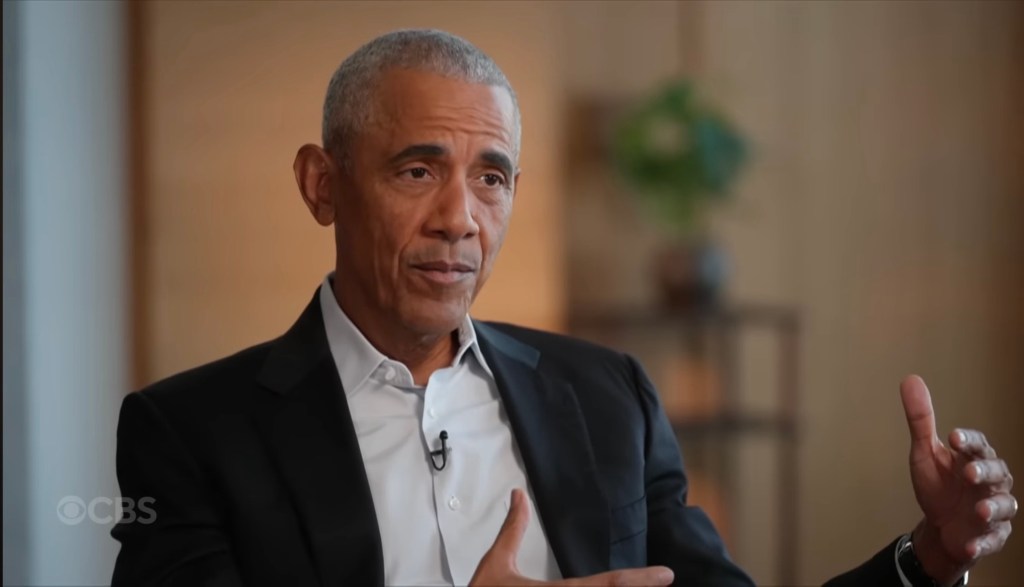
“We Pulled It Off Without Firing A Missile” – President Obama On The 2015 Iran Nuclear Deal

The Joint Comprehensive Plan of Action (JCPOA), negotiated in 2015, dramatically reduced Iran’s nuclear capacity. According to publicly available International Atomic Energy Agency (IAEA) reports, Iran shipped out roughly 97% of its enriched uranium, dismantled thousands of centrifuges, redesigned its Arak reactor to prevent plutonium production, and accepted one of the most intrusive inspection regimes ever implemented. Inspectors were on the ground. Cameras were in place. Supply chains were monitored. Breakout time — the period Iran would need to produce weapons‑grade material — was extended significantly.

In short: the world had visibility, leverage, and time.

Then, in 2018, the United States unilaterally withdrew from the agreement. Not because the IAEA found violations. Not because the deal collapsed. Not because a better alternative had been negotiated. The withdrawal was political, not evidentiary — a reversal driven by domestic considerations rather than international security assessments.

The consequences were predictable. With the restraints gone and sanctions reimposed, Iran accelerated its enrichment, reduced inspector access, and moved closer to the nuclear threshold than at any point under the deal. Analysts across the political spectrum have noted that the post‑withdrawal landscape is more opaque, more volatile, and more dangerous.

It is tempting to treat today’s crisis as inevitable — as if the Middle East is destined to burn, as if nuclear brinkmanship is simply the natural order of things. But inevitability is a myth. There was a period when diplomacy held the line, when inspectors had access, when uranium stockpiles were a fraction of what they are now.

We had a working agreement.
We had a verifiable system.
We had a peaceful path that kept Iran farther from a bomb.

And then it was abandoned.

The lesson is not about nostalgia for a past administration, nor is it about assigning partisan blame. It is about recognizing the cost of dismantling functioning structures simply because they were built by someone else. Foreign policy cannot be governed by personal vendettas or symbolic gestures. The world is too fragile, and the stakes are too high.

If we are to navigate the present moment with any wisdom, we must remember this:

Diplomacy is not weakness. Verification is not naïveté. And tearing down what works is not leadership.

Two Stories, One Pattern — When “Disruptive” Becomes a National Security Issue

There are two stories circulating right now — one verified, one unverified — and together they raise a question about the presidency that goes beyond partisanship.

The first story comes from credible reporting. The Wall Street Journal documented that during a high‑stakes Iran‑related rescue operation, senior officials intentionally kept the President out of the Situation Room because they feared his presence would be “disruptive.”

That word wasn’t invented by critics. It came from officials responsible for managing a delicate military mission.
It is unusual — and telling — for a commander‑in‑chief to be treated as a potential obstacle during an operation requiring precision and discipline.

The second story is different. It comes from a single podcast appearance by a former CIA analyst Larry Johnson and has no independent verification. No major news outlet has confirmed it, and parts of the claim contradict established nuclear command procedures. It is, at this point, an allegation — not a fact.

Johnson claimed that during an “emergency” White House meeting, Donald Trump sought to “use the nuclear codes” against Iran and that General Dan Caine supposedly refused. He described it as a dramatic confrontation.

But even as an unverified claim, its virality says something about the public mood. People are primed to believe it because the idea of a president behaving impulsively in matters of national security no longer feels unthinkable. The ground has shifted.

That’s the real story.

When the presidency becomes associated with unpredictability, when senior officials feel the need to manage around the president rather than with him, when the word “disruptive” appears in reporting about military operations — that’s not a partisan critique. That’s a structural concern.

The office of the presidency carries nuclear authority, diplomatic weight, and the responsibility to steady the nation in moments of crisis.

If the person holding that office is perceived — by their own team — as someone who might derail a mission simply by entering the room, that perception alone becomes a national‑security issue.

Two stories. One verified, one not.
But both point to the same unsettling truth: the stability of the presidency matters, not just for politics, but for the safety of the country.


Outruns Truth: A Reflection on Leadership and the Markets

Author’s Note: I write this reflection not as an economist, but as someone who cares deeply about the integrity of public life. My concern is not partisan; it is human. In a time when narratives often outrun the truth, I believe we owe one another the courtesy of accuracy, humility, and respect. Leadership is strongest when it tells the truth plainly, without stretching it to fit a desired story. This piece is offered in that spirit.

In his recent State of the Union Address, President Trump spoke with confidence about the strength of the stock market under his leadership. It was a bold claim, delivered with the certainty that often accompanies political speeches. But as I listened, something in me hesitated. Not out of cynicism, but out of a simple desire for truthfulness — the kind that does not stretch itself to fit a narrative.

The numbers tell a different story.

The market’s strongest gains — the remarkable climb of 2023, 2024, and the early part of 2025 — all happened before the current administration began. Those gains were already in motion long before January 2025. They were shaped by global recovery cycles, Federal Reserve policy, technological expansion, and the resilience of American companies. They were not the product of a single leader, and certainly not the product of a term that had barely begun.

Yet in the SONA, those years were gathered up and presented as evidence of presidential accomplishment.

This is where my concern lies. Not in the politics, but in the integrity of the claim.

Economists across the spectrum have long said that presidents do not control the stock market. They influence sentiment, yes. They can shape policy, yes. But the market responds to forces far larger and more complex than any one administration: global supply chains, interest rates, inflation cycles, technological innovation, geopolitical tensions, and the decisions of millions of investors acting independently.

To claim personal credit for a multi‑year rise that predates one’s term is, at best, an oversimplification. At worst, it is a quiet rewriting of the timeline — a way of gathering unearned accomplishments into one’s own narrative.

And I say this not as a partisan critique, but as a human concern.

Because leadership, at its best, is not about claiming what one has not done. It is about telling the truth even when the truth is less flattering. It is about acknowledging the work of others, the complexity of systems, and the limits of one’s own influence. It is about resisting the temptation to turn every good thing into a personal victory.

What troubles me is not the boast itself, but the pattern it represents — a pattern in which public claims drift away from public reality, and the distance between the two becomes normalized. When that happens, trust erodes. And when trust erodes, institutions weaken.

I am not asking for perfection. I am asking for honesty.

A leader does not need to own the stock market to lead well. A leader does not need to claim credit for what came before. A leader does not need to bend the timeline to appear successful.

What we need — what I long for — is a leadership that is simple, truthful, respectful, and grounded. A leadership that does not fear humility. A leadership that can say, “This rise began before me,” and still stand tall.

In a world already strained by misinformation and narrative‑shaping, truthfulness is not a luxury. It is a responsibility.

And it is one we should expect from anyone who asks to lead us.