
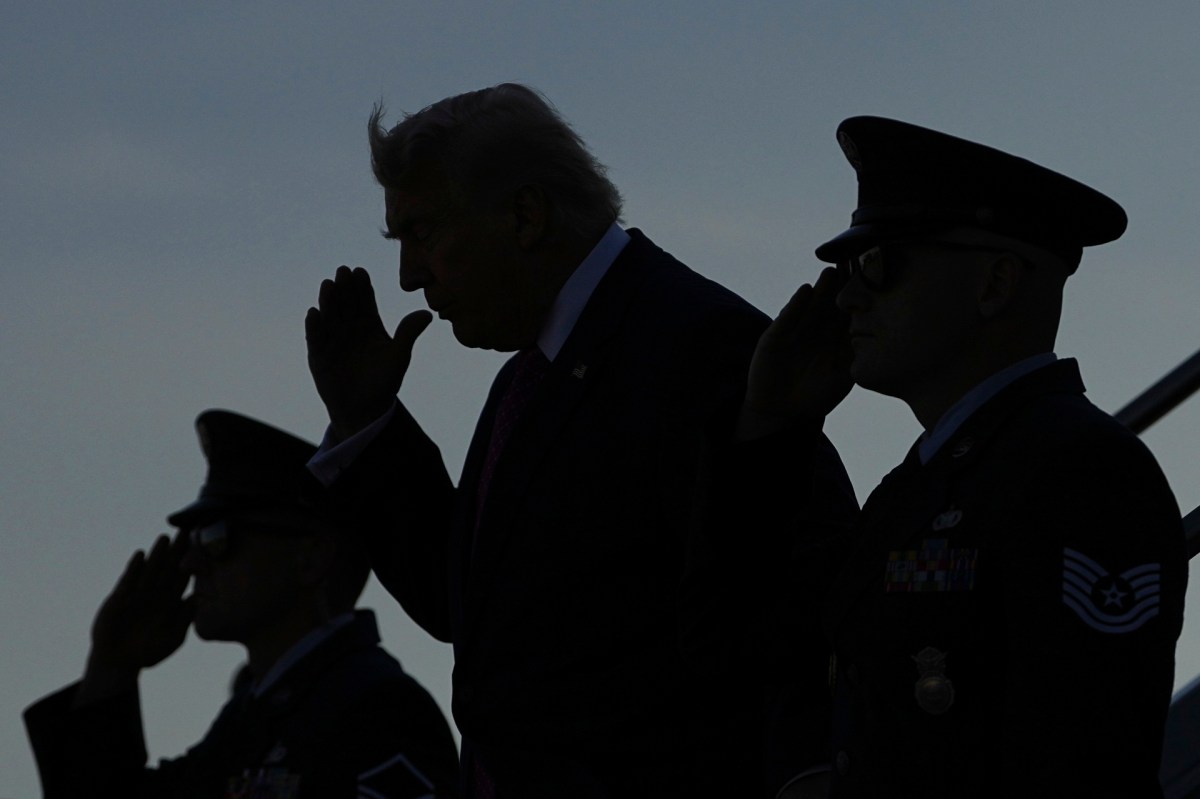
There are two stories circulating right now — one verified, one unverified — and together they raise a question about the presidency that goes beyond partisanship.
That word wasn’t invented by critics. It came from officials responsible for managing a delicate military mission.
It is unusual — and telling — for a commander‑in‑chief to be treated as a potential obstacle during an operation requiring precision and discipline.
The second story is different. It comes from a single podcast appearance by a former CIA analyst Larry Johnson and has no independent verification. No major news outlet has confirmed it, and parts of the claim contradict established nuclear command procedures. It is, at this point, an allegation — not a fact.
Johnson claimed that during an “emergency” White House meeting, Donald Trump sought to “use the nuclear codes” against Iran and that General Dan Caine supposedly refused. He described it as a dramatic confrontation.
But even as an unverified claim, its virality says something about the public mood. People are primed to believe it because the idea of a president behaving impulsively in matters of national security no longer feels unthinkable. The ground has shifted.
That’s the real story.
When the presidency becomes associated with unpredictability, when senior officials feel the need to manage around the president rather than with him, when the word “disruptive” appears in reporting about military operations — that’s not a partisan critique. That’s a structural concern.
The office of the presidency carries nuclear authority, diplomatic weight, and the responsibility to steady the nation in moments of crisis.
If the person holding that office is perceived — by their own team — as someone who might derail a mission simply by entering the room, that perception alone becomes a national‑security issue.
Two stories. One verified, one not.
But both point to the same unsettling truth: the stability of the presidency matters, not just for politics, but for the safety of the country.
