
Unknown's avatar

Posts by ed fernandez

...living life with no regrets

Queen of Qlay: A Filipino Dream for Alex Eala

By Ed Fernandez

There’s a certain kind of morning only Filipinos understand — a quiet cup of coffee, soft music in the background, and a mind that drifts toward people we root for as if they were family. Today, mine drifted toward Alex Eala, our 21‑year‑old tennis star who carries not just a racket, but the hopes of a nation that loves an underdog story.

Alex trained at the Rafa Nadal Academy in Spain, and you can see it in her game. When she unleashes one of those heavy, unreturnable, Rafa‑like forehands — the kind that seems to bounce twice before the opponent even reacts — you feel the Spanish clay in her DNA. It’s not imitation. It’s formation.

And it makes me wonder:
Could Alex Eala become the Queen of Qlay?

Yes, “Qlay” with a Q — a spelling that looks a little quirky, a little camp, a little proudly Pinoy. But that’s exactly why it works. “Clay” is a surface. “Qlay” is a title. It’s a crown. It’s a nickname only Filipinos could invent — playful, affectionate, and slightly prophetic.

But can she wear it?

Let’s be honest: clay is not yet Alex’s strongest surface. Her recent results show early exits in Madrid, Rome, and Roland Garros. Her hard‑court performances are stronger, her movement more confident, her shot tolerance more reliable.

But clay is also the surface she was trained to understand. The Nadal Academy teaches more than technique — it teaches patience, discipline, and the art of constructing points like architecture. Alex has that foundation. She has the topspin, the rally tolerance, the tactical clarity. What she needs now is refinement: the sliding, the balance, the instinctive adjustments that turn clay players into clay queens.

Her coach even says clay is her “greenest” surface. That’s not criticism. That’s opportunity.

The Serve She Needs — and the Serve She’s Building

If Alex wants to break into the top ten, she needs a stronger serve. The numbers show it. But she’s working on it. Her team knows it. And at 21, she has time to build the kind of serve that doesn’t just start the point — it dictates it.

Modern clay isn’t just about patience. It’s about power. Swiatek, Sabalenka, Rybakina — they don’t just survive rallies; they impose themselves. Alex will need to return power with power, to deliver more of those Rafa‑like heavy returns, and to slice with intention rather than desperation.

She has the tools. She needs the sharpening.

A Filipina on Red Dust

So can she become the Queen of Qlay?

Not yet.
But the possibility is real — and deeply Filipino.

Alex has:

  • the discipline
  • the Nadal training
  • the tactical mind
  • the humility
  • the cultural fire
  • the youth
  • the narrative

And she has something else — something Filipinos recognize instantly: a quiet, grounded joy. She doesn’t play angry. She plays present. She plays awake. She plays with that calm intensity we see in athletes who carry their country in their chest, not on their shoulders.

If she continues to evolve — if she strengthens her serve, refines her movement, and leans into the power exchanges that define modern clay — she could become not just a contender, but a force.

“Queen of Qlay” may sound playful now, but Filipino nicknames often begin as jokes and end as destiny.

Alex Eala is not done becoming.
And the red dust may yet be her throne.


The Fourth of July and the Fracturing of the American Imagination

Independence Day is meant to be our annual civic reset—a moment when Americans remember that the republic was not founded on uniformity, but on a shared commitment to freedom, argument, and responsibility. It is the one holiday that belongs equally to every citizen, regardless of party, persuasion, or grievance.

This year, that shared space narrowed.

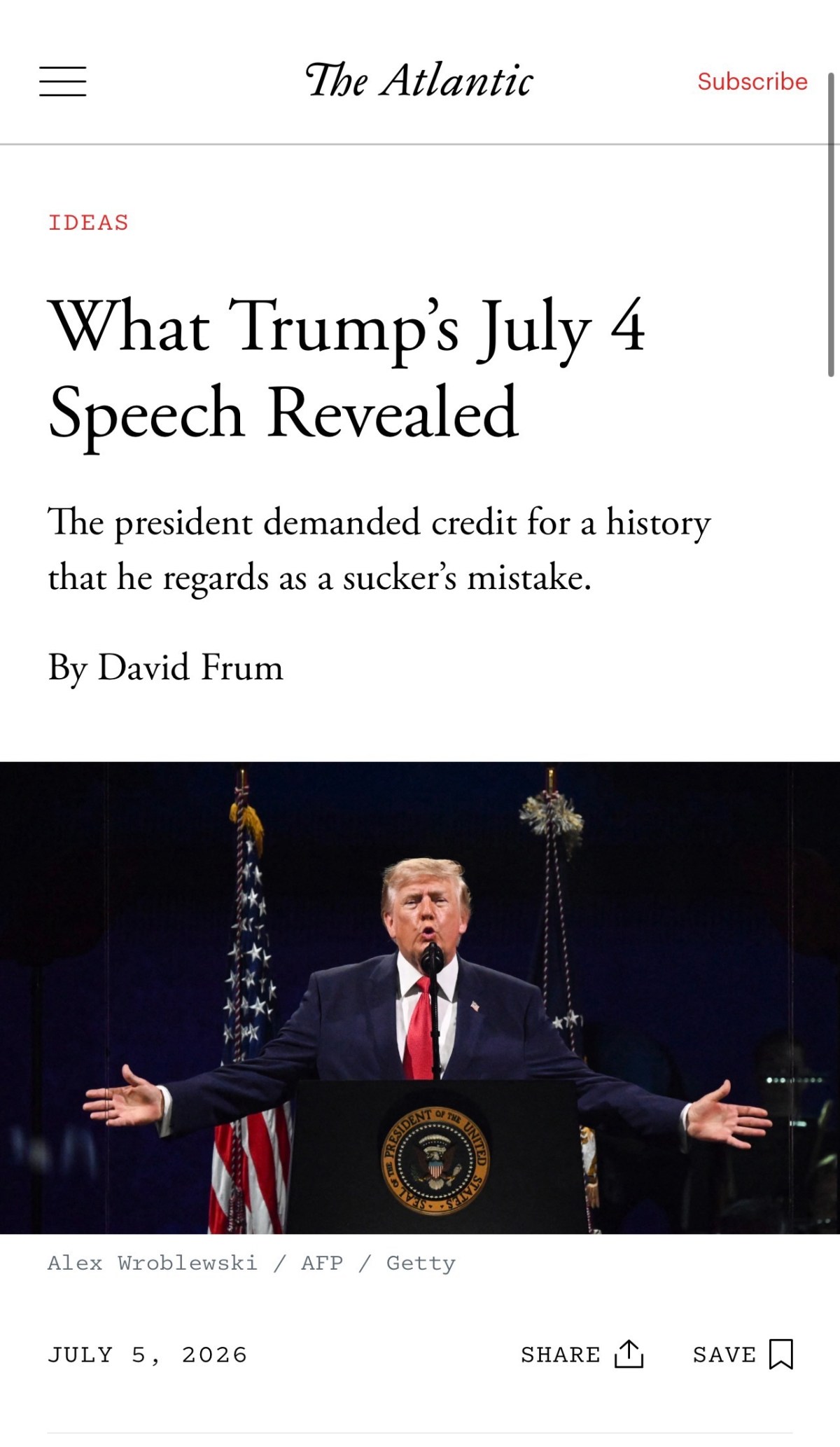
As The Atlantic observed, “Trump’s July 4 message was not a celebration of America. It was a declaration of conflict.” The holiday greeting, traditionally a gesture of national unity, instead framed the country as divided into the loyal and the disloyal, the deserving and the suspect. It was less a commemoration of independence than a warning shot across the civic landscape.

When Patriotism Becomes a Sorting Mechanism

Patriotism has always carried tension—between critique and devotion, between aspiration and reality. But it has rarely been reduced to personal allegiance to a single figure. When national identity is defined by loyalty to one leader, dissent becomes betrayal. Institutions become obstacles. Neighbors become threats.

The Atlantic piece notes that Trump “speaks of the nation as if it is already split into the loyal and the disloyal—and only one side deserves to win.” That framing is not merely divisive; it is corrosive. It trains citizens to imagine the country as a battlefield rather than a shared inheritance.

The Rhetoric of Permanent Emergency

The danger in conflict‑centered messaging is not only what it says, but what it normalizes. When leaders describe the nation as being in internal crisis, people begin to behave as if crisis is the natural state of democracy. When leaders portray opponents as enemies, supporters begin to treat disagreement as existential. When leaders insist that only they can save the nation, the institutions designed to protect the nation become expendable.

This is how polarization becomes a worldview rather than a moment.

Recovering the Civic Imagination

The work before us is not to match rhetoric with counter‑rhetoric, but to recover the civic imagination itself. Democracy requires a discipline of mind and heart: the ability to hold convictions without surrendering curiosity, to argue without erasing the humanity of the person across from us, to remember that patriotism is not a weapon but a responsibility.

July 4 should not be a stage for grievance. It should be a reminder that the American experiment survives only when citizens refuse to let fear or personality eclipse the shared work of self‑government.

A Closing Reflection

If Independence Day becomes a battlefield briefing, then the republic loses one of its few remaining rituals of common identity. The task now is stubbornly simple: to insist that the nation belongs to all of us, not to the loudest voice or the angriest grievance.

Patriotism is not a declaration of conflict. It is a commitment to each other—and to the fragile, unfinished project we call America.

Carrying the Grass: Alex Eala and the Fellowship of Fighters

There are victories that belong to the scoreboard, and there are victories that belong to the human spirit. Alex Eala’s breakthrough at Wimbledon belongs unmistakably to the latter.

Alex Eala (Wimbledon Photo Facebook*)

Her performance on the grass courts did more than advance her career; it illuminated a truth that resonates far beyond tennis. It reminded us that greatness often emerges from places where resources are thin, expectations are heavy, and the odds are rarely fair. And yet, some people rise anyway.

Filipinos everywhere felt that rise. But this moment was not ours alone. It belonged to anyone who has ever fought uphill—athletes from small federations, dreamers from overlooked communities, families who stretch their courage across generations. It belonged to those who train on borrowed courts, those who travel only when someone else can sponsor the fare, those who carry their loved ones’ hopes in their bags alongside their gear.

Alex played for all of them.

Alex on Served+

What made her Wimbledon run even more striking was how it aligned with the deeper conversation unfolding in tennis today. Andy Roddick’s recent reflections on Served captured the modern athlete’s reality: pressure that is more public, more relentless, more intertwined with identity. The court is no longer just a court; it is a stage where narratives, expectations, and global scrutiny converge.

And yet, in the middle of that storm, Alex stood with a composure that felt almost countercultural. Calm. Centered. Unrushed. She played with the clarity of someone who understands that pressure is not an enemy—it is a companion that sharpens purpose.

Her presence on the grass was not loud, but it was unmistakably strong. It carried the quiet defiance of someone who has learned to expand into the moment rather than shrink from it. That expansion was felt not only in the Philippines but across communities worldwide who know what it means to rise from difficult odds.

Wimbledon, with all its tradition and gravity, has always been a cathedral of tennis. But this year, Alex reminded us that it can also be a place where new stories begin—stories written by those who were never expected to be there, yet arrive with a presence that makes everyone sit up a little straighter.

Her victory is not just a win for a nation. It is a win for a fellowship of fighters: the child practicing in the heat, the parent sacrificing quietly, the coach believing fiercely, the supporter watching from afar because travel is a luxury. It is a win for anyone who has ever whispered someday and meant it.

Alex Eala did not simply play at Wimbledon. She carried people—Filipinos, yes, but also the countless others who know what it means to fight against all odds. And in doing so, she made the grass feel a little more accessible for everyone who dreams.

Her story is still being written. But this chapter, this moment, belongs to all of us.


*https://www.facebook.com/share/1CpoXm3cF6/?mibextid=wwXIfr

+https://youtu.be/yH5k9GzV-CE?is=WR_cKUaLop98yNxT

An Immigrant Wonders About America’s Celebrations

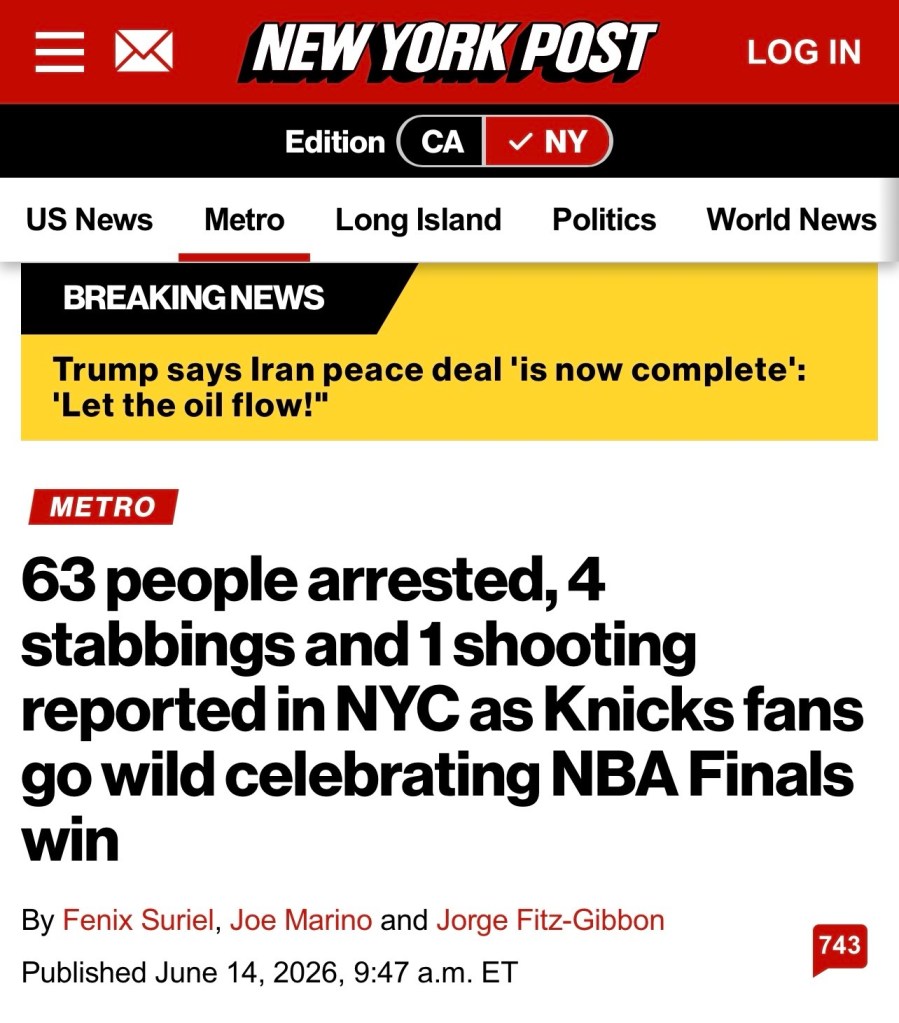
I have lived in the United States long enough to understand its history with contradictions, but some moments still leave me puzzled. The latest came after the New York Knicks won the NBA Finals — a moment of joy, relief, and civic pride. Yet the night ended with smashed windows, overturned barricades, and dozens of arrests. A celebration became a scene of chaos.

As an immigrant, I find myself asking a question I never had to ask back home:
Why does joy in America so often come with a bruise?

Where I grew up, a sports victory was a communal exhale. People laughed, shared food, teased each other, and went home with their dignity intact. The idea of celebrating by destroying property or fighting strangers would have been unthinkable — not because we were better people, but because joy was relational, not performative. You celebrated with your neighbors, not against the city.

In America, I’ve noticed something different. A small but loud minority seems to believe that celebration must be loud, unruly, even violent — as if joy is not complete until something breaks. It is not the whole country, not even most fans. But it is a pattern, and patterns deserve reflection.

Part of it is cultural. American sports fandom is not just entertainment; it is identity, tribe, and emotional outlet. A championship win feels like a personal triumph, and for some, that intensity spills over. Add alcohol, anonymity, and the adrenaline of a crowd, and the line between celebration and chaos dissolves quickly.

But there is something deeper at play. America is a nation that prizes individual freedom, sometimes to the point of forgetting that freedom without responsibility is simply permission to harm. Public order is not a shared value here in the way it is in many immigrant cultures. The threshold for “unacceptable behavior” is lower, and the consequences often feel abstract.

Still, I wonder if the real issue is emotional vocabulary. Many Americans know how to win loudly, but not how to celebrate gently. Joy becomes spectacle. Excitement becomes aggression. A moment meant for unity becomes an excuse for disorder.

And yet, I do not write this as a condemnation. I write it as someone who loves this country enough to hope for better. America is capable of extraordinary generosity, creativity, and communal spirit. I have seen it in hospitals, churches, neighborhoods, and classrooms. I have seen it in the quiet ways people care for strangers.

Which is why the violent celebrations feel so out of place — not because they reveal who Americans are, but because they obscure who Americans can be.

A championship win should be a moment of shared delight, not shared damage. A city should wake up proud, not sweeping broken glass. And joy — real joy — should never need a police barricade to contain it.

Perhaps someday, America will learn to celebrate victories the way it dreams: boldly, freely, and without leaving scars behind.


Why Taxing Remittances Reveals Something Deeper About Those Targeting Immigration and Immigrants

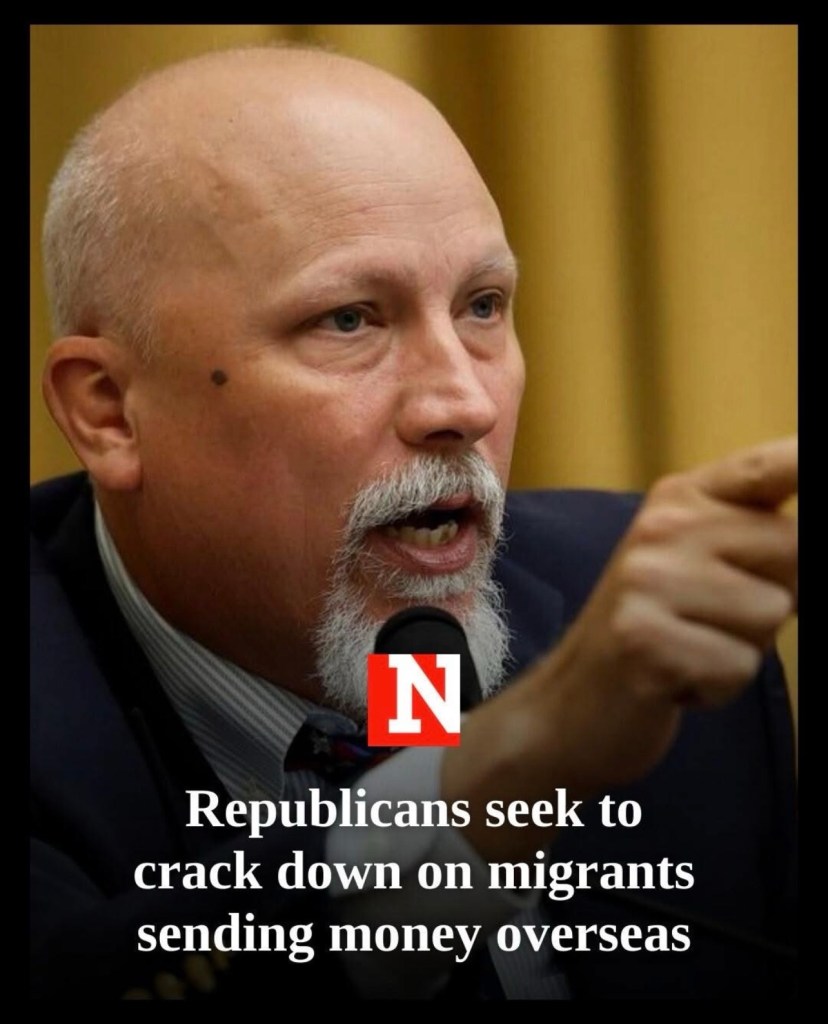
Every proposal to tax immigrant remittances begins with the same claim: immigrants aren’t paying their fair share. But the truth is simpler and more revealing. A remittance tax isn’t an economic strategy. It’s a moral signal — and not a flattering one.

Chip Roy introduced a bill that would impose a 25 percent tax on remittances sent by non-citizens to recipients overseas.

Every year, immigrants in the United States send more than $80 billion to family members abroad. These are not luxury transfers. They are survival transfers. They are the difference between a grandmother in Manila getting her hypertension medication, or not; between a nephew in Guatemala staying in school, or dropping out to work; between a family in Haiti eating three meals a day, or one.

To tax that is to tax love.

The real people behind the numbers

Walk through any hospital in Tucson and you’ll meet the people this policy would hit first.

There’s the Filipino nurse at Banner South, working a twelve-hour shift, then sending $300 home so her parents can afford their monthly prescriptions. She already pays federal income tax, state tax, Social Security, Medicare, and every sales tax embedded in her daily life. A remittance tax would not make her “contribute more.” It would simply take from her parents’ medicine cabinet.

There’s the Mexican construction worker rebuilding homes in Vail and Oro Valley, sending money to help his sister raise her children. His remittances don’t weaken the U.S. economy — they stabilize a family that might otherwise face impossible choices.

There’s the Haitian caregiver in Phoenix who sends part of every paycheck to keep her younger brother in school. That money doesn’t disappear into some foreign void. It becomes food, tuition, and hope — the very things that reduce the desperation that fuels forced migration.

And there’s the Somali Uber driver in Tucson who sends money to a refugee camp in Kenya, not because he has extra, but because he remembers what it was like to have nothing.

These are the people a remittance tax targets. Not billionaires. Not corporations. Not offshore accounts.
Just workers. Just families. Just love.

What the policy really reveals

Supporters of a remittance tax often frame it as a matter of fairness or national interest. But the economics don’t hold. Immigrants already contribute billions in taxes — often without ever receiving the benefits. Remittances are sent from after‑tax income. And taxing them would generate little revenue while inflicting disproportionate harm.

So if it’s not about economics, what is it about?

It reveals a worldview that sees immigrants not as neighbors, coworkers, or contributors, but as targets.
It reveals a willingness to punish the poor for the crime of caring for their families.
It reveals a political project that confuses cruelty with strength.

A confident nation does not tax the money a daughter sends her mother so she can buy blood pressure medication.
A secure nation does not squeeze the poorest workers to score political points.
A morally serious nation does not weaponize policy against the very people who keep its hospitals, farms, and service industries running.

The deeper truth

Taxing remittances is not about revenue.
It is about resentment.

It is not about fiscal responsibility.
It is about cultural punishment.

It is not about strengthening America.
It is about narrowing who gets to belong.

Immigrants do not send money home because they are disloyal. They send money home because they are human — because love does not stop at borders, because responsibility does not end with migration, because family is not a taxable commodity.

A remittance tax tells us nothing about immigrants.
But it tells us everything about those who want to tax them.


The Deal That Worked — And the Decision That Broke It

(Readers are encouraged to confirm details with trusted, authoritative sources.)

In a moment when global tensions feel dangerously combustible, it is worth remembering that the world once had a functioning, peaceful mechanism to restrain Iran’s nuclear ambitions. It wasn’t perfect, and it wasn’t permanent, but it worked — and it worked because diplomacy was allowed to do what missiles and threats cannot.

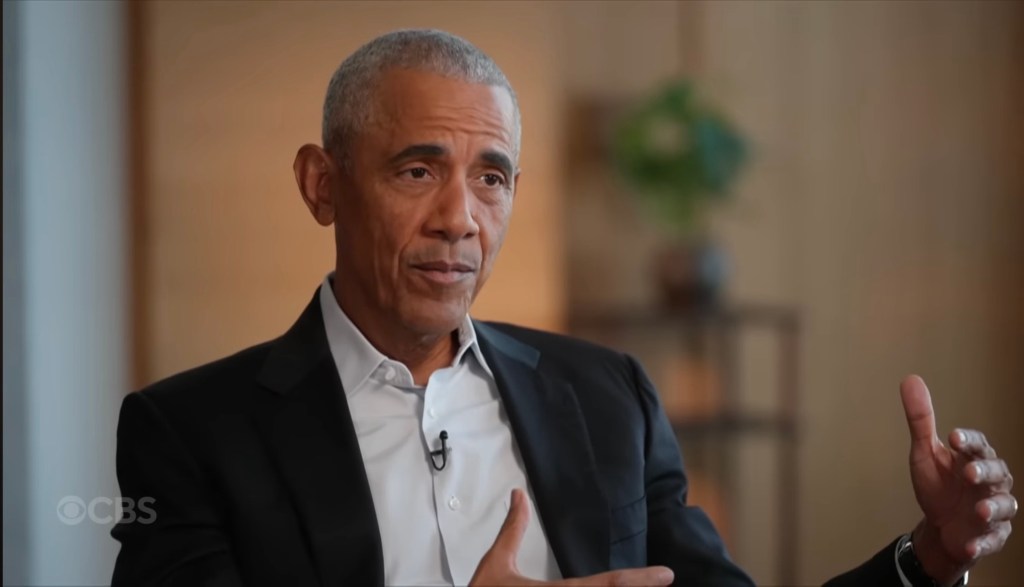
“We Pulled It Off Without Firing A Missile” – President Obama On The 2015 Iran Nuclear Deal

The Joint Comprehensive Plan of Action (JCPOA), negotiated in 2015, dramatically reduced Iran’s nuclear capacity. According to publicly available International Atomic Energy Agency (IAEA) reports, Iran shipped out roughly 97% of its enriched uranium, dismantled thousands of centrifuges, redesigned its Arak reactor to prevent plutonium production, and accepted one of the most intrusive inspection regimes ever implemented. Inspectors were on the ground. Cameras were in place. Supply chains were monitored. Breakout time — the period Iran would need to produce weapons‑grade material — was extended significantly.

In short: the world had visibility, leverage, and time.

Then, in 2018, the United States unilaterally withdrew from the agreement. Not because the IAEA found violations. Not because the deal collapsed. Not because a better alternative had been negotiated. The withdrawal was political, not evidentiary — a reversal driven by domestic considerations rather than international security assessments.

The consequences were predictable. With the restraints gone and sanctions reimposed, Iran accelerated its enrichment, reduced inspector access, and moved closer to the nuclear threshold than at any point under the deal. Analysts across the political spectrum have noted that the post‑withdrawal landscape is more opaque, more volatile, and more dangerous.

It is tempting to treat today’s crisis as inevitable — as if the Middle East is destined to burn, as if nuclear brinkmanship is simply the natural order of things. But inevitability is a myth. There was a period when diplomacy held the line, when inspectors had access, when uranium stockpiles were a fraction of what they are now.

We had a working agreement.
We had a verifiable system.
We had a peaceful path that kept Iran farther from a bomb.

And then it was abandoned.

The lesson is not about nostalgia for a past administration, nor is it about assigning partisan blame. It is about recognizing the cost of dismantling functioning structures simply because they were built by someone else. Foreign policy cannot be governed by personal vendettas or symbolic gestures. The world is too fragile, and the stakes are too high.

If we are to navigate the present moment with any wisdom, we must remember this:

Diplomacy is not weakness. Verification is not naïveté. And tearing down what works is not leadership.

When Power Turns Toward the Young: A Reflection on Youth, Fitness, and the Shape of a Nation

(Readers should confirm all political details with trusted sources.)

There are moments in civic life when a public proclamation lands with a weight that is not entirely its own. President Donald Trump’s recent call to revive a national youth physical fitness test is one such moment. On the surface, it resembles the familiar rituals of school gymnasiums — the shuttle run, the pull‑up bar, the stopwatch in a coach’s hand. But beneath the nostalgia lies a deeper question about how a nation imagines its future, and what it asks of its children.

This reflection is not about equivalence. It is about discernment — the quiet, necessary work of noticing the shape of things as they unfold.

The Young as a Mirror of National Longing

Every society, especially in seasons of uncertainty, turns its gaze toward the young. They become the canvas on which a nation paints its hopes, anxieties, and unfinished dreams. Throughout the last century, governments of many kinds — democratic, authoritarian, and everything in between — have used youth programs to cultivate a particular vision of citizenship.

Physical fitness often becomes the doorway. It is tangible. It is measurable. It carries symbolic weight. A strong body can be framed as a sign of a strong nation.

But history teaches us that when a government turns its attention to the bodies of the young, it is rarely only about health.

It is about formation.

A Pattern Older Than Any One Leader

Across the 20th century, a recognizable pattern emerges:

  • Youth are framed as the key to national renewal.
  • Programs begin with fitness, discipline, and shared activity.
  • Physical training slowly blends with civic or ideological messaging.
  • Alternative spaces for youth formation narrow.
  • The young become symbols of the nation’s desired identity.

The most extreme examples — Nazi Germany, Fascist Italy, Maoist China — are not invoked here as comparisons, but as reminders of how easily physical formation can become moral formation, and how quickly moral formation can become political formation.

The pattern is not about a particular leader. It is about the architecture of influence.

Why This Moment Deserves Attention

Trump’s proclamation does not recreate the systems of the past. But it does echo the early moves that historians often notice when leaders speak of youth fitness in the language of national destiny:

  • a narrative of decline
  • a call for renewed discipline
  • a symbolic use of youth as carriers of national strength
  • a leader‑centered vision of what the next generation should embody

These elements are not inherently dangerous. They are, however, historically resonant. They invite us to listen closely to the story being told beneath the policy.

The Question Beneath the Question

Physical activity is good for children. Communities should encourage it. Schools should support it. The concern is not the test itself but the imagination behind it.

A democracy must ask:

  • What kind of strength are we cultivating?
  • What virtues are being attached to the young body?
  • What vision of citizenship is implied?
  • And who is shaping that vision?

Youth formation is healthiest when it is plural — when families, schools, religious communities, civic groups, the arts, and the natural world all have a voice. When that landscape narrows, even subtly, the tone of a society shifts.

The Sanctuary of Discernment

At TEdR, we return often to the idea of sanctuary — not as escape, but as clarity. A place where the noise of public life quiets enough for us to hear the deeper currents beneath it.

Trump’s proclamation invites such sanctuary. It invites us to pause, to breathe, to ask what story is being told about our children and our future. It invites us to remember that youth programs are never just about youth. They are about the kind of society we are becoming, and the kind of citizens that future requires.

The work before us is not to react, but to discern. Not to fear, but to stay awake. Not to assume the worst, but to refuse to look away.

In the end, the question is simple and ancient:

What do we believe a child is for?

Everything else flows from that.

Two Stories, One Pattern — When “Disruptive” Becomes a National Security Issue

There are two stories circulating right now — one verified, one unverified — and together they raise a question about the presidency that goes beyond partisanship.

The first story comes from credible reporting. The Wall Street Journal documented that during a high‑stakes Iran‑related rescue operation, senior officials intentionally kept the President out of the Situation Room because they feared his presence would be “disruptive.”

That word wasn’t invented by critics. It came from officials responsible for managing a delicate military mission.
It is unusual — and telling — for a commander‑in‑chief to be treated as a potential obstacle during an operation requiring precision and discipline.

The second story is different. It comes from a single podcast appearance by a former CIA analyst Larry Johnson and has no independent verification. No major news outlet has confirmed it, and parts of the claim contradict established nuclear command procedures. It is, at this point, an allegation — not a fact.

Johnson claimed that during an “emergency” White House meeting, Donald Trump sought to “use the nuclear codes” against Iran and that General Dan Caine supposedly refused. He described it as a dramatic confrontation.

But even as an unverified claim, its virality says something about the public mood. People are primed to believe it because the idea of a president behaving impulsively in matters of national security no longer feels unthinkable. The ground has shifted.

That’s the real story.

When the presidency becomes associated with unpredictability, when senior officials feel the need to manage around the president rather than with him, when the word “disruptive” appears in reporting about military operations — that’s not a partisan critique. That’s a structural concern.

The office of the presidency carries nuclear authority, diplomatic weight, and the responsibility to steady the nation in moments of crisis.

If the person holding that office is perceived — by their own team — as someone who might derail a mission simply by entering the room, that perception alone becomes a national‑security issue.

Two stories. One verified, one not.
But both point to the same unsettling truth: the stability of the presidency matters, not just for politics, but for the safety of the country.


When Moral Speech Is Mistaken for Politics

There is a category error many people make when a religious leader speaks into public life.
They hear politics.
But what is being offered is moral witness.

A religious authority does not speak as a rival power to the state. The task is not to govern, mobilize voters, or draft policy. The task is simpler—and harder: to speak truthfully about human dignity, justice, mercy, and responsibility as revealed in the Gospel.

When that speech challenges a political leader, the instinct is to translate it into political terms.
Who is siding with whom?
Which party benefits?
Who is attacking whom?

That translation is the mistake.

The church does not address the state as a political opponent, but as a moral interlocutor.

This is not new. The Hebrew prophets spoke to kings. John the Baptist spoke to Herod. Across Christian history, the church has understood that power must be confronted by something it cannot command: conscience.

Many evangelicals struggle here, especially those shaped by decades of teaching that treats Catholic authority as inherently suspect or even hostile to the Gospel. Suspicion often precedes listening. Once the speaker is dismissed, the content never has a chance.

But Christian faith does not permit us to evaluate speech based on who speaks rather than what is said.

If a religious leader speaks in line with the Gospel—about care for the vulnerable, truthfulness, humility, or the restraint of power—then the speech must be weighed on those grounds alone. Agreement or disagreement should follow listening, not replace it.

Confusion deepens when political movements demand loyalty that rivals theological conviction. In such an environment, any moral critique feels like betrayal. Faith becomes tribal. The Gospel becomes partisan.

That is not evangelicalism at its best. And it is not Christianity.

Religious leaders are not called to be chaplains of the state, nor activists chasing relevance. They are called to bear witness—to speak plainly, even when it is inconvenient, even when it is misunderstood.

When moral speech is reduced to politics, everyone loses.
The state loses a necessary mirror.
The church loses its voice.
And the Gospel is flattened into just another opinion.

Clarity requires that we keep the categories straight.
Politics governs.
Faith speaks.
And sometimes, faith speaks to politics—not as an enemy, but as a reminder that power is never ultimate.

“I have no fear of the Trump administration or of speaking out loudly about the message of the Gospel, which is what I believe I am here to do, what the Church is here to do.”

— Pope Leo XIV, April 13, 2026

Talks—Not War—Still Work

Every now and then, a story breaks through the noise of global politics and reminds us that diplomacy, when practiced with patience and clarity, still has the power to shift outcomes. The recent report that the Philippines successfully renegotiated safe passage for its oil tankers through the Strait of Hormuz is one such moment.

This was not a simple diplomatic task.
The Philippines maintains long‑standing ties with the United States, and the current administration had just concluded a high‑visibility visit with President Trump. At the same time, Iran is under immense geopolitical pressure, navigating its own conflict dynamics with both the U.S. and Israel. For Manila to engage Tehran directly—while balancing these relationships—required careful calculation, steady hands, and a willingness to sit at the table despite the risks.

And yet, the result speaks for itself:
Philippine‑flagged and Filipino‑manned vessels are now moving safely through one of the most volatile maritime chokepoints in the world.

This is not merely a political achievement.
It is a practical one.
A human one.

The Strait of Hormuz is a narrow passage with global consequences. When tensions rise there, ordinary people feel it first—through fuel prices, supply chain disruptions, and the quiet anxiety that comes when conflict threatens to spill into daily life. Securing safe passage means Filipino seafarers can work without fear, tankers can move without becoming bargaining chips, and the country can breathe a little easier about its energy supply.

It also underscores a truth that often gets overshadowed in an age of spectacle:
Diplomacy works.
Not always quickly. Not always cleanly. But consistently, quietly, and with far fewer casualties than any alternative.

Some may be tempted to frame this achievement through the lens of political rivalry or international alignment. But the heart of the matter is simpler: negotiation prevented escalation. Dialogue protected lives. A government chose engagement over confrontation, and the outcome benefited the people who would have suffered most if tensions had worsened.

This is the kind of story that rarely dominates headlines, yet it is precisely the kind of story that deserves attention. It reminds us that the work of peace is often slow, often unglamorous, and often overshadowed by louder voices calling for force. But it is also the work that keeps nations stable, families safe, and economies functioning.

So let’s name it plainly:
Good work was done here.
Lives were safeguarded.
And the world is a little less volatile today because two nations chose to talk.

In a time when conflict is easy and escalation is fashionable, this moment stands as a quiet testament to what diplomacy can still accomplish.
Talks—not war—continue to prove their worth.


For the details of the story, please click here.