
There are moments in public life when a policy announcement sounds routine on the surface, yet something in the tone makes you sit up a little straighter. Pete Hegseth’s recent creation of an Office of Religious Affairs inside the Department of Defense is one of those moments. Not because faith has no place in the lives of service members — it absolutely does — but because the framing of this new office feels less like support and more like direction.
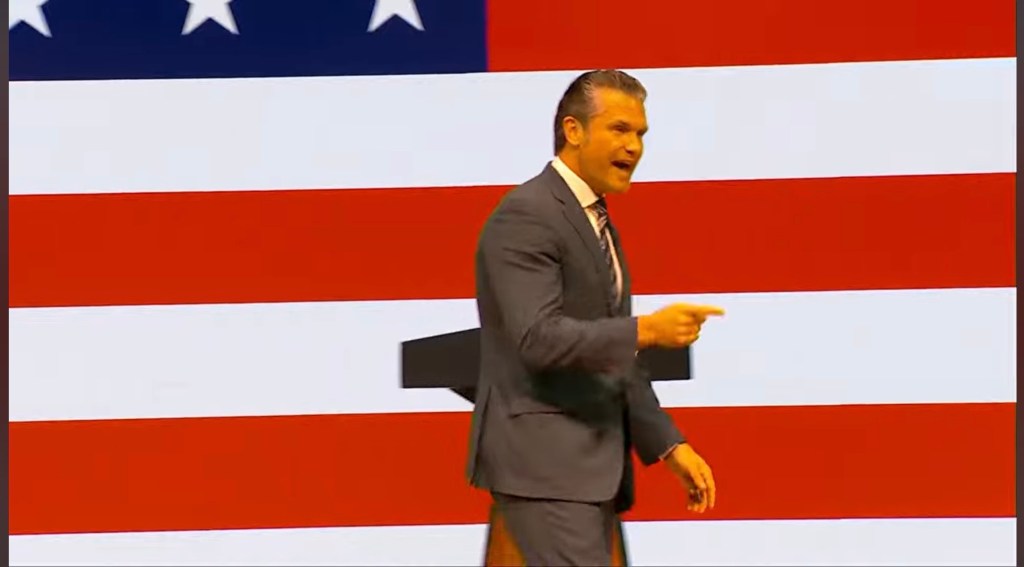
When a government begins speaking of “spiritual readiness” as a national security priority, we should pay attention. When chaplains are urged to “preach truth” and “fear no man,” we should ask whose truth is being centered and whose voices might be pushed to the margins. And when all of this is paired with a plan to reduce the number of generals and high‑ranking officers by twenty percent, we should not simply nod along as if this is a neutral modernization effort.
Technology is a convenient explanation. It’s hard to argue against innovation. But history teaches us that mass removal of senior military leaders often has less to do with drones and algorithms, and more to do with loyalty. Generals are among the last internal guardrails in any democracy — people who can say “no” when political power overreaches. When you thin their ranks, you thin the resistance.
What troubles me most is the way this language quietly redraws the circle of belonging. When a leader says that “95% of our force recognizes an almighty God,” it’s not just a demographic observation — it’s a moral sorting. It suggests that the spiritual identity of the military is already settled, and that those who do not share that belief are somehow outside the center of gravity. In an institution where promotion, trust, and cohesion matter deeply, that kind of framing can make nonreligious service members — and even those whose faith doesn’t match the majority — feel like they are one step away from being labeled a distraction rather than a contributor. And when unity is elevated above diversity, it becomes very easy for leaders to justify sidelining or quietly removing people who don’t fit the preferred spiritual mold, all in the name of “strength.”
I’m not suggesting we are on the brink of a theocracy. But I am suggesting that the architecture of one begins quietly: a religious office here, a shift in military culture there, a rhetorical appeal to “moral restoration,” and a reorganization that conveniently sidelines those who might object. These moves don’t announce themselves as threats. They present themselves as reforms.
The United States has always wrestled with the tension between faith and governance. That tension is not a problem; it’s part of our story. But the strength of our system has always depended on one principle: the state does not decide the spiritual direction of its people. It protects the freedom of every person — Christian, Jewish, Muslim, Buddhist, agnostic, atheist — to seek meaning without government supervision.
When a federal office begins defining “spiritual readiness,” that line blurs.
I write this not as someone suspicious of faith — far from it — but as someone who believes faith is healthiest when it is free. And freedom is healthiest when it is shared. If we care about the integrity of our institutions, we should care about any movement that concentrates religious authority inside the machinery of the state, especially the military.
This moment calls for calm vigilance. Not panic. Not cynicism. Just the steady insistence that our constitutional commitments matter, and that no administration — left, right, or otherwise — should reshape the spiritual landscape of the nation by administrative memo.
Democracy is not only defended on battlefields. It is defended in the quiet decisions about who gets to lead, who gets to speak, and who gets to define the soul of a country.
And those decisions deserve our attention.
Discover more from The Editorial Room
Subscribe to get the latest posts sent to your email.
