
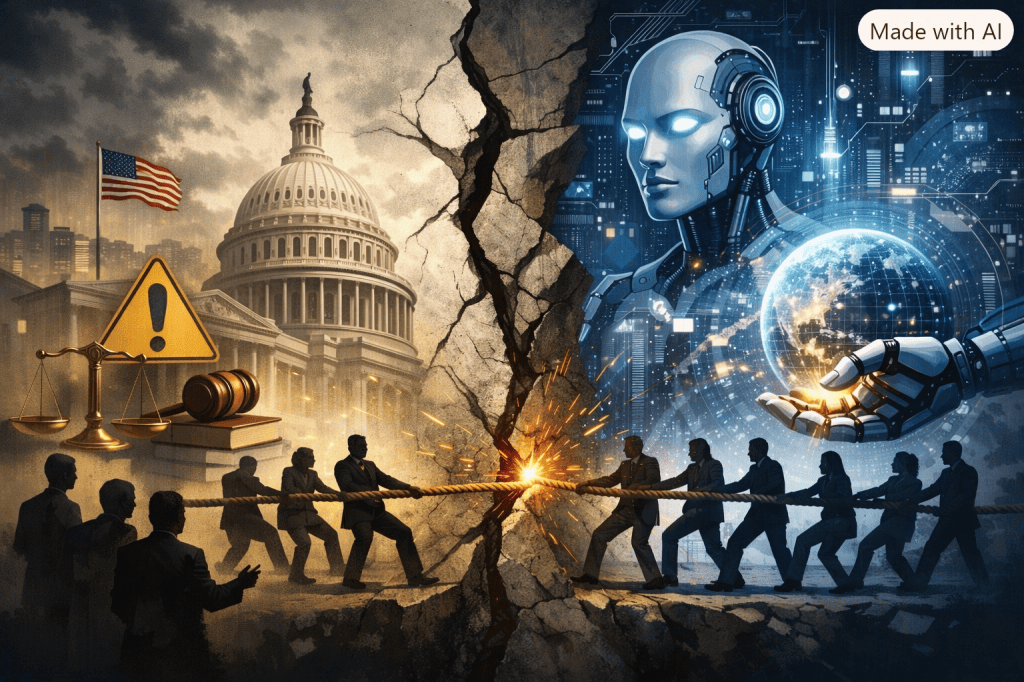
There is a strange and unsettling pattern emerging in the world of artificial intelligence: the people who understand it most deeply are the ones urging caution, while the people with the most power over its future seem content to let the industry police itself.
Take Jaan Tallinn, one of the earliest investors in Anthropic. He is no techno‑optimist chasing the next gold rush. He is, in fact, terrified of AI’s potential to outrun human control — a fear shared by pioneers like Geoffrey Hinton, Yoshua Bengio, and even Bill Gates, who has repeatedly emphasized both the extraordinary benefits and the existential risks of advanced systems. These are not alarmists. They are architects of the technology itself.
Their warnings echo what Nick Bostrom argued years ago in Superintelligence: that once a system surpasses certain thresholds, human oversight becomes fragile, and the consequences of misalignment could be irreversible. At the time, many dismissed such concerns as speculative. Today, they read more like early weather reports before a storm.
What should trouble us is not that experts disagree — disagreement is healthy — but that some political leaders appear comfortable with a “self‑policing” approach to AI development. This confidence would be reassuring if it were grounded in technical understanding. But when those shaping national policy have limited familiarity with the technology’s inner workings, the optimism begins to look less like leadership and more like wishful thinking.
The United States has long prided itself on innovation, and rightly so. But innovation without guardrails is not progress; it is acceleration without direction. Frontier AI systems are being trained with unprecedented scale, speed, and autonomy. The companies building them are staffed with brilliant people, but they are also driven by market incentives that reward being first, not being careful.
The question is not whether AI will transform society — it already has. The question is whether we will insist on the kind of oversight that matches the magnitude of the technology. Experts are calling for mandatory safety evaluations, independent audits, and international cooperation. These are not bureaucratic hurdles; they are seatbelts for a vehicle we have barely learned to steer.
Is it too late to issue a warning? No. But it is late.
The window for thoughtful regulation is narrowing, and the stakes are rising. We cannot afford to treat AI as just another industry that will “figure itself out.” The people who built the technology are telling us that the risks are real. The least we can do is listen — and act with the seriousness the moment demands.
Discover more from The Editorial Room
Subscribe to get the latest posts sent to your email.
