
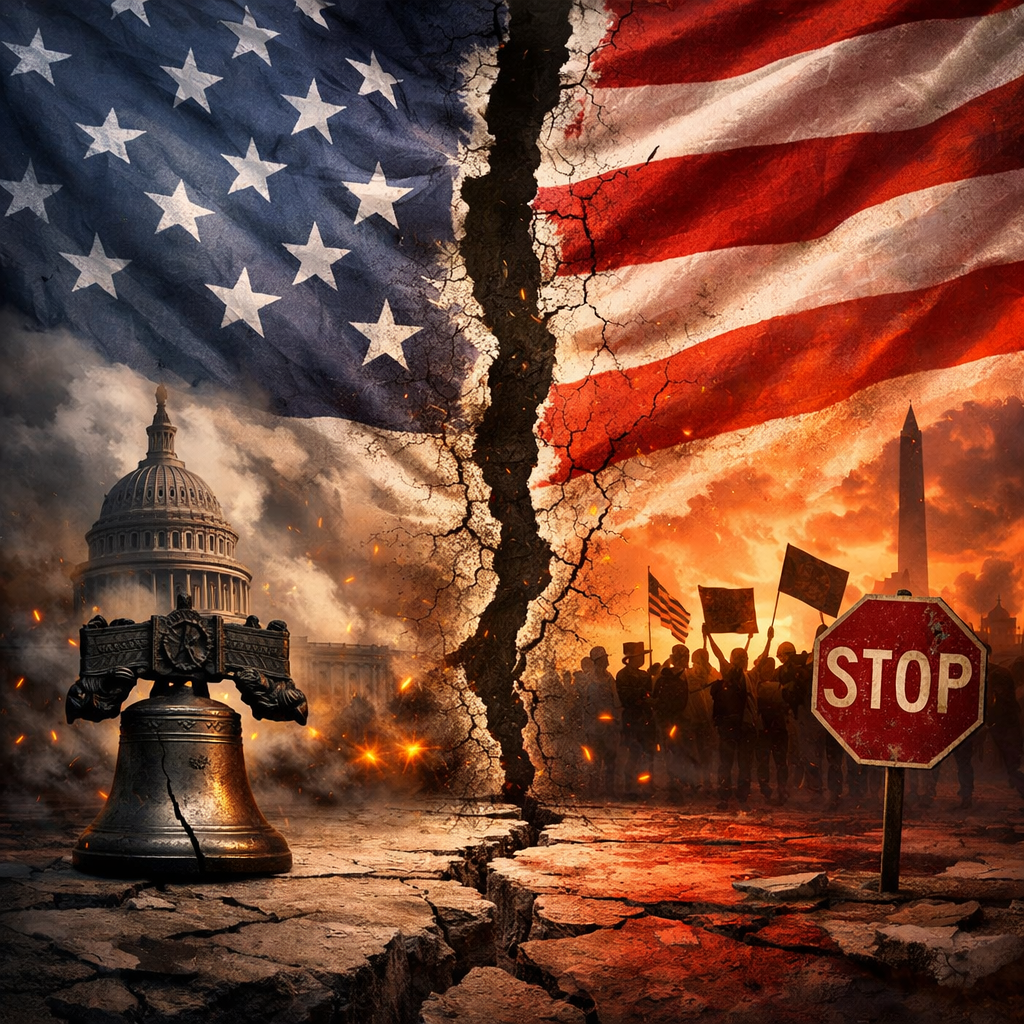
Independence Day is meant to be our annual civic reset—a moment when Americans remember that the republic was not founded on uniformity, but on a shared commitment to freedom, argument, and responsibility. It is the one holiday that belongs equally to every citizen, regardless of party, persuasion, or grievance.
This year, that shared space narrowed.
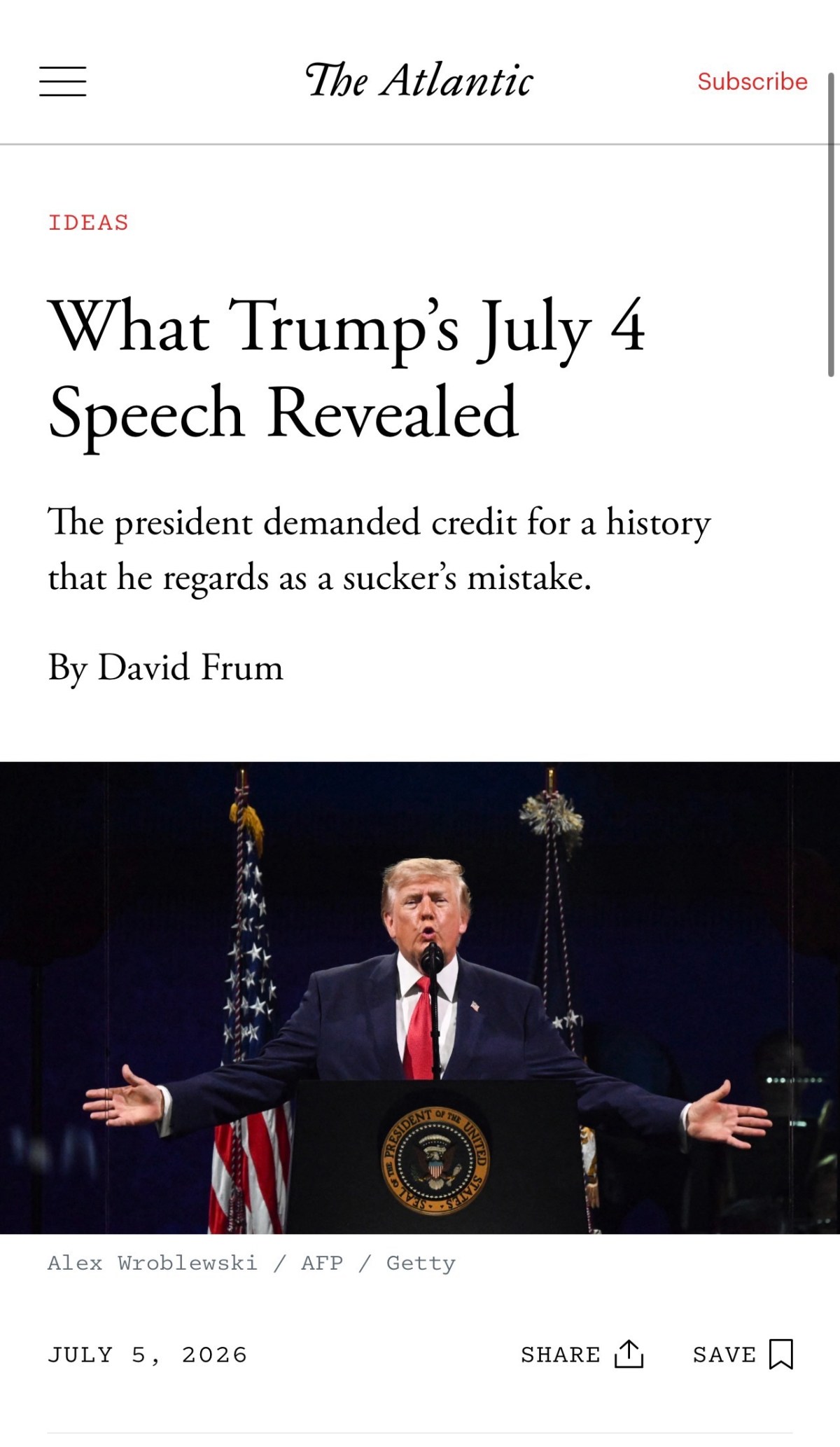
As The Atlantic observed, “Trump’s July 4 message was not a celebration of America. It was a declaration of conflict.” The holiday greeting, traditionally a gesture of national unity, instead framed the country as divided into the loyal and the disloyal, the deserving and the suspect. It was less a commemoration of independence than a warning shot across the civic landscape.
When Patriotism Becomes a Sorting Mechanism
Patriotism has always carried tension—between critique and devotion, between aspiration and reality. But it has rarely been reduced to personal allegiance to a single figure. When national identity is defined by loyalty to one leader, dissent becomes betrayal. Institutions become obstacles. Neighbors become threats.
The Atlantic piece notes that Trump “speaks of the nation as if it is already split into the loyal and the disloyal—and only one side deserves to win.” That framing is not merely divisive; it is corrosive. It trains citizens to imagine the country as a battlefield rather than a shared inheritance.
The Rhetoric of Permanent Emergency
The danger in conflict‑centered messaging is not only what it says, but what it normalizes. When leaders describe the nation as being in internal crisis, people begin to behave as if crisis is the natural state of democracy. When leaders portray opponents as enemies, supporters begin to treat disagreement as existential. When leaders insist that only they can save the nation, the institutions designed to protect the nation become expendable.
This is how polarization becomes a worldview rather than a moment.
Recovering the Civic Imagination
The work before us is not to match rhetoric with counter‑rhetoric, but to recover the civic imagination itself. Democracy requires a discipline of mind and heart: the ability to hold convictions without surrendering curiosity, to argue without erasing the humanity of the person across from us, to remember that patriotism is not a weapon but a responsibility.
July 4 should not be a stage for grievance. It should be a reminder that the American experiment survives only when citizens refuse to let fear or personality eclipse the shared work of self‑government.
A Closing Reflection
If Independence Day becomes a battlefield briefing, then the republic loses one of its few remaining rituals of common identity. The task now is stubbornly simple: to insist that the nation belongs to all of us, not to the loudest voice or the angriest grievance.
Patriotism is not a declaration of conflict. It is a commitment to each other—and to the fragile, unfinished project we call America.
Discover more from The Editorial Room
Subscribe to get the latest posts sent to your email.
