
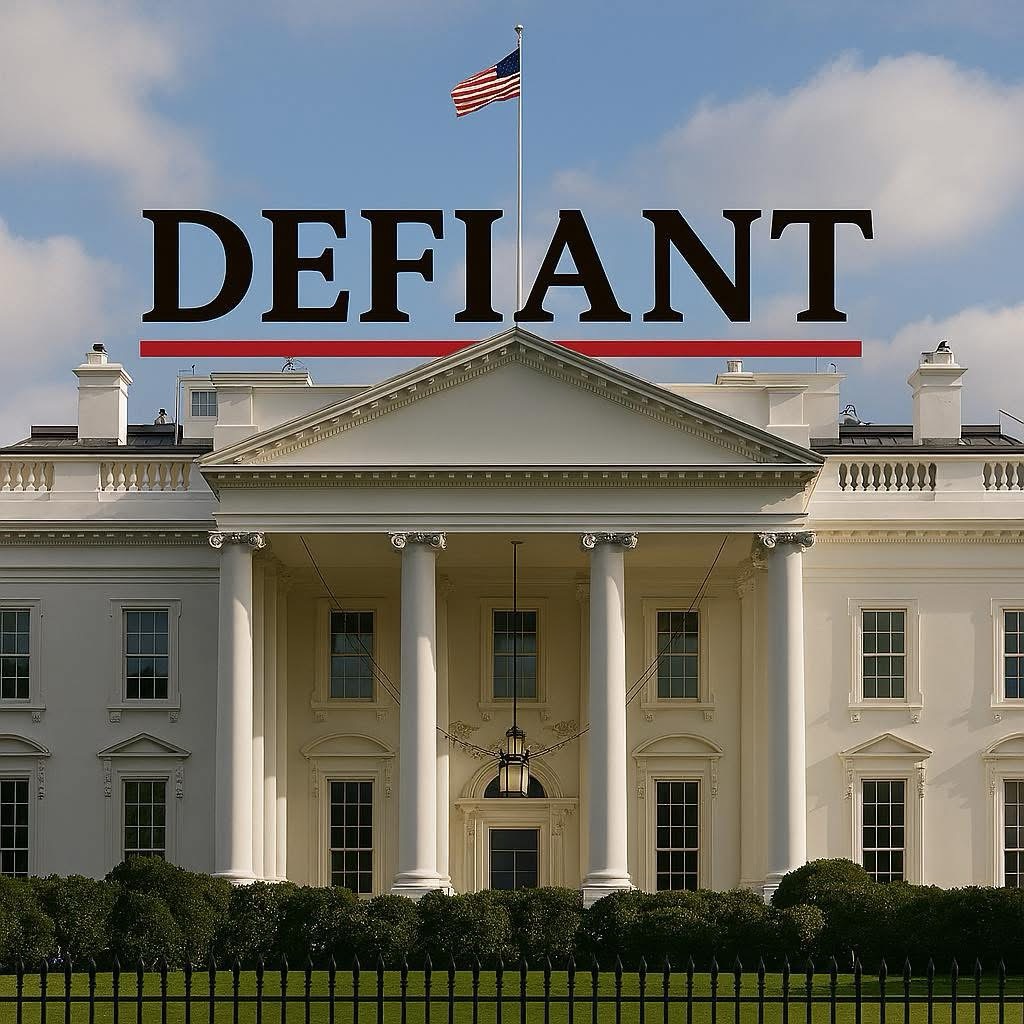
In the hours following the Supreme Court’s decision to limit one of the president’s emergency tariff powers, the response from the White House was swift and unmistakably defiant. Rather than recalibrate, the president dismissed the Court’s reasoning as “ridiculous,” reframed a constitutional limit as a strategic advantage, and announced a new 10% global tariff under a different statute — treating the ruling not as a boundary, but as a hurdle to maneuver around.
This moment reveals more than a disagreement over trade policy. It exposes the deeper struggle between institutional limits and personal authority,
When the Court chose principle, power pushed back.
The president’s statement did more than challenge the ruling. It treated the Court’s decision as a technicality, something to be outflanked. It elevated a dissenting opinion as if it carried the force of law. And it suggested that presidential will can simply shift to another legal pathway whenever one is blocked.
Such a posture raises concerns not because of the individual involved, but because of what it signals about the relationship between the branches of government. The Constitution anticipates tension, but it also assumes a shared respect for the legitimacy of the limits themselves. When that respect weakens, the strain is felt across the nation.
Many are quietly wrestling with this: not only the policies, but the posture. Not only the decisions, but the defiance. The sense that the guardrails are being treated as obstacles rather than obligations.
And yet, the Court’s ruling stands. The building stands. The principle stands.
The question now is not whether institutions can act — they have. The question is whether they can withstand the pressure that follows.
This moment calls for vigilance, clarity, and a commitment to the boundaries that hold a democracy together. When power pushes back, principle must not retreat.
Discover more from The Editorial Room
Subscribe to get the latest posts sent to your email.
