
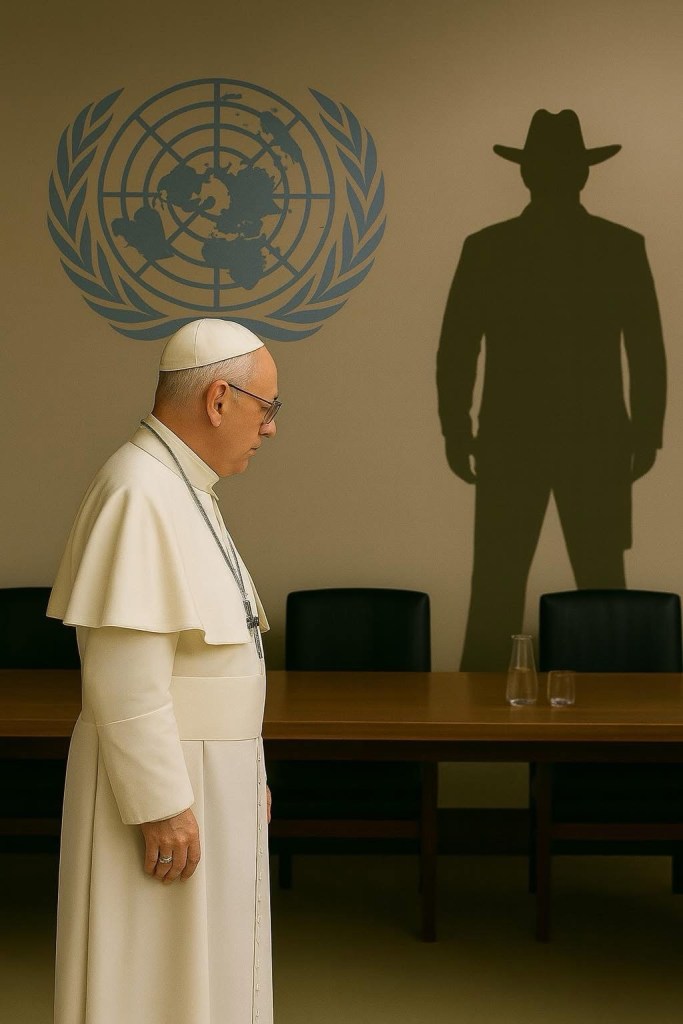
Every now and then, global politics offers us a moment so revealing that it almost feels like a parable. The latest one arrived in the form of the “Board of Peace,” a U.S.-led initiative meant to address the Gaza crisis — and the growing list of people and nations quietly declining their invitations to join it.
At first glance, the headline was the Pope’s refusal. But look a little closer, and you notice something more interesting: he wasn’t alone. Several countries also stepped back, some with polite diplomatic phrasing, others with silence that spoke just as loudly. And when multiple actors — religious, political, regional — all decline the same invitation, it’s worth paying attention.
Diplomacy, after all, is built on trust in the broker. Nations don’t just evaluate the plan; they evaluate the person hosting the table. They ask the same question any of us would ask before sitting down to mediate a family conflict: Is the person running this conversation someone who can hold the room steady?
And this is where the whole thing starts to feel like a scene from the Wild West.
Because what we have here is a peace table being set by someone known for bold, unpredictable, high‑conflict moves — someone who fires warning shots into the air to make a point — now stepping into the role of mediator between two deeply wounded communities. It’s the classic image of a happy‑trigger gunslinger trying to negotiate peace between the white villagers and the Indigenous tribes. Even if he means well, everyone’s hand is still hovering over their holster.
That’s not a partisan critique; it’s a structural one. In international relations, this is called role incongruence: when the personality, history, or posture of the would‑be mediator doesn’t match the neutrality required for the job. And when that mismatch is obvious, nations quietly decline the invitation. Not because they oppose peace — but because they don’t trust the process.
The Vatican said it plainly: crises of this magnitude should be handled by the United Nations, not by a single state or a single personality. That’s not a theological statement; it’s a diplomatic one. It’s the Church saying, “We’ll pray for peace, but we’re not stepping into a process that looks more like a political performance than a multilateral negotiation.”
And honestly, the countries that declined are saying the same thing, just in their own languages.
What’s striking is that none of this is about rejecting peace. It’s about rejecting a peace process that feels structurally unstable — one that places too much power in the hands of a single actor who is, to put it gently, not known for quiet mediation.
Peace requires a broker who is the calmest person in the room, not the loudest. Someone who can hold the tension without escalating it. Someone who understands that diplomacy is less about charisma and more about credibility.
So when the Pope and several nations all step back at once, it’s not a scandal. It’s a signal.
A signal that peace is too important to be handled like a showdown in the town square.
A signal that the world is looking for a mediator who doesn’t carry the energy of a Wild West outlaw trying to negotiate a truce with his hand still resting on the revolver.
A signal that real peace — the kind that heals, the kind that lasts — requires a table where everyone trusts the person at the head of it.
And until that table exists, the refusals will keep coming. Not out of defiance, but out of discernment.
Discover more from The Editorial Room
Subscribe to get the latest posts sent to your email.
