
By Ed Fernandez
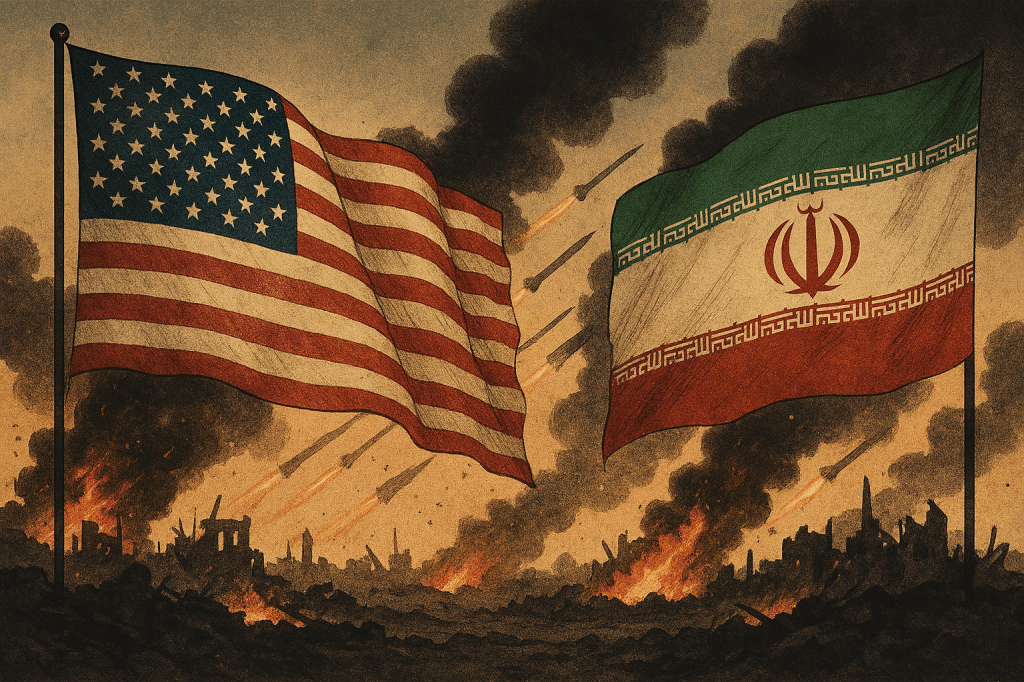
The United States has crossed a threshold this week. In coordination with Israel, President Donald Trump ordered a large‑scale strike on Iranian military targets—an escalation that has already reshaped the region and unsettled the world. The speed of the attack was startling. But what unsettled me even more was the language the president used to justify it.
In his official announcement, Trump described the Iranian regime as “a vicious group of very hard, terrible people,” a phrase widely reported across major news outlets. Technically, he aimed those words at the regime. Yet the speech blurred the line between leaders and citizens so thoroughly that many listeners—myself included—heard a sweeping condemnation of Iranians as a whole. When a president uses broad, dehumanizing language in the same breath as announcing military action, rhetoric and missiles land together. And the consequences of that pairing are profound.
A People Collapsed Into a Threat
Iran is a nation of more than 85 million people—families, students, workers, elders—none of whom chose this war. To describe “terrible people” without clarifying who is meant invites the public to see an entire nation as a singular enemy. It collapses the complexity of a society into a caricature. It makes war easier to justify and harder to question.
Even Iran’s foreign minister, in the midst of the chaos, insisted that Iran was not targeting Americans “in their land” and expressed readiness to talk once the strikes end. That statement may or may not be persuasive, but it underscores a truth: diplomacy was still possible. It was not exhausted.
The Nuclear Question and the Abandonment of Diplomacy
For years, Iran has maintained that its nuclear program is for peaceful purposes. Whether one believes that claim or not, diplomacy—not bombardment—has historically been the only tool capable of verifying and constraining nuclear ambitions. Trump himself acknowledged that negotiations had been underway just days before the attack.
If the United States fears a nuclear‑armed Iran, is it unreasonable for Iranians to fear a nuclear‑armed United States—especially under a leader whose posture is often confrontational? Fear is mutual. Diplomacy is how nations keep fear from becoming war.
A Constitutional Shortcut
Members of Congress from both parties have already raised concerns about the president bypassing congressional authorization. This is not a procedural quibble. The Constitution vests war‑making power in Congress precisely to prevent unilateral military escalation. When that safeguard is ignored, the balance of power shifts toward executive overreach, and the nation drifts into conflict without the deliberation such decisions demand.
The Cost of This Trajectory
The consequences are already unfolding: Iranian retaliation against U.S. and Israeli targets, heightened regional instability, global security alerts, and rising fear among Americans at home and abroad. Internationally, the United States risks being seen as a nation willing to strike first and consult later. Domestically, we risk normalizing the idea that war is a tool of first resort. This is not strength. It is drift.
A Call for Moral Clarity
We are at a crossroads. The language our leaders use matters. The processes they follow matter. And the lives caught in the middle—American, Iranian, Israeli, and countless others—matter most of all.
War should never be made easier through rhetoric that dehumanizes or through procedures that bypass accountability. In moments like this, we must insist on restraint, transparency, and the dignity of all people, no matter which side of a border they live on.
Discover more from The Editorial Room
Subscribe to get the latest posts sent to your email.
