Duterte, the ICC, and the Global Reckoning With State Violence
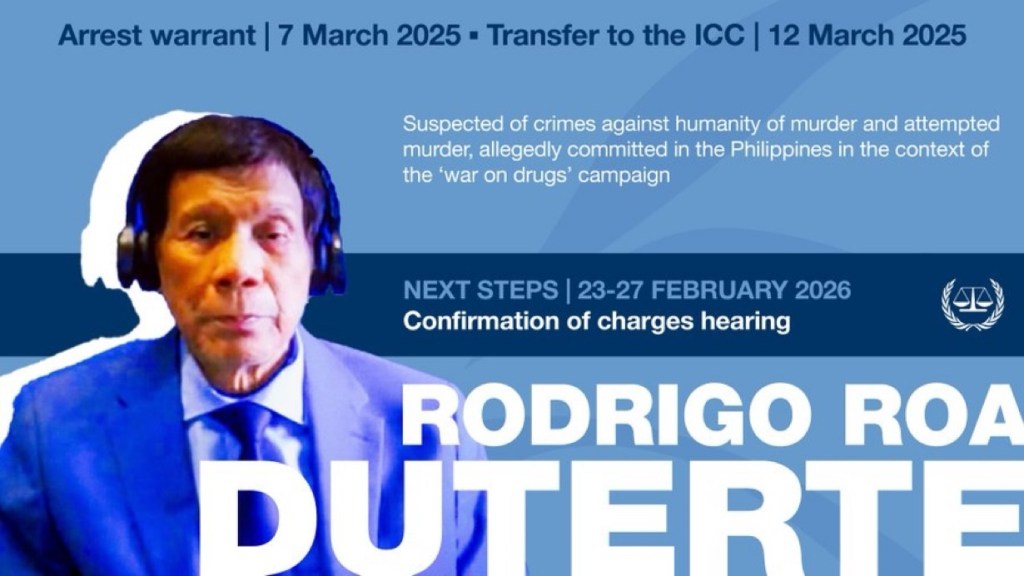
There are moments in global politics that feel almost impossible until they happen. Watching former Philippine President Rodrigo Roa Duterte stand before the International Criminal Court is one of them. It is a rare sight: a former head of state—once shielded by popularity, political machinery, and the rhetoric of “public safety”—now answering to a tribunal built precisely for the moments when nations cannot or will not hold their own leaders accountable.
What stood out immediately was the contrast in tone. The prosecution delivered its opening statement plainly, almost clinically. It was dry, yes—but strong because of that restraint. They laid out the grounds for the case with the confidence of those who know the facts are enough.
The defense, by contrast, leaned heavily on emotion. They resorted to personal attacks against individuals who allegedly misrepresented their cooperation with the ICC—accusations that have no bearing on the legal questions at hand. Their narrative was dramatic, even theatrical, but it rang hollow. It felt less like a legal argument and more like a performance meant to stir sympathy rather than address the substance of the charges.
The contrast matters. Because the law does not need theatrics. It needs truth.
The Philippine Reckoning
For Filipinos, this hearing is not abstract. It is personal.
We lived through the years when extrajudicial killings became normalized as a tool of governance. We watched as fear was weaponized, as institutions were weakened, as the language of “war” was used to justify the deaths of thousands of our own people—many of them poor, nameless, and voiceless.
When domestic accountability became impossible, the ICC became the only venue left.
This is not about political rivalry. It is not about ideology. It is about the moral cost of a nation that grows numb to its own wounds. A country that forgets its dead eventually forgets itself.
If this trial leads to conviction, it will not erase the grief of families who lost loved ones without trial or explanation. But it will affirm something essential: that the lives of the powerless matter, and that the powerful must answer for what they do in the name of “order.”
A Warning to Strongmen Everywhere
The implications of this case extend far beyond the Philippines.
If a former president can be held accountable for state‑sanctioned violence, it sends a message to leaders around the world who use “security” as a pretext for unchecked force. It challenges the idea—long assumed, rarely questioned—that state violence is automatically legitimate simply because the state performs it.
This is where the U.S. parallel becomes important.
In recent months, concerns have grown about the expanding authority of immigration enforcement agencies, particularly when individuals are labeled as “local terrorists” or “security threats” without transparent evidence. Civil liberties groups have raised alarms about the potential for abuse when suspicion alone becomes grounds for lethal force. The pattern is familiar: broaden the definition of threat, narrow the avenues for accountability, and justify extraordinary measures in the name of public safety.
The contexts are different, the histories distinct. But the underlying logic—the temptation to treat certain lives as expendable for the sake of national security—is a global one.
And that logic is precisely what the ICC is challenging.
When a court tells a former president, “You must answer for the deaths carried out under your authority,” it sends a quiet but unmistakable warning: State power is not a blank check.
The Moral Thread
Beyond the legal arguments and political implications lies a deeper question: What kind of societies are we becoming?
When governments normalize violence against their own people—whether through police operations, immigration raids, or counterterrorism rhetoric—something in the national conscience erodes. We begin to accept the idea that some lives are less worthy of due process, less deserving of dignity, less human.
The ICC trial is, in one sense, about Duterte. But in a larger sense, it is about us—about the world we are shaping, the leaders we tolerate, and the moral lines we allow to be crossed.
Accountability as a Gift
Accountability is not vengeance.
It is a safeguard for the future.
If this trial leads to conviction, it will not humiliate the powerful. It will honor the powerless. It will remind nations—including my own, including the United States—that the rule of law is not a tool for the strong but a refuge for the vulnerable.
The law may move slowly, but it moves. And when it finally arrives, it does so to say what many families have waited years to hear: Your lives mattered. Your grief mattered. Your dead were not forgotten.
Author’s Note
It is worth noting the paradox at the center of the defense strategically
. Duterte’s team rejects the ICC’s authority, yet must rely on that same court to hear and validate their objection. Their argument against jurisdiction can only exist inside the very institution they claim has none. That tension frames the entire proceeding.