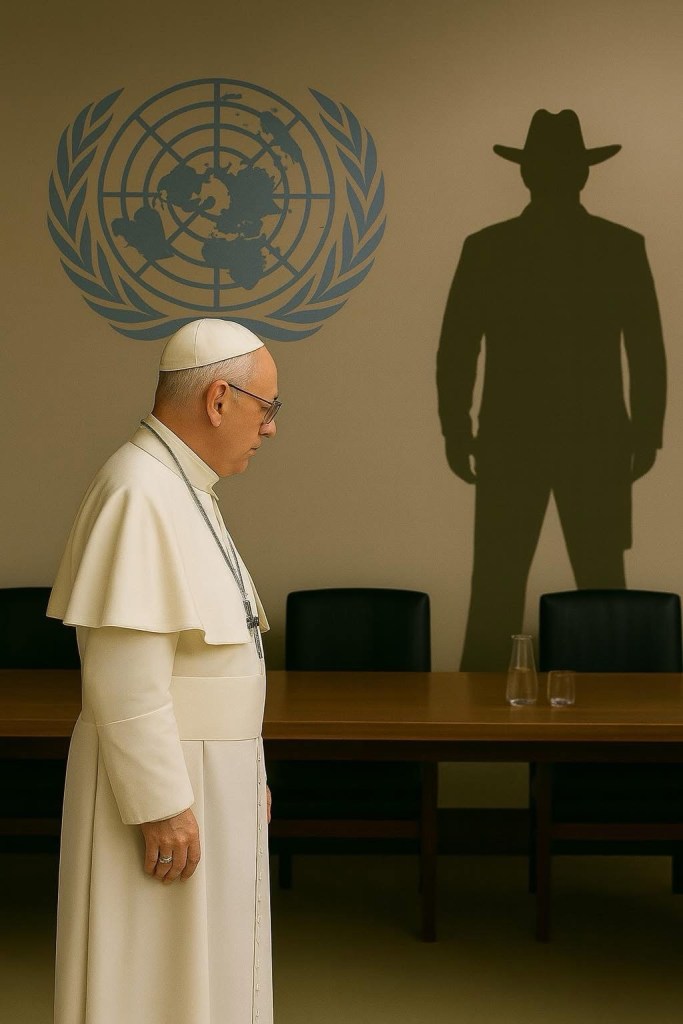

Ash Wednesday always arrives with a kind of quiet honesty. It does not shout. It does not campaign. It does not flatter. It simply presses a thumb of ashes onto our foreheads and tells the truth: Remember that you are dust, and to dust you shall return.
So when the White House issues a message about prayer, repentance, and the meaning of Lent, it naturally draws attention. Not because the themes are unusual—they are ancient and universal—but because they come from an administration whose leader has, in the past, publicly stated that he has never felt the need to repent. That he has done nothing wrong. That repentance is unnecessary for him.
This is not a stone thrown. It is simply a matter of public record, and it creates a tension worth naming.
For Christians, repentance is not a punishment. It is not humiliation. It is not a political liability. It is the doorway to truth, healing, and freedom. It is the spiritual equivalent of oxygen. To say one has no need of repentance is to say one has no need of God’s mercy—and that is a claim no human being can make honestly.
Even the most loyal evangelical supporters of the President know this. Many have said openly that moral character is not a requirement for national leadership, or that God can use anyone regardless of their flaws. And of course, God can. But that is different from saying flaws do not matter, or that repentance is optional for some and essential for others.
Ash Wednesday levels the ground. It refuses to let anyone—president or pauper—stand above the need for grace.
What makes this moment spiritually interesting is not the political contradiction but the theological one. A message about repentance coming from a leader who has rejected the concept invites us to reflect on how easily religious language can be used without being inhabited. How faith can be referenced without being practiced. How sacred words can be spoken without ever touching the heart.
And yet, perhaps this is precisely why the message matters.
Because Lent is not about who already understands repentance. It is about who is willing to begin.
It is about the possibility that even those who have never admitted wrongdoing might one day feel the weight of their own humanity. It is about the hope that even the powerful might discover the freedom that comes from telling the truth. It is about remembering that God’s mercy is not a political tool but a spiritual lifeline.
On this Saturday—this Sunday in other parts of the world—when people are a little more spiritually attuned, a little more open, a little more honest, we can hold this tension without cynicism. We can acknowledge the contradiction without losing hope. We can pray for leaders without excusing their actions. And we can remember that repentance is not a performance but a posture.
Ashes do not lie. They tell us who we are.
And they remind us who we are not.
May this Lent be a season when truth is spoken, humility is rediscovered, and repentance becomes more than a word in a press release. May it become a way home.