
By Ed Fernandez
My wife and I recently watched a National Geographic documentary on North Korea’s dictator, and we found ourselves stunned by the way he is worshiped like a god. It made me wonder how political devotion can harden into something unshakeable — something that prevents people from seeing what is right in front of them.
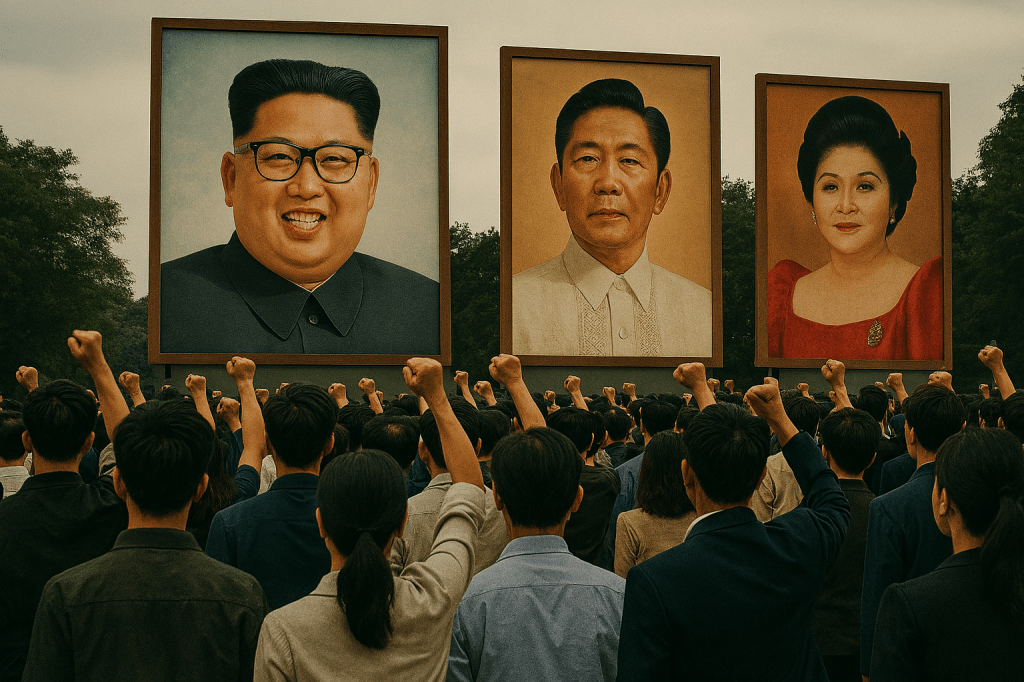
I know what it means to admire a leader. When I was a boy in rural Mindanao, I was chosen to greet President Ferdinand Marcos Sr. as he stepped off a helicopter. To a child, that moment was dazzling. I became a fan — not only of him, but of Imelda Romualdez Marcos, the former beauty queen whose elegance captivated the nation.
But admiration has a way of maturing when reality intrudes. Under Martial Law, I saw the cruelty of soldiers at checkpoints between Norala and Cotabato City. I heard the stories of “salvage” victims — people killed for resisting the regime. I witnessed how power could be used not for service but for plunder. Those experiences forced me to re‑evaluate the man I once admired. I changed my mind because the truth demanded it.
And so I find myself grieving when I see friends who remain loyal to leaders whose actions have caused undeniable harm. Some of my friends continue to defend former President Rodrigo Duterte, even as evidence mounts about extrajudicial killings and the possibility that the drug war served interests far darker than public safety. Their devotion seems to override their capacity to evaluate the facts.
Why is it that some people can re‑examine their loyalties while others cannot?
I don’t believe in predestination. I believe people have the freedom to think, to choose, to change. But I also know that we are shaped by our fears, our loyalties, our communities, and the stories we tell ourselves about the leaders we admire. And I know I am not infallible — I do not understand everything.
Still, I return to this question:
What allows one person to step back and see clearly, while another clings to the image of a leader long after the truth has become impossible to ignore?
I don’t have a final answer. But I know this: the ability to re‑evaluate our heroes is not a sign of disloyalty. It is a sign of moral courage. And in times like ours, courage may be the only thing that keeps admiration from becoming blindness.
