Public conversations about Iran often swing between oversimplification and outright conspiracy. It’s true that misinformation circulates quickly, but correcting it requires more than replacing one sweeping narrative with another. The argument I am responding to was written by Melissa Brodsky, a digital creator who publicly identifies as a “loud and proud Zionist” (see link at the bottom). That self‑description does not invalidate her position, but it does clarify the lens through which she interprets the current conflict. Her recent post, which frames the Iran escalation as unrelated to Israel and rooted solely in longstanding U.S. policy, reflects that perspective. Understanding the commitments from which she writes helps situate the narrative she presents.
It is accurate that every U.S. administration since 1979 has opposed a nuclear‑armed Iran. That position is consistent with long‑standing nonproliferation doctrine, not with any single president’s ideology. But to suggest that Israel’s security concerns are irrelevant to U.S. decision‑making is historically incomplete. For decades, American and Israeli intelligence, diplomacy, and military planning have been intertwined on the Iran question. Untangling them for the sake of rhetorical clarity does not make the picture more accurate.
The claim that Iran “dramatically accelerated” its nuclear program may be true, but it requires evidence, not assertion. Diplomatic agreements—including the 2015 nuclear deal—were designed precisely to slow enrichment and increase transparency. For a time, they did. If Iran’s program surged in recent years, that development cannot be separated from the collapse of those diplomatic frameworks, nor from the decisions that hastened that collapse.
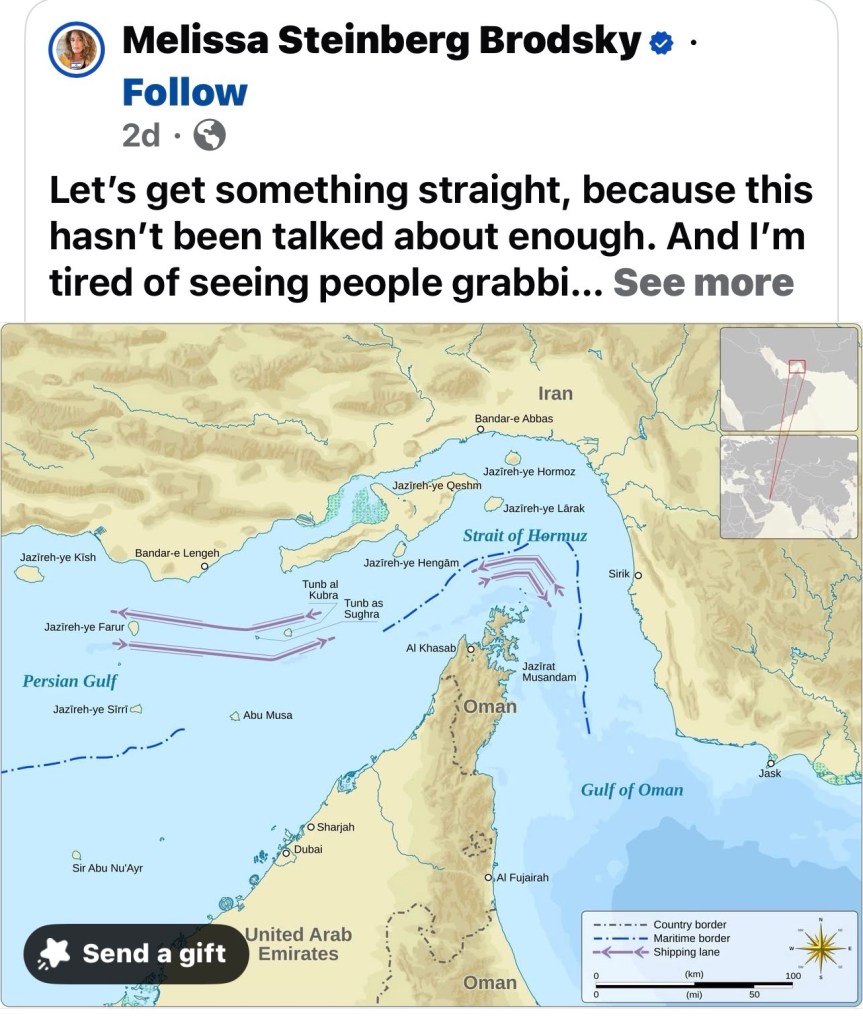
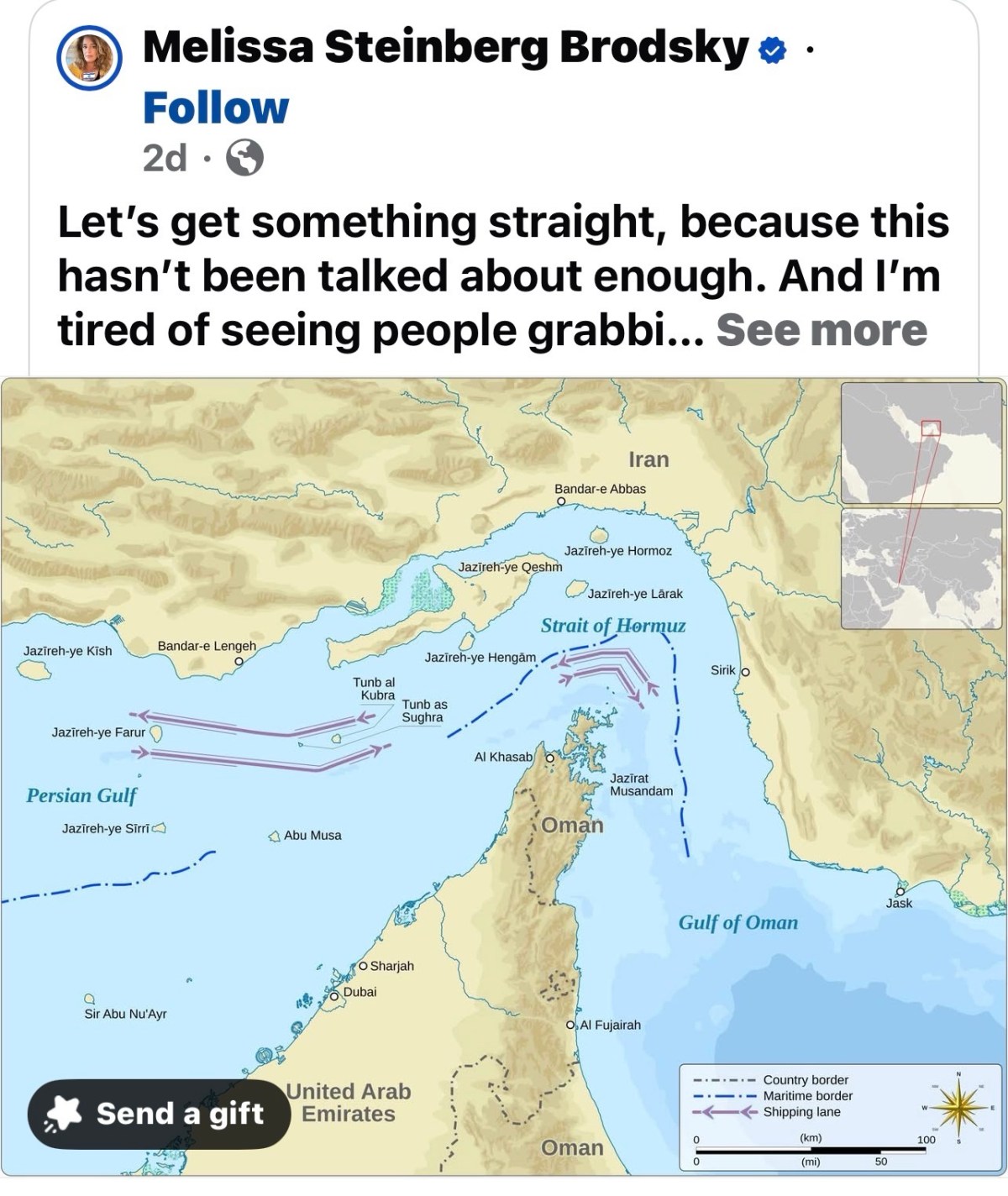
China’s dependence on Iranian oil and the strategic importance of the Strait of Hormuz are not new revelations. They are well‑known features of global energy politics. Their inclusion in the argument does not necessarily illuminate the present moment; it simply restates the geopolitical landscape that has existed for decades.
The most consequential claim—that the United States acted because the threat was “imminent”—is the one that requires the greatest scrutiny. Diplomatic channels were active. Regional intermediaries were engaged. Negotiations, while fragile, had not collapsed on their own. The idea that military action became unavoidable only after fifty years of restraint overlooks the role of policy choices that disrupted talks and escalated tensions. Imminence is not a fact; it is a framing, and one that should be examined carefully.
The situation with Iran is complex, layered, and historically charged. Reducing it to a single cause—whether Israel, the United States, or China—does not help us understand it. What we need is not a new narrative to replace an old one, but a willingness to hold multiple truths at once: that diplomacy was working until it wasn’t, that policy decisions have consequences, that regional alliances matter, and that urgency should never be confused with inevitability.
In moments like this, clarity is not found in louder arguments, but in quieter, steadier ones.