
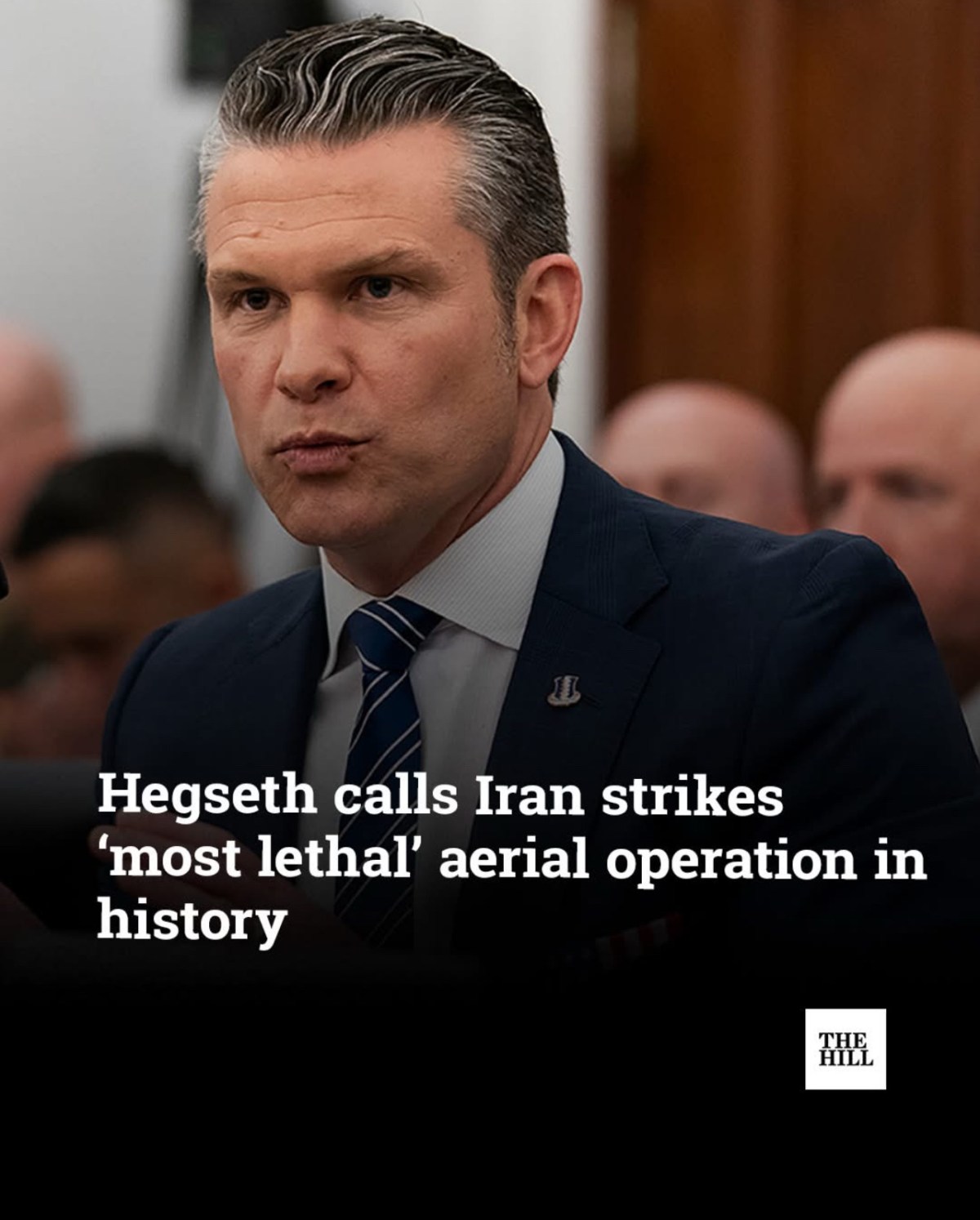
Defense Secretary Pete Hegseth broke his silence about the U.S. strikes on Iran by calling them “the most lethal, most complex, and most‑precision aerial operation in history,” a description he repeated across multiple statements.
Those are the facts. But the meaning they carry is far more complicated.
When a government official boasts about lethality, it does not land as a triumph for everyone. For many Americans who do not support war, it feels less like strength and more like a burden—one that ordinary people will carry long after the cameras move on. It can make the country look less like a stabilizing force and more like a global bully, especially when the language centers on destruction rather than restraint.
And when one remembers the scale of devastation in Hiroshima and Nagasaki, the boast itself becomes strangely small. Those events remain among the deadliest acts of war in human history. By comparison, calling any modern strike “the most lethal” can sound like a mouse boasting in front of a cat—loud, but not grounded in the reality of what mass destruction has meant before.
The deeper issue is not the comparison; it is the posture. Celebrating lethality sends a message to the world that America measures success by the force it can unleash. That posture can make everyday Americans—who may oppose escalation—appear complicit in decisions they did not make. It can also make them targets in places where U.S. policy is not separated from the people who live under its flag.
There is a difference between defending a nation and glorifying destruction. The former is a responsibility. The latter is a choice. And when leaders choose the language of boasting, the world hears it—even those who never wanted a war in the first place.
