
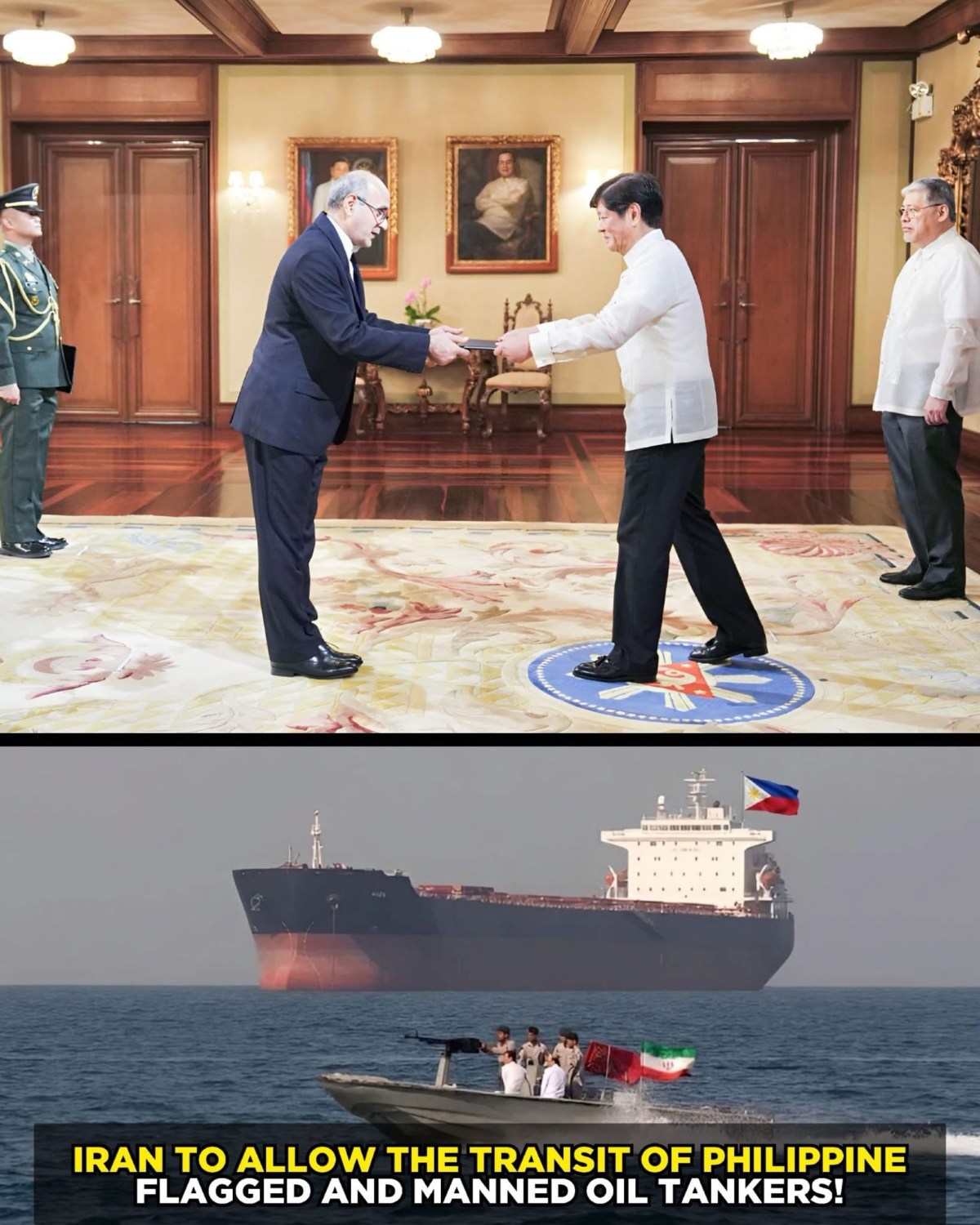
Every now and then, a story breaks through the noise of global politics and reminds us that diplomacy, when practiced with patience and clarity, still has the power to shift outcomes. The recent report that the Philippines successfully renegotiated safe passage for its oil tankers through the Strait of Hormuz is one such moment.
This was not a simple diplomatic task.
The Philippines maintains long‑standing ties with the United States, and the current administration had just concluded a high‑visibility visit with President Trump. At the same time, Iran is under immense geopolitical pressure, navigating its own conflict dynamics with both the U.S. and Israel. For Manila to engage Tehran directly—while balancing these relationships—required careful calculation, steady hands, and a willingness to sit at the table despite the risks.
And yet, the result speaks for itself:
Philippine‑flagged and Filipino‑manned vessels are now moving safely through one of the most volatile maritime chokepoints in the world.
This is not merely a political achievement.
It is a practical one.
A human one.
The Strait of Hormuz is a narrow passage with global consequences. When tensions rise there, ordinary people feel it first—through fuel prices, supply chain disruptions, and the quiet anxiety that comes when conflict threatens to spill into daily life. Securing safe passage means Filipino seafarers can work without fear, tankers can move without becoming bargaining chips, and the country can breathe a little easier about its energy supply.
It also underscores a truth that often gets overshadowed in an age of spectacle:
Diplomacy works.
Not always quickly. Not always cleanly. But consistently, quietly, and with far fewer casualties than any alternative.
Some may be tempted to frame this achievement through the lens of political rivalry or international alignment. But the heart of the matter is simpler: negotiation prevented escalation. Dialogue protected lives. A government chose engagement over confrontation, and the outcome benefited the people who would have suffered most if tensions had worsened.
This is the kind of story that rarely dominates headlines, yet it is precisely the kind of story that deserves attention. It reminds us that the work of peace is often slow, often unglamorous, and often overshadowed by louder voices calling for force. But it is also the work that keeps nations stable, families safe, and economies functioning.
So let’s name it plainly:
Good work was done here.
Lives were safeguarded.
And the world is a little less volatile today because two nations chose to talk.
In a time when conflict is easy and escalation is fashionable, this moment stands as a quiet testament to what diplomacy can still accomplish.
Talks—not war—continue to prove their worth.
