
A School Was Bombed. The World Must Speak.

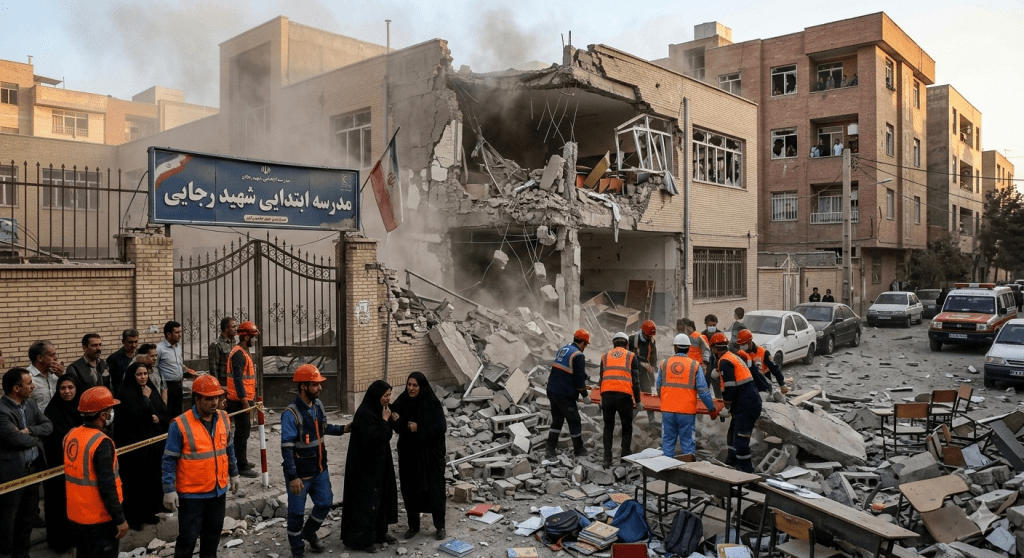
A school was bombed in Minab.

More than 150 children died.

That is not rumor — that is verified loss.

And when children die in their classrooms, the world does not need spin, or deflection, or leaders reaching for the nearest convenient enemy. The world needs truth. The world needs grief. The world needs accountability that does not wait for political permission.

A prophetic voice begins here:

No nation is righteous enough to excuse the killing of children.

No military is precise enough to call this “collateral.”

No leader is credible if they answer a mass grave with a shrug or a conspiracy.

The facts are still being investigated.

But the scale of harm is not in question.

And when the smallest coffins are lowered into the ground, the burden of truth rises — not falls.

So this must be said plainly:

• A school is not a battlefield.

• A child is not an acceptable loss.

• And any government involved — directly or indirectly — owes the world not a justification, but a confession.

Prophetic speech does not wait for the powerful to feel ready.

It speaks because the dead cannot.

Update:

The most authoritative, up‑to‑date figure comes from Al Jazeera’s live casualty tracker, which reports:

“168 children were killed in the Minab elementary school strike.”

This aligns with the higher end of earlier reports (115–168 total children), but the 168 figure is the latest confirmed and comes from Iran’s deputy health minister speaking directly to Al Jazeera.
When Admiration Becomes Blindness

By Ed Fernandez

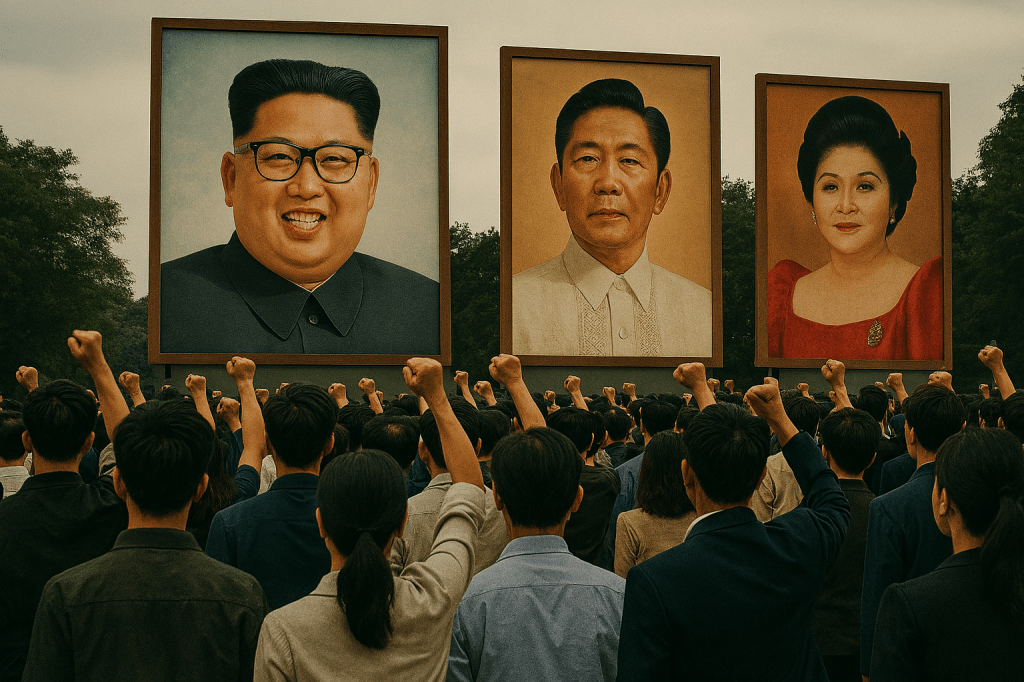
My wife and I recently watched a National Geographic documentary on North Korea’s dictator, and we found ourselves stunned by the way he is worshiped like a god. It made me wonder how political devotion can harden into something unshakeable — something that prevents people from seeing what is right in front of them.

I know what it means to admire a leader. When I was a boy in rural Mindanao, I was chosen to greet President Ferdinand Marcos Sr. as he stepped off a helicopter. To a child, that moment was dazzling. I became a fan — not only of him, but of Imelda Romualdez Marcos, the former beauty queen whose elegance captivated the nation.

But admiration has a way of maturing when reality intrudes. Under Martial Law, I saw the cruelty of soldiers at checkpoints between Norala and Cotabato City. I heard the stories of “salvage” victims — people killed for resisting the regime. I witnessed how power could be used not for service but for plunder. Those experiences forced me to re‑evaluate the man I once admired. I changed my mind because the truth demanded it.

And so I find myself grieving when I see friends who remain loyal to leaders whose actions have caused undeniable harm. Some of my friends continue to defend former President Rodrigo Duterte, even as evidence mounts about extrajudicial killings and the possibility that the drug war served interests far darker than public safety. Their devotion seems to override their capacity to evaluate the facts.

Why is it that some people can re‑examine their loyalties while others cannot?

I don’t believe in predestination. I believe people have the freedom to think, to choose, to change. But I also know that we are shaped by our fears, our loyalties, our communities, and the stories we tell ourselves about the leaders we admire. And I know I am not infallible — I do not understand everything.

Still, I return to this question:
What allows one person to step back and see clearly, while another clings to the image of a leader long after the truth has become impossible to ignore?

I don’t have a final answer. But I know this: the ability to re‑evaluate our heroes is not a sign of disloyalty. It is a sign of moral courage. And in times like ours, courage may be the only thing that keeps admiration from becoming blindness.