When Power Rejects Accountability: What the Kent Resignation Tells Us About Trump’s Leadership Culture

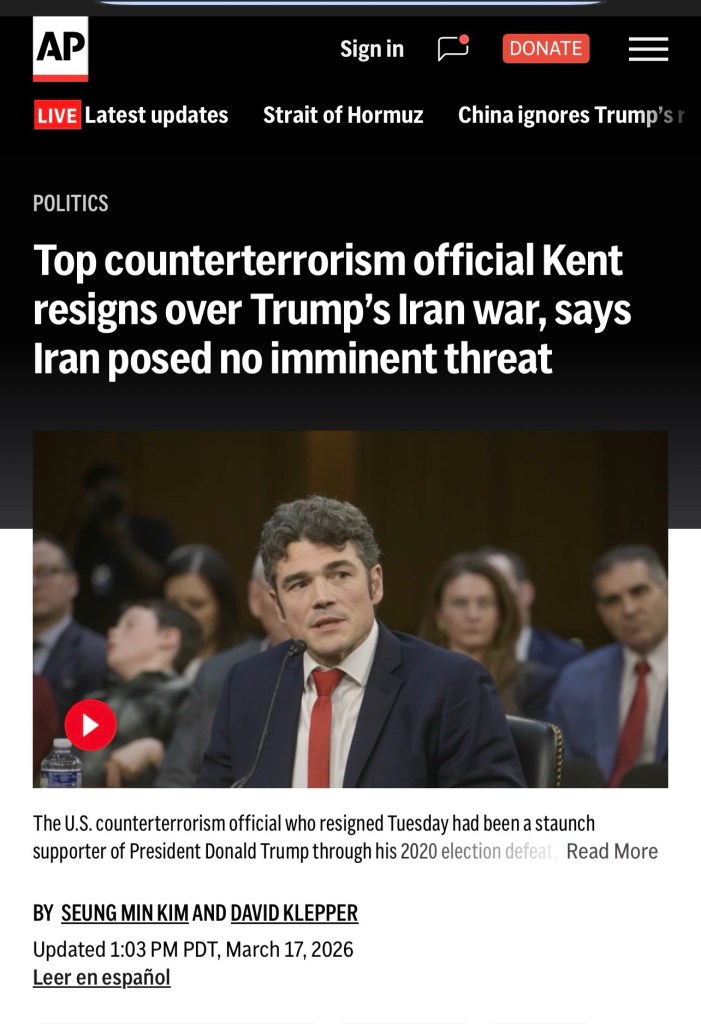
The resignation of National Counterterrorism Center Director Joe Kent should have opened a rare window for introspection inside the administration. Kent did not leave in silence. He left with a warning: that the march toward war with Iran lacked an imminent threat, lacked strategic coherence, and was propelled by pressures the public has not been allowed to see. These are the kinds of concerns a healthy administration would confront head-on.

Instead, the president dismissed Kent as “weak on security” and “not up to the job.” The critique was not answered; the critic was diminished. And in that exchange — documented plainly in the AP report — we see a leadership culture that treats dissent not as a resource but as a threat.
This is not an isolated moment. It is a governing pattern. Appointees are celebrated when they affirm the president’s position and maligned when they depart from it. The shift is instantaneous: competence becomes incompetence, loyalty becomes betrayal, and expertise becomes weakness. The individual changes; the script does not.

What makes the Kent episode especially revealing is the gravity of the issue at hand. War demands clarity, accountability, and the courage to face uncomfortable truths. Kent attempted to raise those truths. The administration responded with personal attack. The public is left with no clearer understanding of the policy — only a clearer understanding of the leadership style.

A government that cannot tolerate internal critique becomes brittle. It loses the ability to self-correct. It drifts toward decisions shaped not by deliberation but by deference. And when the stakes are measured in lives, that brittleness becomes dangerous.

The AP report does not editorialize. It simply records what was said. But the implications are unavoidable. If every departing official is recast as weak or disloyal, the public must ask whether the problem is always the appointee — or whether the deeper issue is a leadership culture that rejects accountability itself.

In moments of national consequence, the country needs leaders who can absorb critique without collapsing into grievance. Leaders who can distinguish disagreement from disloyalty. Leaders who understand that strength is not measured by the volume of one’s dismissals but by the capacity to engage the truth, even when it is inconvenient.

Joe Kent’s resignation offered an opportunity for that kind of leadership. The response made clear that opportunity was refused.
KAPAG ANG KATOTOHANAN AY GINAGAWANG BALA: ANG ARAL SA “FAKE NEWS” LABAN KAY ATTY. ROMEL BAGARES

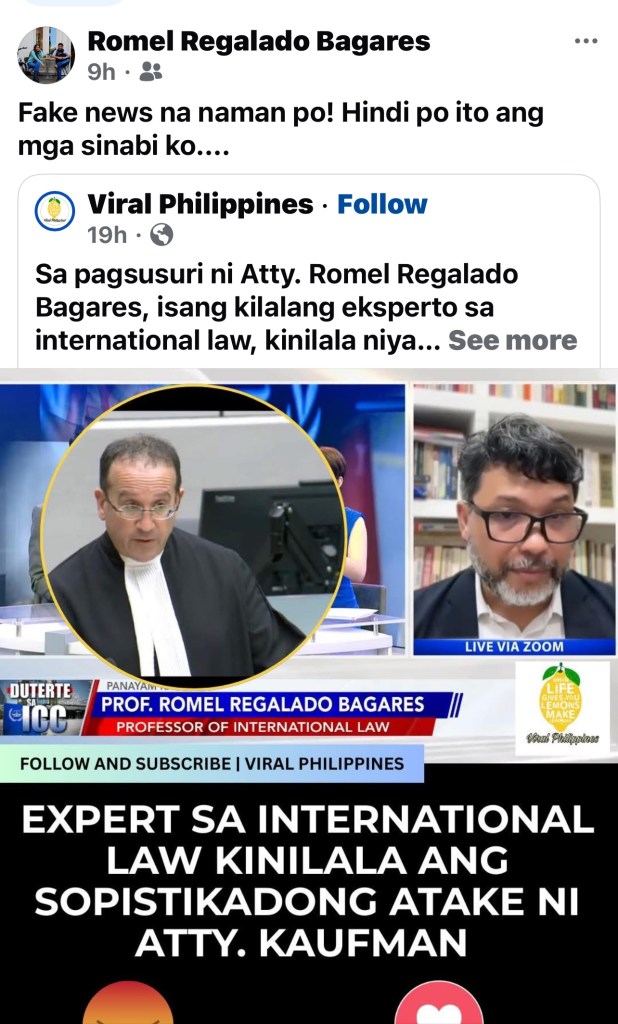
Sa Pilipinas, hindi na bago ang paggamit ng pangalan ng mga iginagalang na lider—obispo, abogado, propesor, pastor—para magtahi ng mga kuwentong hindi nila sinabi. Kahapon, ang pangalan ni Bishop Ef Tendero ang ginamit upang magmukhang may “witness” na pumapabor sa isang politikal na narrative. Ngayon, ang pangalan naman ni Atty. Romel Regalado Bagares, isang kilalang eksperto sa international law, ang ginawang kasangkapan sa parehong paraan.

At tulad ng ginawa ni Bishop Tendero, mabilis at malinaw ang tugon ni Atty. Bagares: “Fake news na naman po! Hindi po ito ang mga sinabi ko…”

Hindi ito basta reklamo. Ito ay pagwawasto. At higit pa roon, ito ay babala.

Ang Inimbentong Kwento Sa isang post ng Viral Philippines, ipininta si Atty. Bagares na para bang tagahanga ng depensa ni Atty. Nicholas Kaufman sa ICC hearings. Ayon sa post, pinuri raw niya ang “sopistikadong atake” ng depensa, inisa‑isa ang mga “brilliant” moves ni Kaufman, at ipinakita pang tila mas kapani‑paniwala ang narrative ng depensa kaysa sa Prosecution.

Ang problema? Wala sa mga ito ang sinabi ni Atty. Bagares. Hindi sa interview. Hindi sa anumang public commentary. Hindi kailanman. At mismong siya ang nagsabi nito.

Ano Ba Talaga ang Sinabi ni Atty. Bagares?
Sa mga totoong interview at public analyses na napanood ko, malinaw ang tono at nilalaman ng kanyang paliwanag:

– Ang focus niya ay sa Prosecution, hindi sa depensa. – Pinuri niya ang pagiging “systematic” at “on point” ng Prosecution sa paglatag ng ebidensya. – Wala siyang binanggit na papuri kay Kaufman. – Wala siyang sinabi tungkol sa “linguistic defense,” “political contextualization,” o pag-atake sa insider witnesses. – Wala siyang anumang pahayag na maaaring basahin bilang pro‑Duterte o pro‑defense. – Ang kanyang boses ay legal, maingat, at tapat—hindi sensational, hindi partisan, at hindi ginagamit para magtahi ng political spin.

Kaya malinaw kung bakit mabilis ang kanyang pagtanggi. Hindi lang ito maling quote. Ito ay pagkatha.

Ang Mas Malaking Sugat
Ang mga ganitong post ay hindi ginagawa para sa mga may kakayahang mag-fact-check. Ginagawa ito para sa mga walang access sa tamang impormasyon, sa mga umaasa sa forwarded posts, sa mga pagod na sa ingay ng politika, at sa mga Pilipinong naghahanap ng simpleng paliwanag sa komplikadong usapin.

Sa madaling salita: ginagawa ito para sa mga ordinaryong tao—lalo na ang mga mahihirap—na walang sandata laban sa disinformation.

At dito nagiging moral ang usapin.

Ang Katotohanan ay Hindi Lang Legal—Ito ay Moral
Sa bansang tinatawag ang sarili na “the only Christian nation in Asia,” hindi sapat ang pagiging relihiyoso kung hindi natin kayang igalang ang katotohanan.

Kung ang pangalan ng isang bishop ay maaaring gamitin para sa kasinungalingan, at ang pangalan ng isang abogado ay maaaring gamitin para sa imbentong analysis, ano pa ang hindi kayang baluktutin?

Kung ang mga Kristiyano mismo ay hindi marunong kumilatis, hindi marunong tumanggi, hindi marunong magsabi ng “mali ito,” kanino pa aasang magtatanggol sa katotohanan?

Ang Panawagan
Hindi ito tungkol sa Duterte. Hindi ito tungkol sa ICC. Hindi ito tungkol sa politika.

Ito ay tungkol sa katotohanan, at kung paano natin ito pinoprotektahan.

Sa panahon ng disinformation, ang pinakamaliit na kabutihan ay ang pagtanggi sa kasinungalingan. At ang pinakamalaking kabayanihan ay ang pagtindig para sa totoo—kahit hindi ito popular, kahit hindi ito komportable.

Kung tunay tayong Kristiyano, kung tunay tayong Pilipino, kung tunay tayong may malasakit sa bayan, dapat nating piliin ang katotohanan—hindi dahil madali, kundi dahil ito ang tama.

When a State of the Union Needs a Fact‑Checker in the Room

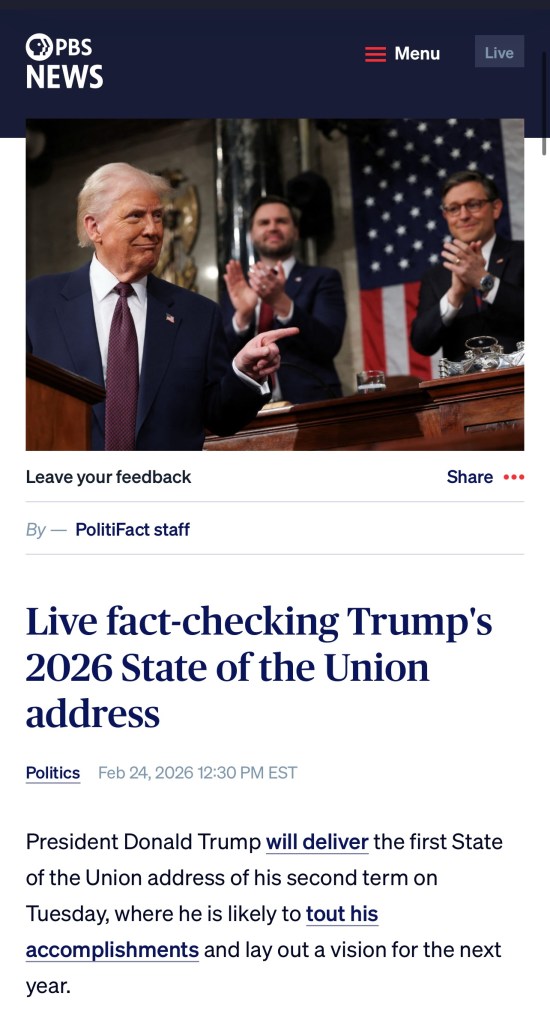
There’s a particular kind of irony that doesn’t make you laugh so much as exhale — that quick, knowing breath that says, Of course this is where we are now. That was my reaction reading PBS’s live fact‑checking of the 2026 State of the Union address.

The article itself is straightforward enough: a running, real‑time verification of the President’s claims as he delivers them. But the very existence of such a feature — and its necessity — says more about the state of the country than any line in the speech.

To be fair, fact‑checking the State of the Union isn’t new. Newsrooms have been doing it in some form since the early 2000s. But the feeling of it has changed. What used to be a next‑day analysis has become a parallel broadcast. What used to be a journalistic courtesy now feels like a civic safeguard. And that shift — from optional to essential — lands differently depending on who is speaking.

PBS didn’t treat their fact‑check as a novelty. It was presented as a public service, almost a requirement. Before the President even began, they reminded readers that only 19% of his campaign promises had been fulfilled, according to PolitiFact — a quiet signal that the evening would require context, correction, and careful listening. That’s the part that stays with me. Not the claims themselves, but the infrastructure now required to accompany them.

The State of the Union used to be a report to the nation. Now it arrives with a chaperone.

It’s tempting to laugh at the absurdity of it — the way the fact‑checkers sit just offstage, ready to annotate the moment. But beneath the humor is something heavier: a grief for what public discourse once aspired to be. The need for real‑time verification is not a sign of a healthy political culture. It’s a sign of erosion — of trust, of shared reality, of the assumption that words spoken from the highest office should at least gesture toward truth.

And yet, there is something quietly hopeful in the work PBS and others are doing. Their presence is steady, unflustered, almost pastoral in its own way. They don’t interrupt. They don’t editorialize. They simply place the facts beside the claims and let the contrast speak for itself. In a time when spectacle often overwhelms substance, that restraint is its own form of civic care.

A State of the Union that requires real‑time verification is not a sign of national strength. It’s a sign of how far we’ve drifted from the expectation that truth belongs at the center of public life. Until that expectation returns, the fact‑checkers will remain in the room — not as critics, but as guardians.


Link to PBS article:

https://www.pbs.org/newshour/politics/live-fact-checking-trumps-2026-state-of-the-union-address