By Ed Fernandez
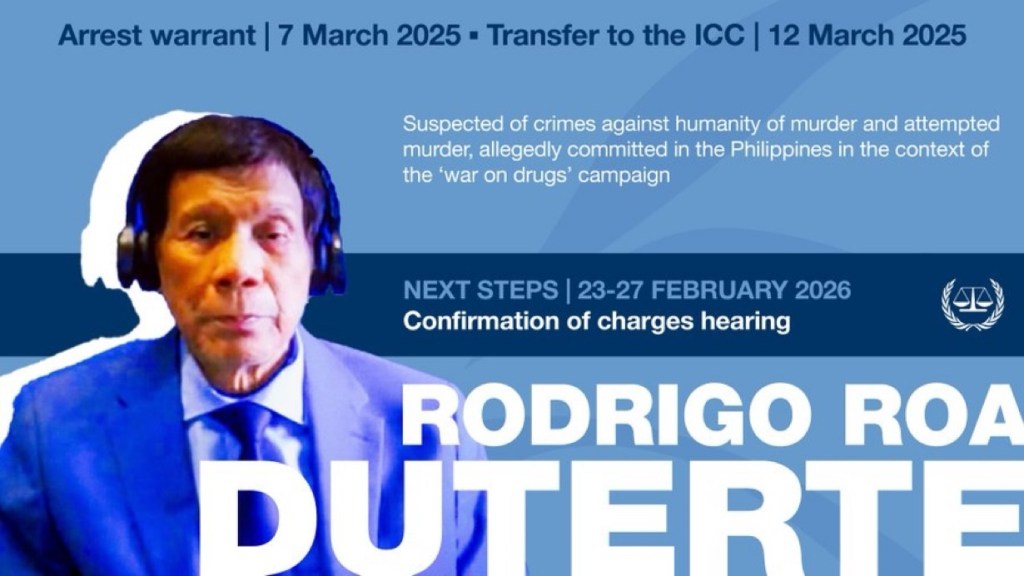
The closing statements in the ICC’s confirmation of charges hearing against former President Rodrigo Duterte were not simply the final words of a long week—they were a window into how each side understands its own case. Watching them, I found myself less interested in the political noise surrounding the proceedings and more attentive to how the arguments themselves were built, delivered, and disciplined.
What emerged was not a question of who I agree with, but who presented a clearer, more coherent, and more legally grounded case before the judges. This is not a judgment on guilt or innocence. It is an evaluation of performance—how each side used its time, evidence, and strategy in a hearing designed not to prove guilt, but to determine whether the case should proceed to trial.
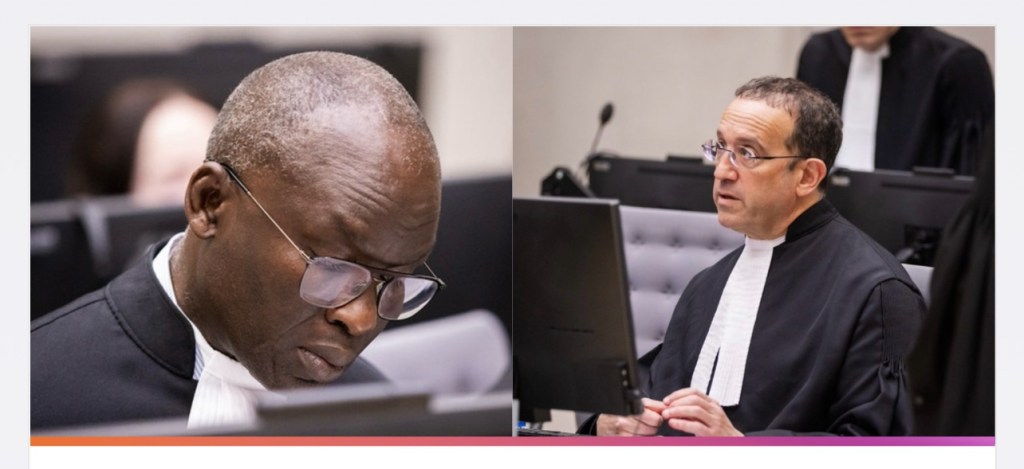
The prosecution, led by Senior Trial Lawyer Julian Nicholls, approached its closing with a kind of disciplined restraint that fit the ICC’s confirmation standard. His task was not to prove Duterte guilty beyond reasonable doubt, but to show that the evidence already on record meets the threshold of “substantial grounds to believe” the crimes charged were committed.
Nicholls’ presentation was methodical. He tied together patterns of killings, police data, Duterte’s own public statements, and documented operations into a coherent narrative of indirect co‑perpetration.
He addressed the defense’s objections directly, especially the claim that “neutralize” meant only to subdue. Citing evidence that the term was operationally used to mean “kill,” he reminded the Chamber that the question at this stage is not whether the prosecution can prove its case at trial, but whether the evidence is strong enough to justify one.
He also pointed out that many of the defense’s objections—witness inconsistencies, credibility disputes, and interpretation of incidents—are precisely the kinds of issues that trials are designed to resolve. In other words, the defense was arguing at the wrong altitude.
Nicholls’ closing was not dramatic. It was not emotional. It was not designed for headlines. It was designed for judges.
The defense, led by Nicholas Kaufman, took a very different approach. His closing was energetic, forceful, and rhetorically sharp. But it often felt like a defense of his strategy rather than a defense of Duterte’s actions. Instead of presenting an alternative narrative of what happened, Kaufman focused on attacking the prosecution’s method: redactions, alleged political motivations, witness inconsistencies, and the absence of a “smoking gun.”
He argued that Duterte’s public statements were political hyperbole, that the prosecution misinterpreted key terms, and that the case was built on inference rather than direct proof. But the ICC’s confirmation standard does not require a smoking gun. It requires substantial grounds. And by repeatedly insisting on a higher standard than the one actually before the Chamber, Kaufman’s argument drifted away from the legal question at hand.
At several points, the judges reminded him to stay within the scope of the hearing. That alone signaled a mismatch between his strategy and the court’s expectations. This does not mean the defense was without merit. Kaufman raised legitimate concerns about witness reliability and the dangers of political influence. But these points were delivered in a way that felt scattered, reactive, and at times more about the lawyer than the client.
Evaluating both sides by the same standard—clarity, coherence, grounding in evidence, and alignment with ICC procedure—the prosecution delivered the stronger performance. Their argument was structured and internally consistent. Their evidence was tied together into a clear narrative. Their presentation matched the legal standard of the hearing. Their tone remained disciplined and judicial.
The defense, while vigorous, often argued at the level of a full trial, challenged the process more than the substance, and did not offer Duterte’s own account or an alternative explanation of events. The result was a closing that felt more like a critique of the ICC than a defense against the charges. This is not a political conclusion. It is a procedural one.
For many Filipinos, the ICC hearing is not just a legal process—it is a mirror held up to our collective memory. The prosecution speaks for victims who have waited years to be heard. The defense speaks for a former president whose leadership shaped a generation. And the judges must weigh all of this with the cold discipline of law. My evaluation is not about taking sides in our national debate, but about assessing how each argument met the standard of the court and the moment.