The Editorial Room is born in the space between headlines and understanding — a quiet corner of the digital world dedicated to clear, grounded analysis of the news and public life.
Those are the facts. But the meaning they carry is far more complicated.
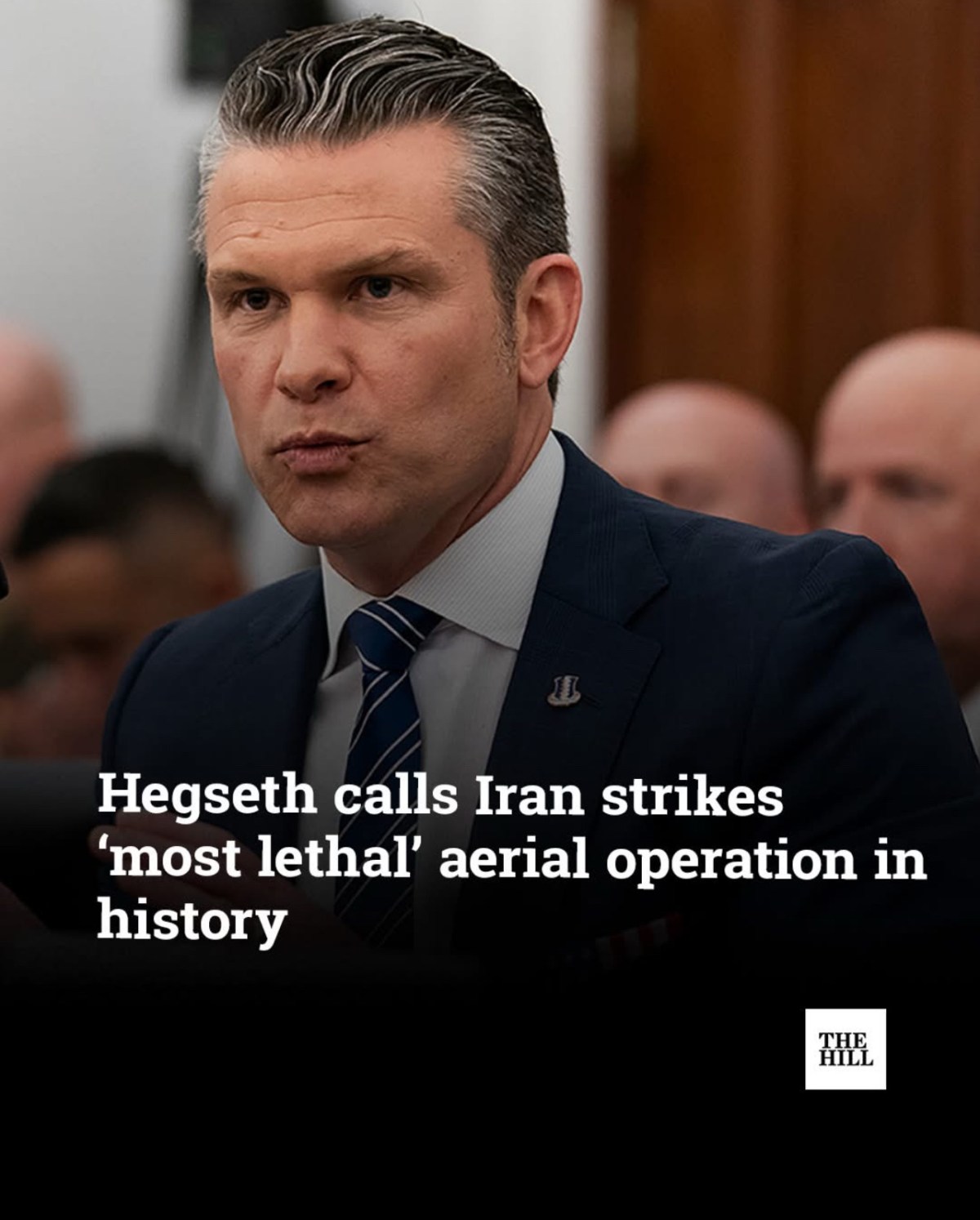
When a government official boasts about lethality, it does not land as a triumph for everyone. For many Americans who do not support war, it feels less like strength and more like a burden—one that ordinary people will carry long after the cameras move on. It can make the country look less like a stabilizing force and more like a global bully, especially when the language centers on destruction rather than restraint.
And when one remembers the scale of devastation in Hiroshima and Nagasaki, the boast itself becomes strangely small. Those events remain among the deadliest acts of war in human history. By comparison, calling any modern strike “the most lethal” can sound like a mouse boasting in front of a cat—loud, but not grounded in the reality of what mass destruction has meant before.
The deeper issue is not the comparison; it is the posture. Celebrating lethality sends a message to the world that America measures success by the force it can unleash. That posture can make everyday Americans—who may oppose escalation—appear complicit in decisions they did not make. It can also make them targets in places where U.S. policy is not separated from the people who live under its flag.
There is a difference between defending a nation and glorifying destruction. The former is a responsibility. The latter is a choice. And when leaders choose the language of boasting, the world hears it—even those who never wanted a war in the first place.
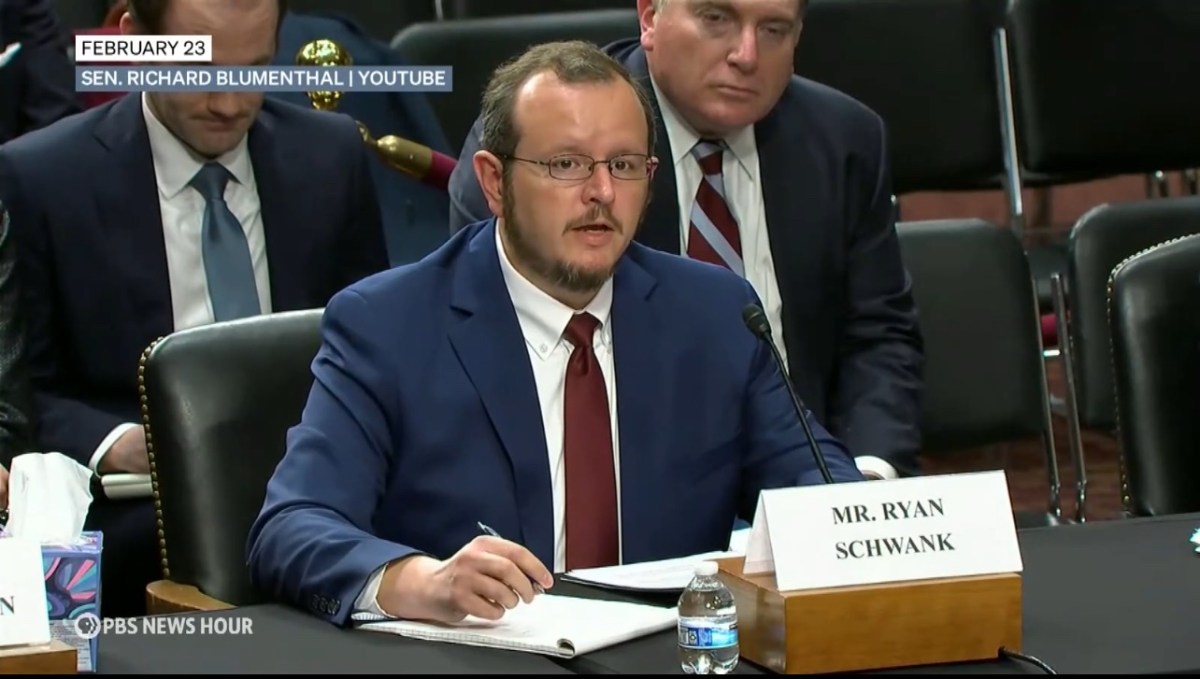
A former ICE attorney and instructor, Ryan Schwank, testified that the agency’s training program has become “deficient, defective and broken.” He described a system where essential instruction on the Constitution, lawful arrest, and use‑of‑force standards has been removed, and where new officers are being taught practices that contradict the Fourth Amendment, including entering homes without a judicial warrant. Schwank resigned so he could speak publicly, warning that rushing thousands of under‑trained officers into the field is dangerous and unlawful.
This was months ago. It is no longer “news.” And yet it is exactly the kind of truth that must not be forgotten. The public may move on, but the consequences of this training system have not. The same pipeline that contributed to fatal mistakes—including the deaths of U.S. citizens—remains in place.
Since Schwank’s testimony, very little has changed. Congress has not launched a formal investigation. DHS continues to deny the training cuts but has not provided documentation to support those denials. The hiring surge continues, sending thousands of inadequately trained officers into communities. No independent review has been initiated into the warrantless‑entry memo or the legality of the curriculum. The silence is not a sign of resolution; it is a sign of avoidance.
Forgetting is not harmless. Forgetting is how violations become normalized. Forgetting is how preventable tragedies repeat themselves. Forgetting is how public institutions drift further from the law they are sworn to uphold. The violations did not stop simply because the headlines did. The risks to the public remain active and unaddressed. And the agency responsible has not been held accountable.
ICE must be held accountable for the violations already committed. Constitutional and legal instruction must be restored. Congress must investigate the training cuts and the warrantless‑entry memo. Independent oversight must review use‑of‑force instruction, testing standards, and officer deployment. The hiring surge must be paused until training meets constitutional requirements. Families harmed by unlawful or negligent enforcement deserve transparency and justice.
This cannot be allowed to fade from public memory. A federal agency cannot be permitted to train its officers to break the law they are sworn to uphold.
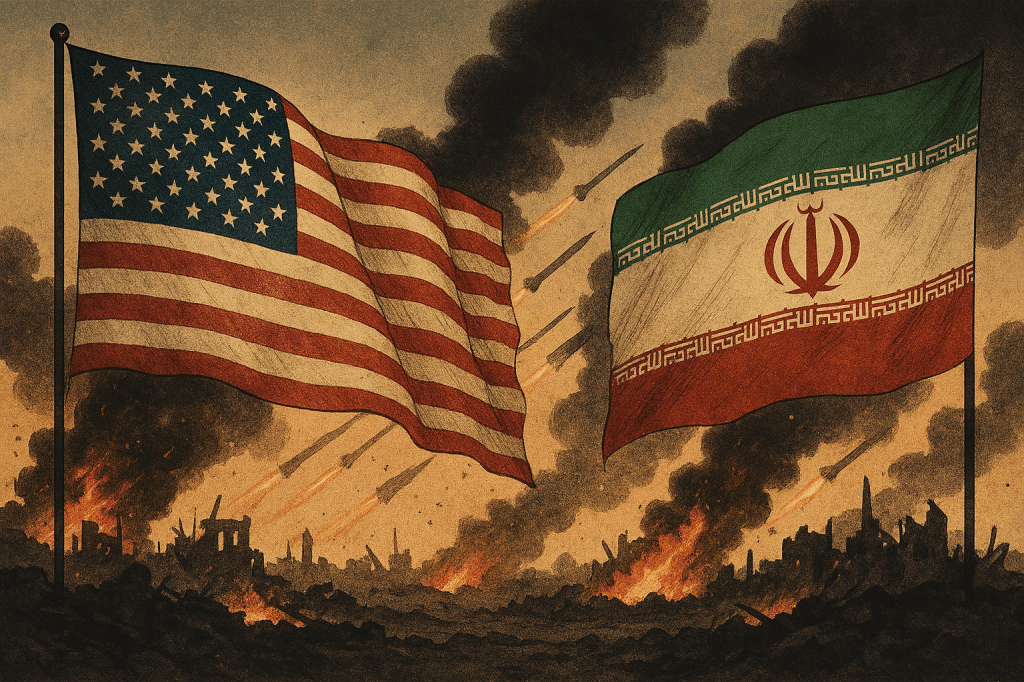
The United States has crossed a threshold this week. In coordination with Israel, President Donald Trump ordered a large‑scale strike on Iranian military targets—an escalation that has already reshaped the region and unsettled the world. The speed of the attack was startling. But what unsettled me even more was the language the president used to justify it.
In his official announcement, Trump described the Iranian regime as “a vicious group of very hard, terrible people,” a phrase widely reported across major news outlets. Technically, he aimed those words at the regime. Yet the speech blurred the line between leaders and citizens so thoroughly that many listeners—myself included—heard a sweeping condemnation of Iranians as a whole. When a president uses broad, dehumanizing language in the same breath as announcing military action, rhetoric and missiles land together. And the consequences of that pairing are profound.
A People Collapsed Into a Threat
Iran is a nation of more than 85 million people—families, students, workers, elders—none of whom chose this war. To describe “terrible people” without clarifying who is meant invites the public to see an entire nation as a singular enemy. It collapses the complexity of a society into a caricature. It makes war easier to justify and harder to question.
Even Iran’s foreign minister, in the midst of the chaos, insisted that Iran was not targeting Americans “in their land” and expressed readiness to talk once the strikes end. That statement may or may not be persuasive, but it underscores a truth: diplomacy was still possible. It was not exhausted.
The Nuclear Question and the Abandonment of Diplomacy
For years, Iran has maintained that its nuclear program is for peaceful purposes. Whether one believes that claim or not, diplomacy—not bombardment—has historically been the only tool capable of verifying and constraining nuclear ambitions. Trump himself acknowledged that negotiations had been underway just days before the attack.
If the United States fears a nuclear‑armed Iran, is it unreasonable for Iranians to fear a nuclear‑armed United States—especially under a leader whose posture is often confrontational? Fear is mutual. Diplomacy is how nations keep fear from becoming war.
A Constitutional Shortcut
Members of Congress from both parties have already raised concerns about the president bypassing congressional authorization. This is not a procedural quibble. The Constitution vests war‑making power in Congress precisely to prevent unilateral military escalation. When that safeguard is ignored, the balance of power shifts toward executive overreach, and the nation drifts into conflict without the deliberation such decisions demand.
The Cost of This Trajectory
The consequences are already unfolding: Iranian retaliation against U.S. and Israeli targets, heightened regional instability, global security alerts, and rising fear among Americans at home and abroad. Internationally, the United States risks being seen as a nation willing to strike first and consult later. Domestically, we risk normalizing the idea that war is a tool of first resort. This is not strength. It is drift.
A Call for Moral Clarity
We are at a crossroads. The language our leaders use matters. The processes they follow matter. And the lives caught in the middle—American, Iranian, Israeli, and countless others—matter most of all.
War should never be made easier through rhetoric that dehumanizes or through procedures that bypass accountability. In moments like this, we must insist on restraint, transparency, and the dignity of all people, no matter which side of a border they live on.
The closing statements in the ICC’s confirmation of charges hearing against former President Rodrigo Duterte were not simply the final words of a long week—they were a window into how each side understands its own case. Watching them, I found myself less interested in the political noise surrounding the proceedings and more attentive to how the arguments themselves were built, delivered, and disciplined.
What emerged was not a question of who I agree with, but who presented a clearer, more coherent, and more legally grounded case before the judges. This is not a judgment on guilt or innocence. It is an evaluation of performance—how each side used its time, evidence, and strategy in a hearing designed not to prove guilt, but to determine whether the case should proceed to trial.
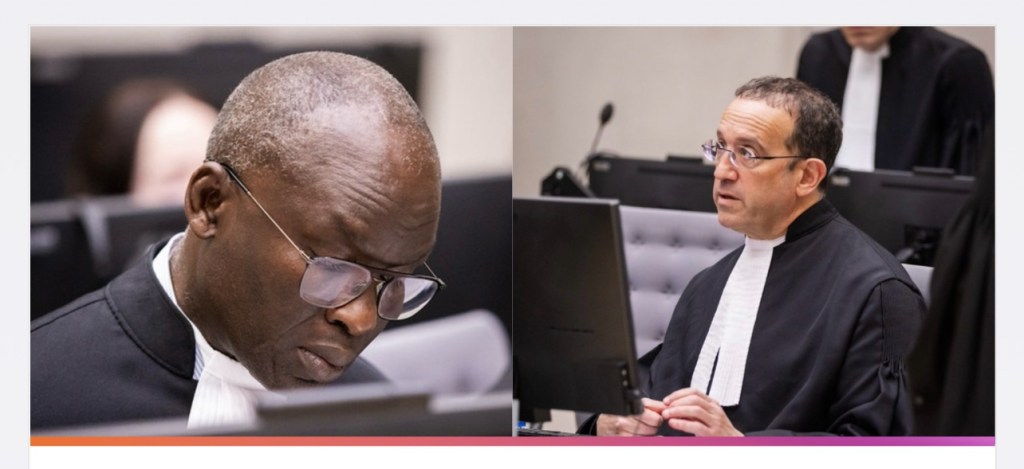
The prosecution, led by Senior Trial Lawyer Julian Nicholls, approached its closing with a kind of disciplined restraint that fit the ICC’s confirmation standard. His task was not to prove Duterte guilty beyond reasonable doubt, but to show that the evidence already on record meets the threshold of “substantial grounds to believe” the crimes charged were committed.
Nicholls’ presentation was methodical. He tied together patterns of killings, police data, Duterte’s own public statements, and documented operations into a coherent narrative of indirect co‑perpetration.
He addressed the defense’s objections directly, especially the claim that “neutralize” meant only to subdue. Citing evidence that the term was operationally used to mean “kill,” he reminded the Chamber that the question at this stage is not whether the prosecution can prove its case at trial, but whether the evidence is strong enough to justify one.
He also pointed out that many of the defense’s objections—witness inconsistencies, credibility disputes, and interpretation of incidents—are precisely the kinds of issues that trials are designed to resolve. In other words, the defense was arguing at the wrong altitude.
Nicholls’ closing was not dramatic. It was not emotional. It was not designed for headlines. It was designed for judges.
The defense, led by Nicholas Kaufman, took a very different approach. His closing was energetic, forceful, and rhetorically sharp. But it often felt like a defense of his strategy rather than a defense of Duterte’s actions. Instead of presenting an alternative narrative of what happened, Kaufman focused on attacking the prosecution’s method: redactions, alleged political motivations, witness inconsistencies, and the absence of a “smoking gun.”
He argued that Duterte’s public statements were political hyperbole, that the prosecution misinterpreted key terms, and that the case was built on inference rather than direct proof. But the ICC’s confirmation standard does not require a smoking gun. It requires substantial grounds. And by repeatedly insisting on a higher standard than the one actually before the Chamber, Kaufman’s argument drifted away from the legal question at hand.
At several points, the judges reminded him to stay within the scope of the hearing. That alone signaled a mismatch between his strategy and the court’s expectations. This does not mean the defense was without merit. Kaufman raised legitimate concerns about witness reliability and the dangers of political influence. But these points were delivered in a way that felt scattered, reactive, and at times more about the lawyer than the client.
Evaluating both sides by the same standard—clarity, coherence, grounding in evidence, and alignment with ICC procedure—the prosecution delivered the stronger performance. Their argument was structured and internally consistent. Their evidence was tied together into a clear narrative. Their presentation matched the legal standard of the hearing. Their tone remained disciplined and judicial.
The defense, while vigorous, often argued at the level of a full trial, challenged the process more than the substance, and did not offer Duterte’s own account or an alternative explanation of events. The result was a closing that felt more like a critique of the ICC than a defense against the charges. This is not a political conclusion. It is a procedural one.
For many Filipinos, the ICC hearing is not just a legal process—it is a mirror held up to our collective memory. The prosecution speaks for victims who have waited years to be heard. The defense speaks for a former president whose leadership shaped a generation. And the judges must weigh all of this with the cold discipline of law. My evaluation is not about taking sides in our national debate, but about assessing how each argument met the standard of the court and the moment.
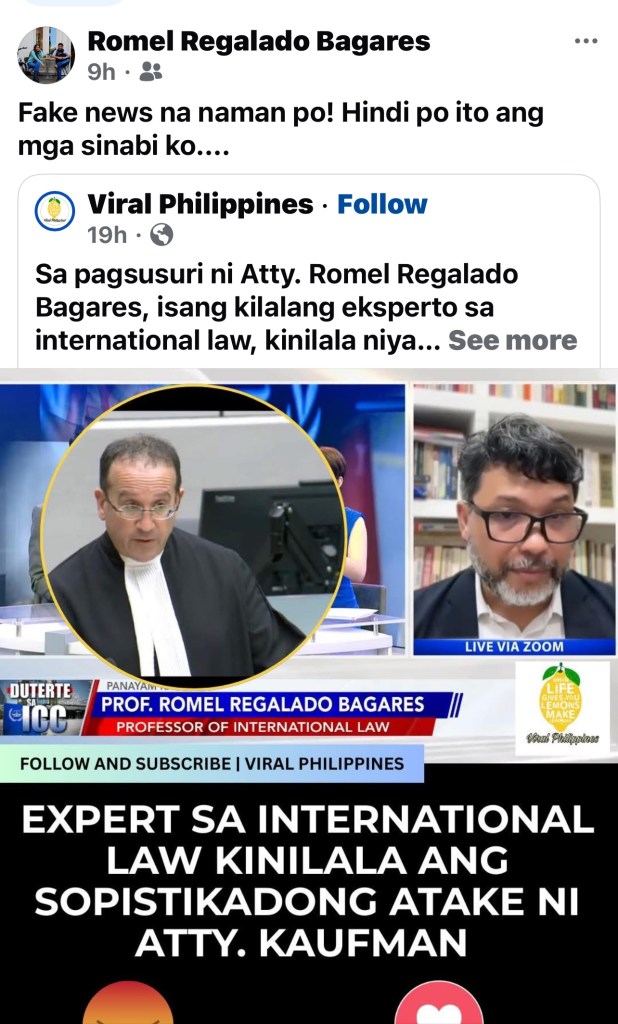
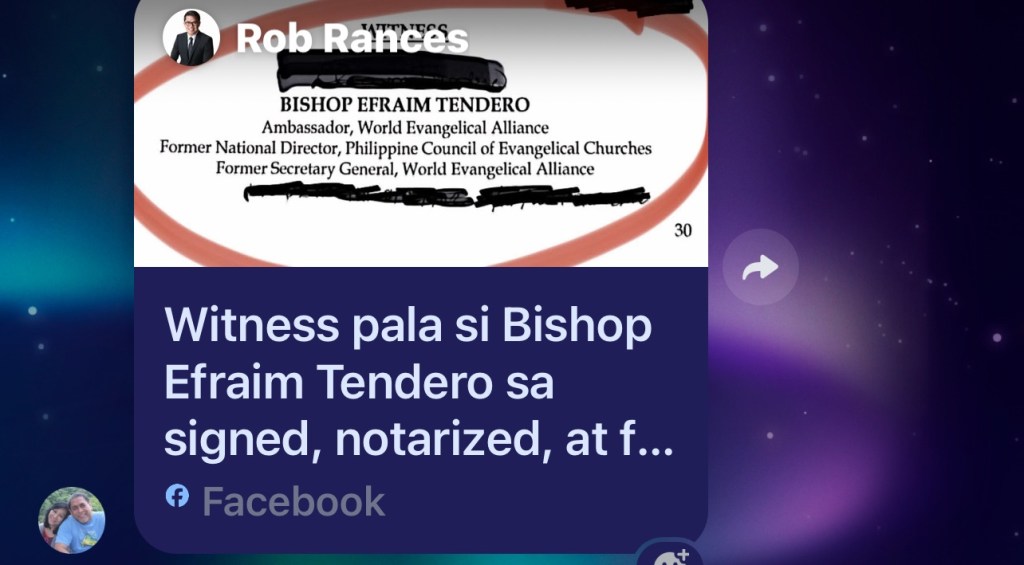
Sa Pilipinas, hindi na bago ang paggamit ng pangalan ng mga iginagalang na lider—obispo, abogado, propesor, pastor—para magtahi ng mga kuwentong hindi nila sinabi. Kahapon, ang pangalan ni Bishop Ef Tendero ang ginamit upang magmukhang may “witness” na pumapabor sa isang politikal na narrative. Ngayon, ang pangalan naman ni Atty. Romel Regalado Bagares, isang kilalang eksperto sa international law, ang ginawang kasangkapan sa parehong paraan.
At tulad ng ginawa ni Bishop Tendero, mabilis at malinaw ang tugon ni Atty. Bagares: “Fake news na naman po! Hindi po ito ang mga sinabi ko…”
Hindi ito basta reklamo. Ito ay pagwawasto. At higit pa roon, ito ay babala.
Ang Inimbentong Kwento Sa isang post ng Viral Philippines, ipininta si Atty. Bagares na para bang tagahanga ng depensa ni Atty. Nicholas Kaufman sa ICC hearings. Ayon sa post, pinuri raw niya ang “sopistikadong atake” ng depensa, inisa‑isa ang mga “brilliant” moves ni Kaufman, at ipinakita pang tila mas kapani‑paniwala ang narrative ng depensa kaysa sa Prosecution.
Ang problema? Wala sa mga ito ang sinabi ni Atty. Bagares. Hindi sa interview. Hindi sa anumang public commentary. Hindi kailanman. At mismong siya ang nagsabi nito.
Ano Ba Talaga ang Sinabi ni Atty. Bagares? Sa mga totoong interview at public analyses na napanood ko, malinaw ang tono at nilalaman ng kanyang paliwanag:
– Ang focus niya ay sa Prosecution, hindi sa depensa. – Pinuri niya ang pagiging “systematic” at “on point” ng Prosecution sa paglatag ng ebidensya. – Wala siyang binanggit na papuri kay Kaufman. – Wala siyang sinabi tungkol sa “linguistic defense,” “political contextualization,” o pag-atake sa insider witnesses. – Wala siyang anumang pahayag na maaaring basahin bilang pro‑Duterte o pro‑defense. – Ang kanyang boses ay legal, maingat, at tapat—hindi sensational, hindi partisan, at hindi ginagamit para magtahi ng political spin.
Kaya malinaw kung bakit mabilis ang kanyang pagtanggi. Hindi lang ito maling quote. Ito ay pagkatha.
Ang Mas Malaking Sugat Ang mga ganitong post ay hindi ginagawa para sa mga may kakayahang mag-fact-check. Ginagawa ito para sa mga walang access sa tamang impormasyon, sa mga umaasa sa forwarded posts, sa mga pagod na sa ingay ng politika, at sa mga Pilipinong naghahanap ng simpleng paliwanag sa komplikadong usapin.
Sa madaling salita: ginagawa ito para sa mga ordinaryong tao—lalo na ang mga mahihirap—na walang sandata laban sa disinformation.
At dito nagiging moral ang usapin.
Ang Katotohanan ay Hindi Lang Legal—Ito ay Moral Sa bansang tinatawag ang sarili na “the only Christian nation in Asia,” hindi sapat ang pagiging relihiyoso kung hindi natin kayang igalang ang katotohanan.
Kung ang pangalan ng isang bishop ay maaaring gamitin para sa kasinungalingan, at ang pangalan ng isang abogado ay maaaring gamitin para sa imbentong analysis, ano pa ang hindi kayang baluktutin?
Kung ang mga Kristiyano mismo ay hindi marunong kumilatis, hindi marunong tumanggi, hindi marunong magsabi ng “mali ito,” kanino pa aasang magtatanggol sa katotohanan?
Ang Panawagan Hindi ito tungkol sa Duterte. Hindi ito tungkol sa ICC. Hindi ito tungkol sa politika.
Ito ay tungkol sa katotohanan, at kung paano natin ito pinoprotektahan.
Sa panahon ng disinformation, ang pinakamaliit na kabutihan ay ang pagtanggi sa kasinungalingan. At ang pinakamalaking kabayanihan ay ang pagtindig para sa totoo—kahit hindi ito popular, kahit hindi ito komportable.
Kung tunay tayong Kristiyano, kung tunay tayong Pilipino, kung tunay tayong may malasakit sa bayan, dapat nating piliin ang katotohanan—hindi dahil madali, kundi dahil ito ang tama.
Author’s Note: I write this reflection not as an economist, but as someone who cares deeply about the integrity of public life. My concern is not partisan; it is human. In a time when narratives often outrun the truth, I believe we owe one another the courtesy of accuracy, humility, and respect. Leadership is strongest when it tells the truth plainly, without stretching it to fit a desired story. This piece is offered in that spirit.
In his recent State of the Union Address, President Trump spoke with confidence about the strength of the stock market under his leadership. It was a bold claim, delivered with the certainty that often accompanies political speeches. But as I listened, something in me hesitated. Not out of cynicism, but out of a simple desire for truthfulness — the kind that does not stretch itself to fit a narrative.
The numbers tell a different story.
The market’s strongest gains — the remarkable climb of 2023, 2024, and the early part of 2025 — all happened before the current administration began. Those gains were already in motion long before January 2025. They were shaped by global recovery cycles, Federal Reserve policy, technological expansion, and the resilience of American companies. They were not the product of a single leader, and certainly not the product of a term that had barely begun.
Yet in the SONA, those years were gathered up and presented as evidence of presidential accomplishment.
This is where my concern lies. Not in the politics, but in the integrity of the claim.
Economists across the spectrum have long said that presidents do not control the stock market. They influence sentiment, yes. They can shape policy, yes. But the market responds to forces far larger and more complex than any one administration: global supply chains, interest rates, inflation cycles, technological innovation, geopolitical tensions, and the decisions of millions of investors acting independently.
To claim personal credit for a multi‑year rise that predates one’s term is, at best, an oversimplification. At worst, it is a quiet rewriting of the timeline — a way of gathering unearned accomplishments into one’s own narrative.
And I say this not as a partisan critique, but as a human concern.
Because leadership, at its best, is not about claiming what one has not done. It is about telling the truth even when the truth is less flattering. It is about acknowledging the work of others, the complexity of systems, and the limits of one’s own influence. It is about resisting the temptation to turn every good thing into a personal victory.
What troubles me is not the boast itself, but the pattern it represents — a pattern in which public claims drift away from public reality, and the distance between the two becomes normalized. When that happens, trust erodes. And when trust erodes, institutions weaken.
I am not asking for perfection. I am asking for honesty.
A leader does not need to own the stock market to lead well. A leader does not need to claim credit for what came before. A leader does not need to bend the timeline to appear successful.
What we need — what I long for — is a leadership that is simple, truthful, respectful, and grounded. A leadership that does not fear humility. A leadership that can say, “This rise began before me,” and still stand tall.
In a world already strained by misinformation and narrative‑shaping, truthfulness is not a luxury. It is a responsibility.
And it is one we should expect from anyone who asks to lead us.
In the past few days, I’ve watched a familiar pattern unfold online: a fragment of information, lifted from its context, is turned into a weapon. A name is pulled into a narrative it did not choose. And a respected Christian leader — in this case, Bishop Efraim Tendero — becomes collateral damage in someone else’s political story.
I have known Bishop Tendero for years. He is a man of integrity, humility, and deep pastoral steadiness. So when I saw posts circulating that implied he had “certified” the truth of the Brave 18 affidavit — or worse, that he was a witness against those accused of bribing ICC investigators — I reached out to him directly.
His reply was immediate, clear, and consistent with the man I know.
“Two days before I left Manila for the series of conferences in the USA, I was asked to be a witness to the signing of a sworn statement by 18 men who were enlisted personnel of the Philippine Military before a notary public.
I confirm that I witnessed the 18 soldiers appear before the notary public, and the signing process took place.
As a witness, I don’t attest to the accuracy or truth of the statements made; I only confirm the signing process was legitimate.
The responsibility for the veracity of the document’s content lies with those who gave their sworn statements.”
This is the whole truth. Nothing more. Nothing less.
A witness to a notarization does not verify the truth of the statements. They verify identity, presence, and the act of signing. That is all. It is a procedural role, not a political endorsement. It is a matter of form, not of content.
And yet, some have taken his name — his good name — and used it to imply something he did not say, did not do, and did not intend.
This is where my concern deepens.
Because this is not just about Bishop Tendero. It is about the way we handle truth when it is inconvenient to our preferred narrative. It is about the ease with which we weaponize partial information to score political points. It is about the spiritual cost of using another person’s integrity as a prop for our own agenda.
I say this with respect, and with a pastoral heart: When we twist someone’s role to make our side look righteous and the other side look corrupt, we are no longer dealing in truth. We are dealing in manipulation.
And manipulation, even when done in the name of patriotism or loyalty, is still a form of bearing false witness.
I understand the passions surrounding the ICC case. I understand the loyalties, the fears, the hopes, and the wounds. But none of these justify misusing a pastor’s name to advance a political narrative. None of these justify implying that he verified allegations he did not verify. None of these justify dragging him into a fight he did not choose.
If we care about truth, then we must care about the whole truth — not just the parts that serve our side.
If we care about justice, then we must refuse to harm the innocent in the process.
And if we care about the witness of the Church, then we must be the first to resist the temptation to twist facts for political gain.
Bishop Tendero did what many pastors have done countless times: he witnessed a signing before a notary public. That is all. To turn that simple act into a political endorsement is not only misleading — it is unjust.
My appeal is simple: Let us stop using people’s names as tools for our narratives. Let us stop weaponizing partial truths. Let us stop dragging pastors into political battles they did not enter.
Truth is not a slogan. Truth is not a screenshot. Truth is not a tool for winning arguments.
Truth is a discipline — one that demands humility, restraint, and the courage to say only what is real.
And in this moment, what is real is clear: Bishop Tendero witnessed a signing. He did not certify the truth of the allegations. He did not take sides. He did not enter the political arena. Others placed him there.
For his sake — and for the sake of our own integrity — we should correct the record and let the truth stand on its own.
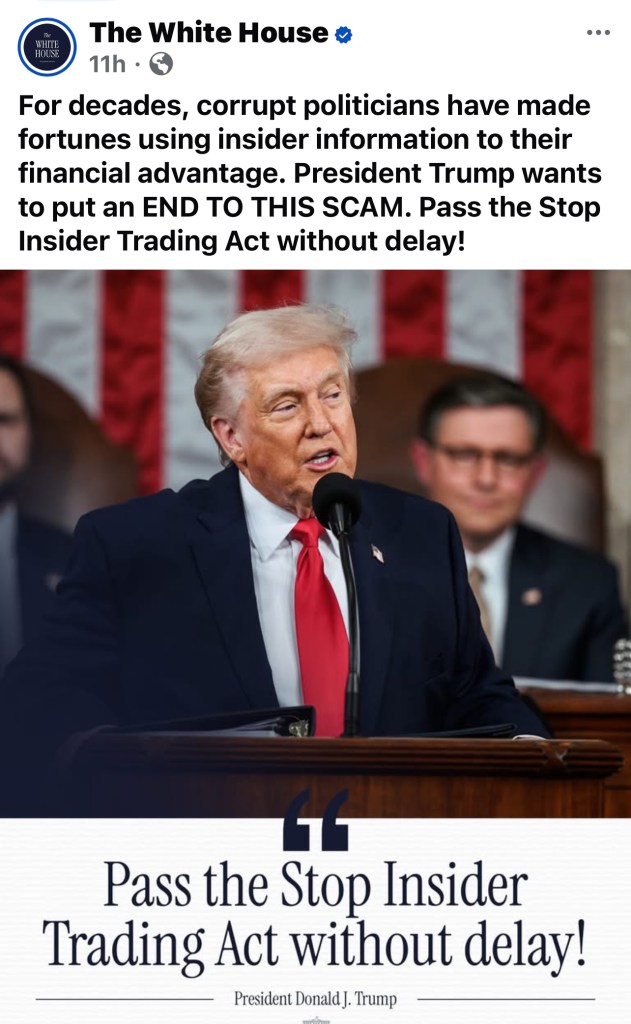
Insider trading is one of the few issues that unites Americans across political lines. People instinctively understand the unfairness of it. When elected officials or senior staff can buy or sell stocks while holding information the public does not yet have, the playing field tilts. Even if no law is technically broken, the trust that holds democratic institutions together begins to fray.
That is why the renewed rhetoric caught my attention. Not because the goal is wrong, but because the history is long. At the beginning of the Trump administration, investigative reporters uncovered a cluster of unusually well‑timed stock sales by senior officials. The pattern was hard to miss: trades made days before major tariff announcements that sent markets tumbling. Nothing was proven illegal, but ethics experts said then what they say now—when people with privileged information move their money just before the public feels the impact, trust erodes. The appearance of self‑dealing is enough to damage institutions.
This is not a partisan problem. It is a structural one. The same concerns have surfaced under Democratic administrations, Republican administrations, and Congresses of every composition. The temptation is built into the system: the people who write the rules are allowed to trade in the very markets their decisions influence. No amount of messaging can make that tension disappear.
The deeper issue is not who sits in the Oval Office or which party controls the House. It is the quiet, corrosive effect of a system that permits lawmakers and high‑ranking officials to trade individual stocks at all. When public servants can personally benefit—or avoid losses—based on the timing of policy decisions, the conflict is not incidental. It is inherent.
Ending insider trading in government is a worthy goal. But it requires more than slogans and more than outrage. It requires rules that apply to everyone, in every administration, without exception. It requires transparency strong enough to withstand political cycles and public pressure. And it requires the humility to admit that trust, once lost, is not easily restored.
The public is not asking for perfection. It is asking for fairness. It is asking for a government that does not play by a different set of rules. And it is asking for leaders who understand that integrity is not a talking point—it is a practice.
The promise to end insider trading will matter only when it becomes more than a promise. Until then, the cycle will continue: outrage, investigation, denial, and another round of well‑timed trades that leave the public wondering whose interests are truly being served.
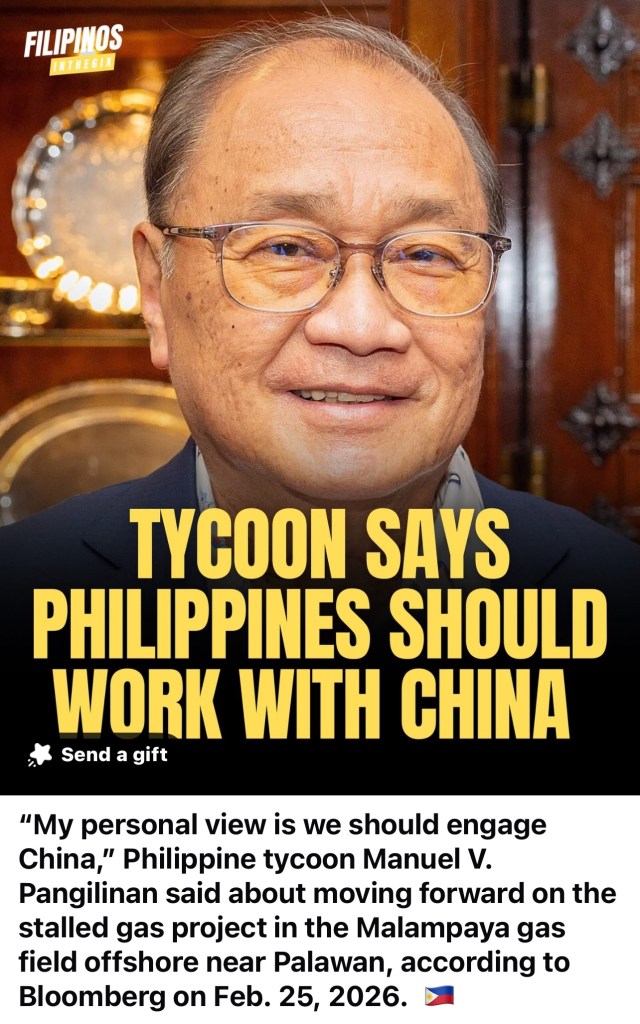
When Manuel V. Pangilinan says, “we should engage China,” in the context of reviving the stalled Malampaya project, the statement lands with the weight of both pragmatism and history. The Philippines has long navigated a world where major powers — whether China, the United States, or others — approach Manila with strategic interests that far exceed its own bargaining capacity. Engagement, in itself, is not the problem. The problem is entering these engagements without the discipline of sovereign partnership.
Malampaya is not just an energy field. It is one of the few strategic assets that has given the Philippines a measure of energy security since 2001. Its decline, and the delays in expanding extraction, expose a familiar national vulnerability: the country’s resources are finite, but its dependence on external actors is not.
This is why the question is not whether the Philippines should work with China, or with any other major power. The real question is whether the Philippines can negotiate from a position that protects its national security and ensures that Filipinos benefit more from their own resources than the foreign entities extracting them.
Other resource-rich nations have learned this discipline. Norway built a sovereign wealth fund that now shapes its future. Qatar leveraged its gas reserves into geopolitical influence. Malaysia has consistently structured deals that keep national interest at the center. The Philippines, by contrast, often negotiates as though grateful to be invited — even when it holds the very resource that makes the partnership possible.
A mature foreign policy begins with a simple premise: if the resource is Filipino, the primary beneficiary must be the Filipino people. This is not nationalism; it is governance. It is the difference between partnership and dependency, between strategic engagement and strategic surrender.
Engaging China is not inherently risky. Engaging the United States is not inherently safe. What is risky — and historically costly — is entering any partnership without guardrails, leverage, or a clear articulation of what must not be compromised. National security is not a geopolitical preference; it is a boundary.
Malampaya is a test case. If the Philippines cannot negotiate from strength when it holds the resource, it will not negotiate from strength anywhere else. The country does not need to choose between China and America. It needs to choose itself.
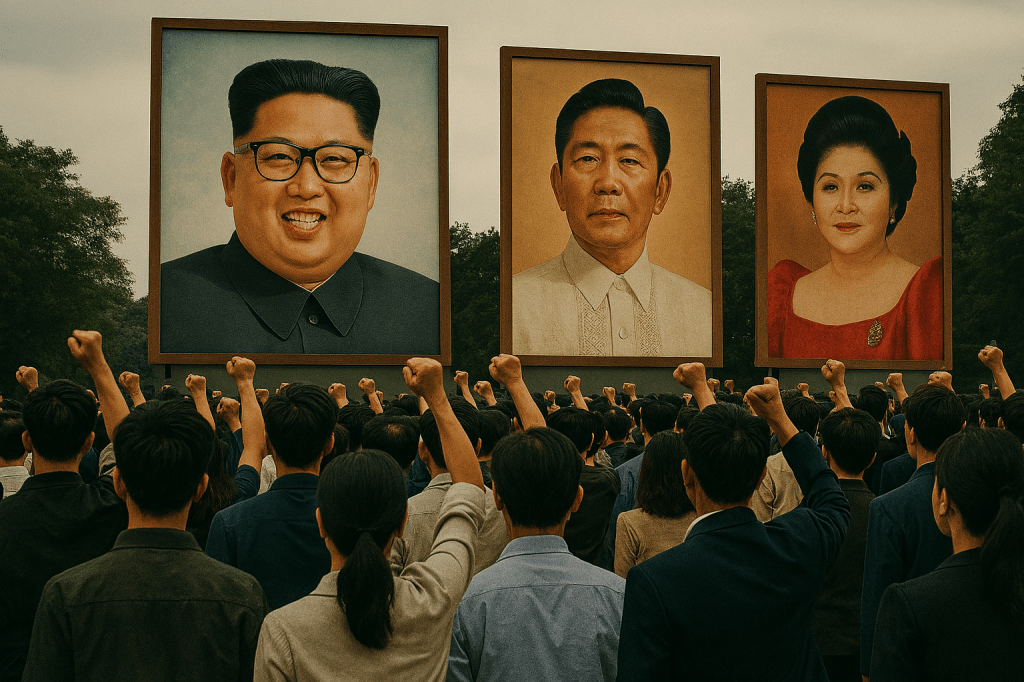
My wife and I recently watched a National Geographic documentary on North Korea’s dictator, and we found ourselves stunned by the way he is worshiped like a god. It made me wonder how political devotion can harden into something unshakeable — something that prevents people from seeing what is right in front of them.
I know what it means to admire a leader. When I was a boy in rural Mindanao, I was chosen to greet President Ferdinand Marcos Sr. as he stepped off a helicopter. To a child, that moment was dazzling. I became a fan — not only of him, but of Imelda Romualdez Marcos, the former beauty queen whose elegance captivated the nation.
But admiration has a way of maturing when reality intrudes. Under Martial Law, I saw the cruelty of soldiers at checkpoints between Norala and Cotabato City. I heard the stories of “salvage” victims — people killed for resisting the regime. I witnessed how power could be used not for service but for plunder. Those experiences forced me to re‑evaluate the man I once admired. I changed my mind because the truth demanded it.
And so I find myself grieving when I see friends who remain loyal to leaders whose actions have caused undeniable harm. Some of my friends continue to defend former President Rodrigo Duterte, even as evidence mounts about extrajudicial killings and the possibility that the drug war served interests far darker than public safety. Their devotion seems to override their capacity to evaluate the facts.
Why is it that some people can re‑examine their loyalties while others cannot?
I don’t believe in predestination. I believe people have the freedom to think, to choose, to change. But I also know that we are shaped by our fears, our loyalties, our communities, and the stories we tell ourselves about the leaders we admire. And I know I am not infallible — I do not understand everything.
Still, I return to this question: What allows one person to step back and see clearly, while another clings to the image of a leader long after the truth has become impossible to ignore?
I don’t have a final answer. But I know this: the ability to re‑evaluate our heroes is not a sign of disloyalty. It is a sign of moral courage. And in times like ours, courage may be the only thing that keeps admiration from becoming blindness.
The Editorial Room
The Editorial Room is born in the space between headlines and understanding — a quiet corner of the digital world dedicated to clear, grounded analysis of the news and public life.